
Hey there! As a supplier of C Channel Roll Forming Machines, I'm super stoked to walk you through the forming process of these nifty machines. It's a fascinating journey from raw materials to a finished C-channel product, and I'm gonna break it down for you step by step.
Step 1: Material Loading
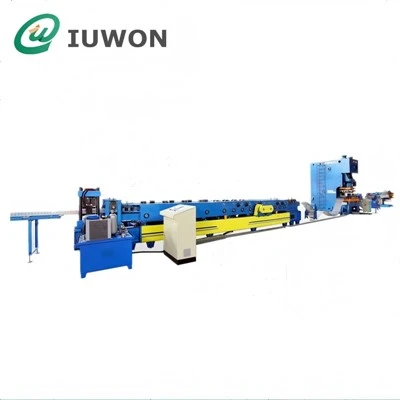
The whole process kicks off with material loading. You start with a large coil of steel, which is the primary raw material for making C-channels. This coil is usually placed on an uncoiler. The uncoiler is like a big spool that holds the steel coil and allows it to unwind smoothly. It's designed to feed the steel strip at a consistent speed into the next stage of the process. The steel used can vary in thickness and quality depending on the specific requirements of the C-channel you're making.
Step 2: Leveling
Once the steel strip is uncoiled, it goes through a leveling machine. This step is crucial because the steel strip might have some bends or unevenness from being coiled for a long time. The leveling machine uses a series of rollers to straighten out the strip, ensuring that it's flat and ready for the next steps. It's like giving the steel strip a little spa treatment to make it nice and even.
Step 3: Punching (Optional)
In some cases, you might need to punch holes in the C-channel for various purposes, like mounting or connecting other components. If this is the case, the steel strip will pass through a punching station. The punching station is equipped with a punch and die set that can create holes of different sizes and shapes according to the design requirements. It's a quick and precise process that adds functionality to the C-channel.
Step 4: Roll Forming
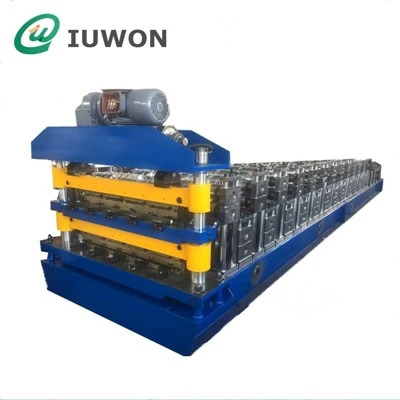
Now, we get to the heart of the process - roll forming. The steel strip enters the roll forming machine, which consists of a series of rollers arranged in a specific pattern. Each set of rollers is designed to gradually shape the steel strip into the desired C-channel profile. As the strip passes through each set of rollers, it undergoes a small amount of deformation, and by the time it reaches the end of the machine, it has taken on the shape of a C-channel. The rollers are carefully calibrated to ensure that the C-channel has the correct dimensions and a smooth finish.
Step 5: Cutting
Once the C-channel has been formed, it needs to be cut to the desired length. The cutting process is usually done by a cutting machine, which can be either a shear or a flying saw. A shear cuts the C-channel by applying a shearing force, while a flying saw cuts the C-channel while it's still moving. The choice of cutting method depends on the specific requirements of the production process and the quality of the cut needed. After cutting, the individual C-channels are ready for further processing or packaging.
Step 6: Additional Processing (Optional)
Depending on the customer's needs, the C-channels might undergo some additional processing steps. This could include surface treatment, such as galvanizing or painting, to improve the corrosion resistance and appearance of the C-channels. It could also involve bending or welding the C-channels to create more complex shapes or structures. These additional processing steps add value to the C-channels and make them suitable for a wider range of applications.
Step 7: Quality Inspection
Before the C-channels are shipped to the customer, they go through a thorough quality inspection. This involves checking the dimensions, surface finish, and mechanical properties of the C-channels to ensure that they meet the specified standards. Any C-channels that don't meet the requirements are either reworked or discarded. Quality control is an important part of the manufacturing process to ensure that the customer receives a high-quality product.
Why Choose Our C Channel Roll Forming Machines
Now that you know the forming process, you might be wondering why you should choose our C Channel Roll Forming Machine. Well, let me tell you, our machines are top-notch. We use the latest technology and high-quality components to ensure that our machines are reliable, efficient, and easy to operate. Our machines are also highly customizable, so we can tailor them to your specific needs and requirements. Whether you're making small C-channels for a home project or large C-channels for an industrial application, we've got you covered.
In addition to our high-quality machines, we also offer excellent customer service. Our team of experts is always available to answer your questions, provide technical support, and help you with any issues you might encounter. We believe in building long-term relationships with our customers, and we're committed to providing the best possible experience.
Related Products: Steel Roll Former
If you're interested in other types of roll forming machines, we also offer Steel Roll Former. These machines are designed to form steel into various profiles, including C-channels, U-channels, and Z-channels. They're a great option if you need to produce a large volume of steel profiles quickly and efficiently.
Contact Us for Purchase and Negotiation
If you're in the market for a C Channel Roll Forming Machine or any other roll forming equipment, we'd love to hear from you. We're always happy to discuss your needs, provide a quote, and answer any questions you might have. Whether you're a small business owner or a large industrial manufacturer, we can help you find the right machine for your needs. So, don't hesitate to reach out and start the conversation. We look forward to working with you!


References
- Roll Forming Technology Handbook, by The Roll Forming Association
- Steel Construction Manual, by American Institute of Steel Construction