
Choose Standard Products Or Customize A Downspout Roll Forming Machine
-
![Gutter Downspout And Elbow Roll Forming Machine]() Gutter Downspout And Elbow Roll Forming Machine
Manufacturing a complete metal rainwater drainage system involves more than producing straight gutters and downpipes. Elbows must also match the pipe dimensions and provide the correct change in...
-
![Downspout Roll Former]() Downspout Roll Former
A downspout roll former converts flat metal coil into finished rainwater pipes through a series of forming rollers. It is designed for manufacturers producing metal downpipes for residential...
-
![Downspout & Gutter Roll Forming Machine]() Downspout & Gutter Roll Forming Machine
Roof drainage products are often purchased as part of a larger building-material order. Roofing contractors, metal building suppliers, and distributors may need gutters, downspouts, and matching...
-
![Downspout Pipe Roll Forming Machine]() Downspout Pipe Roll Forming Machine
Manufacturers of metal rainwater pipes need more than a machine that can form a sheet into a tube. The production system must match the required pipe section, metal thickness, joint construction,...
-
![Automatic Round Downspout Roll Forming Machine]() Automatic Round Downspout Roll Forming Machine
For downspout manufacturers handling repeat orders, production efficiency depends on more than forming speed. Operators must manage coil feeding, maintain the required pipe diameter, set cutting...
-
![Round Downpipe Roll Forming Machine]() Round Downpipe Roll Forming Machine
Round downpipes carry rainwater from roof gutters to ground-level drainage systems.
For manufacturers, the production challenge is to maintain a consistent circular profile, control the... -
![Down Spout Machine]() Down Spout Machine
Downspout manufacturers need to produce drainage pipes that maintain consistent cross-sectional dimensions, connect correctly with gutters and fittings, and meet the appearance requirements of...
-
![Metal Downspout Forming Machine]() Metal Downspout Forming Machine
The Metal Downspout Forming Machine is a fully automatic cold roll forming system designed for continuous production of square and rectangular metal downspout pipes. It processes galvanized steel,...
-
![Square Downspout Machine]() Square Downspout Machine
This industrial-grade square downspout roll forming machine is engineered for high-efficiency, high-precision production of metal square and rectangular downspouts for building rainwater drainage...
-
![Elbow Downpipe Roll Forming Machine]() Elbow Downpipe Roll Forming Machine
Elbow Downpipe Roll Forming Machine is a metal forming equipment designed for producing customized downpipe profiles and related drainage components. It uses continuous cold roll forming...
-
![Pipe Roll Forming Machine]() Pipe Roll Forming Machine
The Pipe Roll Forming Machine is designed to manufacture round, square, rectangular, and customized steel pipes used in construction, infrastructure, furniture, mechanical engineering,...
-
![Downspout Machine]() Downspout Machine
Downspouts (also known as rainspouts, drainpipes) are essential components in building drainage systems, mainly used to guide rainwater from roof gutters to the ground or underground drainage...


Downspout Profiles Designed Around Building Drainage
A downspout is an important part of a building drainage system, and its finished cross-section determines how the product is formed. Square, rectangular and other shaped profiles require different forming arrangements to achieve the required geometry consistently.
Starting from the finished profile allows the equipment configuration to be considered according to the actual product rather than applying the same machine arrangement to every project.

Square Downspouts
Square profiles provide a defined geometric shape for building drainage applications. The forming process progressively develops the required sides and corners through multiple forming stations.
Rectangular Downspouts
Rectangular profiles use different width-to-height proportions depending on the product design. Their dimensions need to be considered when determining the forming sequence and roller arrangement.


Round Downspouts
Round profiles require a controlled forming sequence to gradually develop the curved section. The roller arrangement is determined according to the required finished geometry.
Custom-Formed Downspouts
Some projects require non-standard dimensions or profile configurations. A product drawing can be used as the starting point for evaluating the forming requirements and equipment arrangement.

Profile Geometry and Forming Requirements
The finished shape of a downspout affects more than its appearance. Profile dimensions, corner configuration, symmetry and edge design can all influence how the metal strip moves through the forming section.
Profile Width and Height
The finished width and height determine the overall forming path and influence the arrangement of forming stations. Different profile dimensions require the forming system to be considered according to the target section.
Corner Configuration
Square and rectangular downspouts require controlled forming around each corner. The forming sequence needs to gradually establish the desired geometry without creating unnecessary deformation in the material.
Section Symmetry
The relationship between the different sides of the profile affects material feeding and forming stability. A balanced forming arrangement helps maintain the intended section as the strip progresses through the machine.
Joint or Edge Design
Where the finished product includes a seam or defined edge configuration, the forming sequence and joining requirements need to be considered during machine design.
Build the Machine Around Your Material
Material Type
The material used for the downspout affects the forming conditions and needs to be confirmed before equipment configuration.
Material Thickness
Thickness influences forming requirements, roller design and the conditions under which the strip passes through the forming stations.
Yield Strength
Different yield strength ranges can require different forming conditions. This information is therefore important when evaluating the machine configuration.
Coil Dimensions
Coil width and other material dimensions determine how the strip enters the production line and how the forming process is arranged.
These parameters influence roll forming conditions, roller design, feeding stability, cutting requirements and the overall production line configuration.
Downspout Roll Forming Machine Specifications
IUWON currently provides the following equipment configurations for specific downspout production requirements.
The two configurations are designed for different specified profile dimensions while using the same listed material thickness and yield strength ranges. Final equipment selection should be based on the customer's actual profile, material and production requirements.
How the Profile Takes Shape
A roll forming line develops the finished downspout progressively rather than creating the complete shape in a single operation.
Coil Loading → Leveling → Guiding → Roll Forming → Profile Shaping → Length Measurement → Cutting → Collection
Coil Loading
The metal strip enters the production line from the decoiling unit and is prepared for continuous processing.
Leveling
The material passes through the leveling section to reduce unwanted deformation before entering the forming area.
Guiding
The strip is guided into the forming section so that the material follows the intended production path.
Roll Forming
A series of forming rollers gradually changes the flat strip into the required downspout section.
Profile Shaping
The forming stations progressively establish the sides, corners and other profile characteristics defined by the product design.
Length Measurement
The formed profile is measured according to the required finished length.
Cutting
The continuous profile is cut into individual downspout sections according to the specified production requirement.
Collection
Finished sections leave the forming line and are collected for subsequent handling, packaging or delivery.
Downspout Production Options
Different building drainage projects can require different product specifications. Defining these requirements before machine design helps ensure that the equipment is considered around the actual product.
Profile Dimensions
Specify the required width, height, diameter or other dimensions of the finished downspout profile.
Material Type
Confirm the material planned for production so that the forming conditions can be evaluated accordingly.
Material Thickness
The thickness range should be established before the forming line is configured.
Yield Strength
The material's yield strength provides important information for evaluating forming conditions and machine requirements.
Finished Length
The required cut length affects the measurement and cutting arrangement of the production line.
Production Requirements
Expected production speed, order volume and operating conditions can be considered when determining the overall equipment configuration.
By defining these requirements before machine design, the forming line can be configured around the actual downspout product and production target.
Key Units of a Downspout Forming Line
A complete forming line consists of several functional units working together from coil feeding to finished profile collection.
The decoiler supports the raw material coil and supplies the metal strip to the production line.
The leveling unit helps prepare the incoming strip before it reaches the roll forming section.
The feeding system guides the material into the forming section under controlled conditions.
The roll forming unit contains the forming stations that progressively develop the required downspout profile.
The cutting system separates the continuously formed profile according to the required finished length.
The hydraulic station provides hydraulic power for the corresponding equipment functions.
The control system coordinates the operating functions of the production line and allows operators to manage the equipment during production.
The finished profiles are transferred from the forming section for collection and subsequent handling.
Downspouts for Different Building Projects
Metal downspouts are used as part of rainwater drainage systems across different types of construction projects. The required profile can vary according to building design, drainage requirements and project specifications.
Downspouts are used to direct rainwater away from residential roof and building areas. Different building designs may require different profile dimensions and finished lengths.
Commercial properties often require coordinated drainage components as part of larger building envelope and rainwater management systems.
Industrial facilities can incorporate metal downspouts into their overall rainwater drainage systems, with product specifications determined by the building design and project requirements.
Schools, public facilities and other institutional buildings may require consistent drainage components manufactured according to defined project specifications.
Manufacturers, distributors and building material suppliers can use roll forming equipment to produce downspouts for different construction markets and repeat-order programs.
Which Downspout Machine Configuration Fits Your Product?
Machine configuration should be considered according to the actual finished product rather than production speed alone.
| Your Requirement | What It Determines |
|---|---|
| Profile Size | Forming and roller arrangement |
| Material Thickness | Forming conditions |
| Yield Strength | Machine forming requirements |
| Finished Length | Cutting configuration |
| Production Speed | Line configuration |
| Product Drawing | Roller and profile design |
A complete profile drawing is particularly useful when the required section differs from an existing standard configuration. It allows the forming requirements to be evaluated before the machine is finalized.
A Production Line Built Around Your Drawing
Every downspout project starts with the finished product requirement. Customers can provide a profile drawing together with material specifications, thickness, yield strength, finished length and production requirements.
IUWON can use these details as the basis for evaluating the forming solution and determining the corresponding equipment configuration.
Profile Drawing → Requirement Review → Technical Proposal → Machine Design → Manufacturing → Testing & Commissioning
Provide the finished downspout section or technical drawing showing the required dimensions.
The product profile and material conditions are reviewed to understand the forming requirements.
The proposed equipment arrangement can then be developed according to the confirmed production requirements.
The forming system is designed around the specified profile and production conditions.
The equipment is manufactured and assembled according to the confirmed technical configuration.
The completed machine is tested and prepared for operation before delivery.
From Machine Design to Production-Ready Equipment
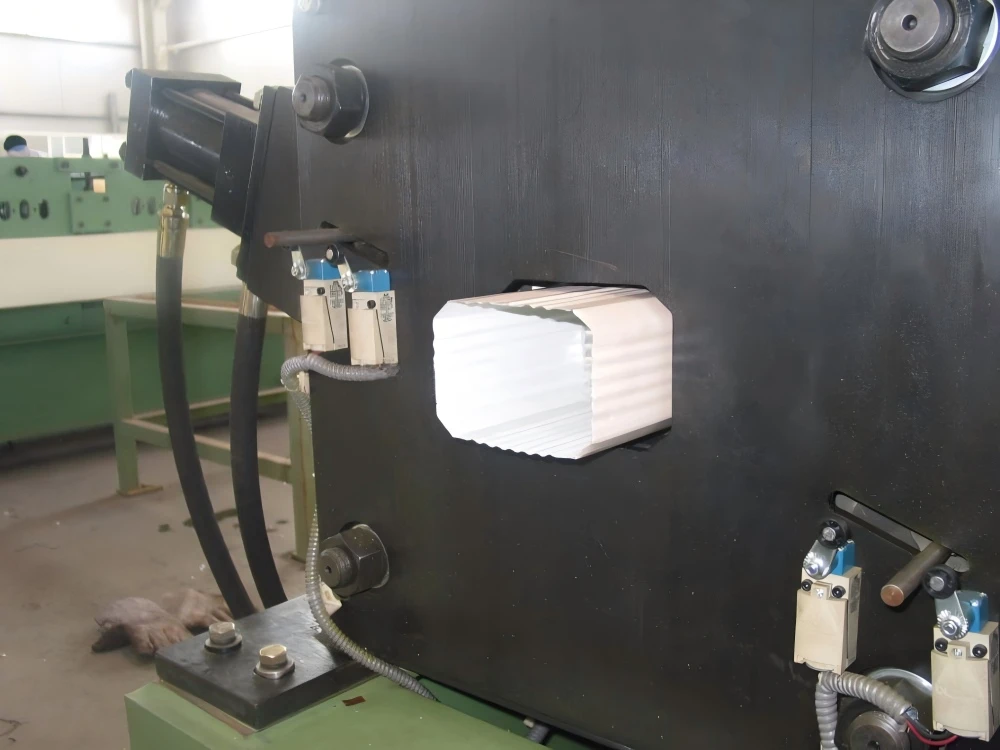
A roll forming machine requires coordinated mechanical, electrical and assembly work before it becomes a production-ready system.
Mechanical Fabrication
Machine structures and related mechanical components are fabricated according to the equipment design.
Precision Machining
Machining work is carried out for components requiring defined dimensions and fitting conditions.
Component Assembly
Individual machine units are assembled into the complete production line.
Electrical Integration
Electrical components and control functions are integrated into the equipment configuration.
Final Commissioning
The completed machine is checked and commissioned before delivery.
IUWON for Metal Roll Forming Solutions
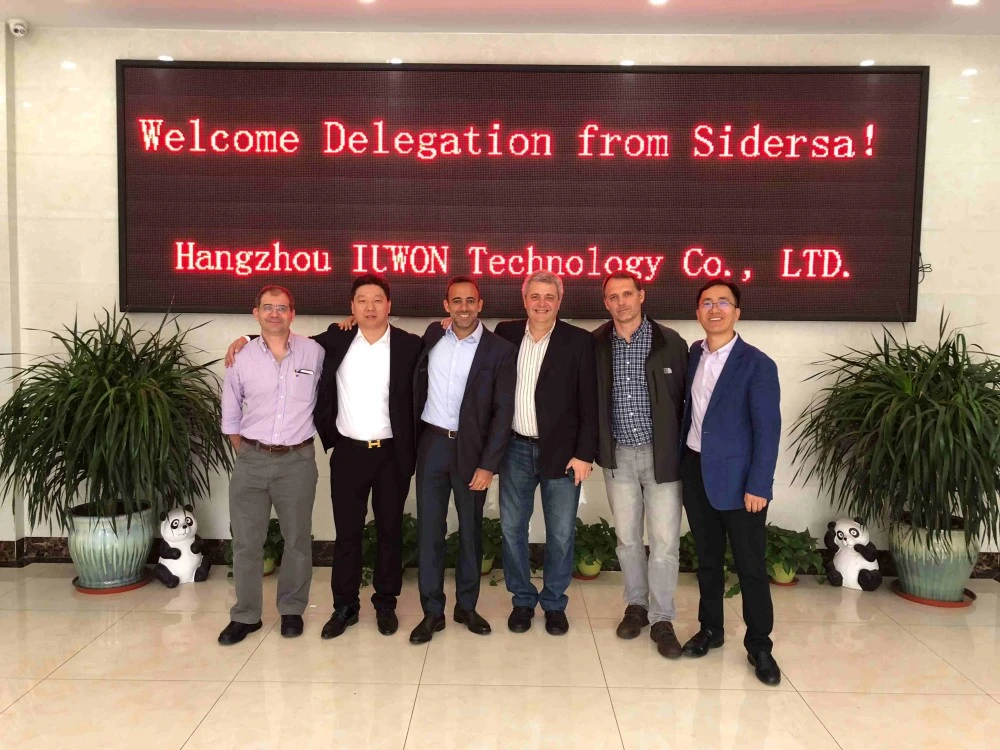
HANGZHOU IUWON TECHNOLOGY CO., LTD. specializes in metal sheet roll forming and has more than 20 years of industry experience. Its capabilities cover mechanical fabrication, precision machining, component assembly, electrical integration and final commissioning.
IUWON serves customers in different markets and provides equipment for metal profile production, with global delivery and technical support available for customers according to their project requirements.
Industry Experience
Global Customer Reach
Integrated Production Capabilities
Support Through Equipment Delivery and Operation
For customers planning a new downspout production line, the finished profile, material specification and production requirements can be used as the starting point for technical evaluation.
Related Roll Forming Solutions
Explore related equipment for building drainage and tubular profiles.
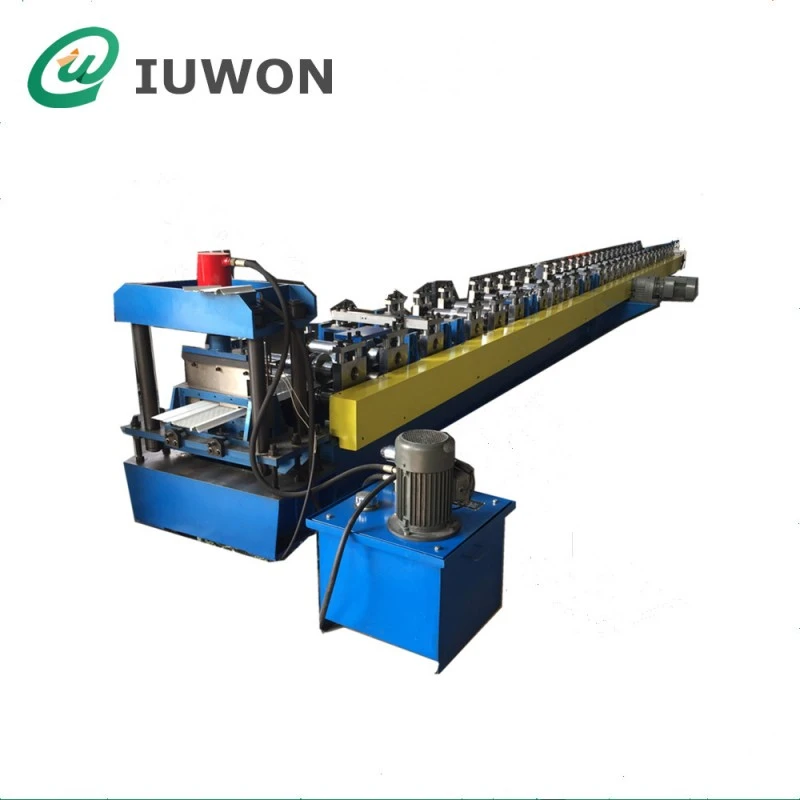
Gutter Roll Forming Machine
Equipment for producing metal gutter profiles used in building drainage systems.
View Machine →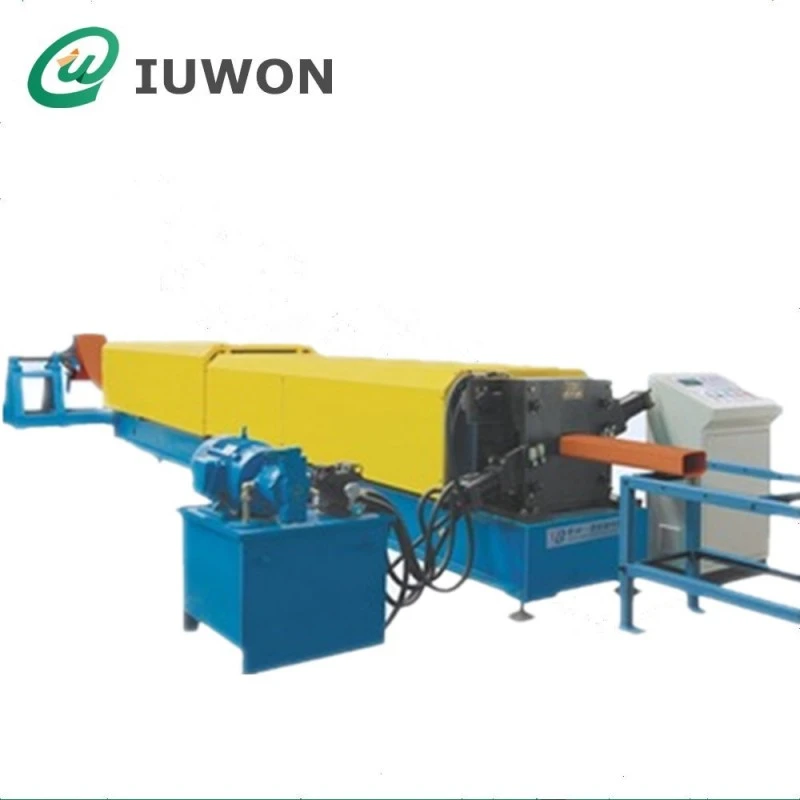
Round Downspout Machine
A forming solution for producing round-profile metal downspouts according to specified dimensions.
View Machine →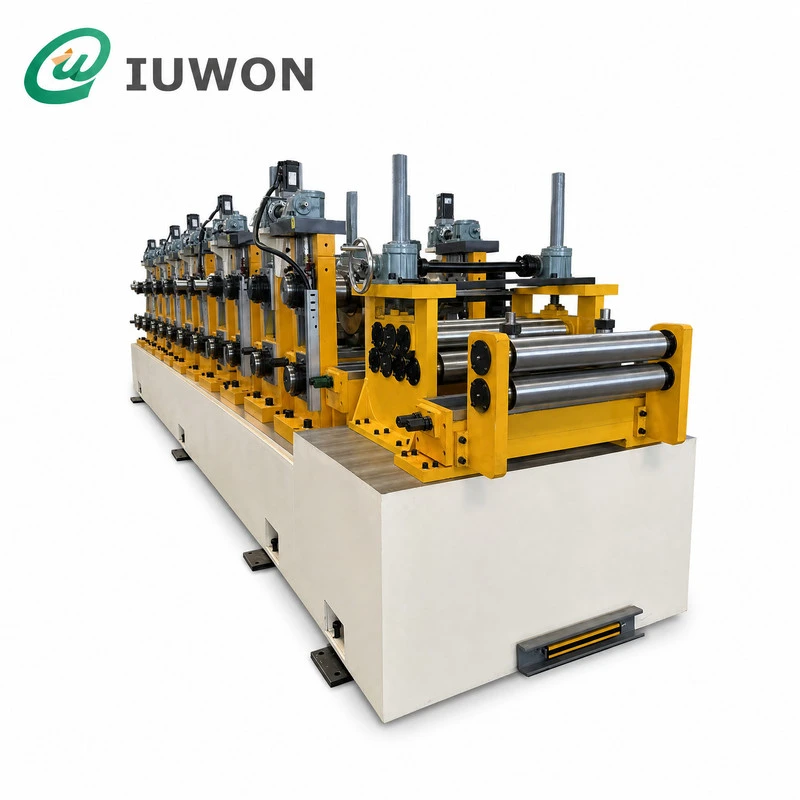
Square Downspout Machine
A machine configuration for square-profile downspout production.
View Machine →
Pipe Roll Forming Machine
Roll forming equipment for producing specified metal pipe or tubular profiles.
View Machine →FAQ
What materials can be used for downspout roll forming?
The material should be confirmed according to the specific machine configuration and product requirement. The listed YG-310 and YG-506 configurations use colored steel sheet.
What downspout profile sizes can the machine produce?
The listed YG-310 configuration is designed for a 134 × 93 mm profile, while the YG-506 configuration is designed for a 118 × 89 mm profile. Custom profile requirements should be evaluated from the customer's drawing and specifications.
What material thickness is supported by the YG-310 and YG-506 models?
Both listed configurations support a material thickness range of 0.45–0.55 mm.
What is the production speed of these downspout machines?
The listed production speed for both YG-310 and YG-506 is 10 m/min.
Can the machine be configured for a custom downspout profile?
Custom profile requirements can be evaluated based on the finished profile drawing, material specification, thickness, yield strength and production requirements.
What information should I provide for a downspout machine quotation?
A profile drawing, profile dimensions, material type, material thickness, yield strength, finished length and expected production requirements are useful for technical evaluation and quotation.
What is the total power of the YG-310 and YG-506?
Both listed configurations have a motor power of 3 kW, hydraulic station power of 7.5 kW and total power of 10.5 kW.
How should I select between different downspout machine configurations?
The selection should be based on the finished profile, material specifications and production requirements. Providing a technical drawing allows the equipment configuration to be evaluated against the actual product.
Have a Downspout Profile in Mind?
Send us your profile drawing and production requirements. We can evaluate the forming requirements and develop the corresponding equipment configuration.
Hangzhou IUWON Technology Co., Ltd. is one of the most professional downspout roll forming machine manufacturers and suppliers in China. Please feel free to buy custom made downspout roll forming machine made in China here from our factory. For price consultation, contact us.
Square Downpipe Roll Forming Machine, fascia roll forming machine, Round Downspout Machine