
-
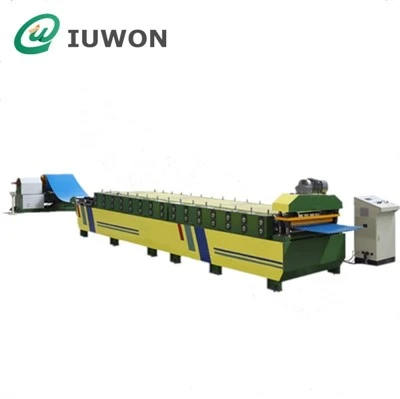
![Photovoltaic Bracket Roll Forming Machine]() Photovoltaic Bracket Roll Forming Machine
The photovoltaic bracket roll forming machine is designed for the continuous production of solar mounting structures, including C/U channels, strut profiles, and customized support rails used in...
-
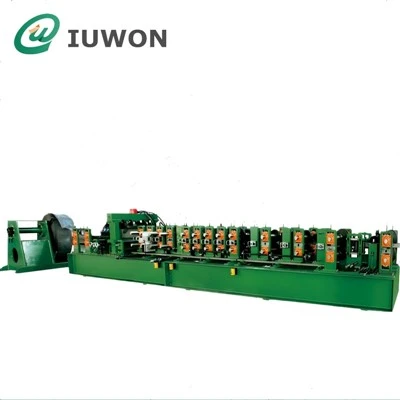
![High Speed Solar Strut Roll Forming Machine]() High Speed Solar Strut Roll Forming Machine
The High Speed Solar Strut Roll Forming Machine is designed for continuous production of solar mounting strut profiles used in photovoltaic support structures.
The machine forms metal strips... -
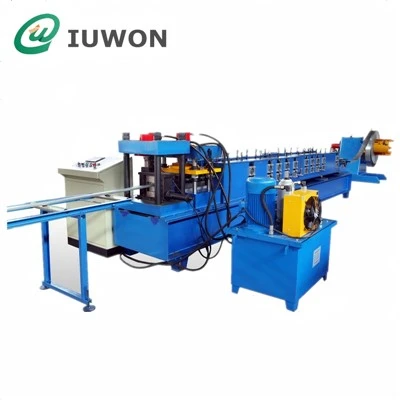
![Solar Mounting Strut Channel Roll Forming Machine]() Solar Mounting Strut Channel Roll Forming Machine
Solar mounting strut channels serve as modular connection members in photovoltaic mounting systems. Their formed steel sections provide mounting surfaces and internal spaces for compatible channel...
-
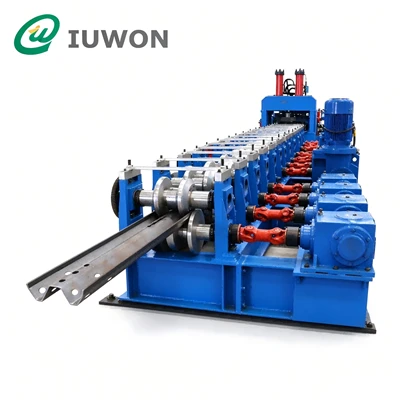
![Solar Panel Structure Roll Forming Machine]() Solar Panel Structure Roll Forming Machine
A Solar Panel Structure Roll Forming Machine manufactures metal profiles used in solar panel support structures, including mounting rails, support channels, purlins, and other structural members...
-
![Roll Forming For The Solar Sector]() Roll Forming For The Solar Sector
Roll forming for the solar sector is used to continuously produce steel profiles for photovoltaic mounting and support structures. The line forms galvanized steel or other specified coil materials...
-
![Solar PV Bracket Roll Forming Machine]() Solar PV Bracket Roll Forming Machine
The Solar PV Bracket Roll Forming Machine is designed for continuous cold forming of steel profiles used in photovoltaic mounting structures. It processes galvanized steel or other specified coil...
-
![Solar Strut Roll Forming Machine]() Solar Strut Roll Forming Machine
The solar strut roll forming machine is a continuous production line designed to manufacture slotted strut channels (C/U-channel profiles) from galvanized or pre-painted steel coil.
These... -
![Solar Uni Strut Channel Making Machine]() Solar Uni Strut Channel Making Machine
The Solar Uni Strut Channel Making Machine is a dedicated roll forming line engineered exclusively for manufacturing international standard slotted unistrut channels widely adopted in solar panel...
-
![Solar Panel Mounting Structure Roll Forming Machine]() Solar Panel Mounting Structure Roll Forming Machine
Our Solar Panel Mounting Structure Roll Forming Machine is a dedicated fully automatic cold roll forming line for manufacturing photovoltaic mounting frames and support profiles for solar panel...
-
![PV Support Bracket Roll Forming Machine]() PV Support Bracket Roll Forming Machine
Our PV Support Bracket Roll Forming Machine is a dedicated continuous cold roll forming production line designed for manufacturing photovoltaic mounting brackets used in solar power systems.
... -
![Solar Panel Frame Roll Forming Machine]() Solar Panel Frame Roll Forming Machine
The Solar Panel Frame Roll Forming Machine is designed to manufacture metal frame sections used around photovoltaic modules. The formed profiles provide the perimeter structure that supports the...
-
![Solar PV Bracket Roll Forming Machine]() Solar PV Bracket Roll Forming Machine
The Solar PV Bracket Roll Forming Machine is designed to manufacture steel profiles used in photovoltaic mounting structures. It converts galvanized steel or other structural coil materials into...


Solar Panel Frame Strut Roll Forming Machine Factory
Solar mounting systems require more than a basic roll forming line. Strut channels, mounting rails, purlins, brackets, ground-mounting members and other PV profiles can differ significantly in section geometry, material thickness, hole patterns, production length and load requirements.
IUWON designs Solar Panel Frame Strut Roll Forming Machine solutions around these production variables. From coil processing and leveling to servo feeding, punching, roll forming, cutting and finished-profile collection, the line can be configured according to the actual profile drawing and production requirements.
The result is a production line matched to the solar mounting profile you manufacture—not a standard machine selected only by nominal dimensions.
Solar Mounting Profiles Your Production Line Can Manufacture
A solar mounting structure normally consists of multiple cold-formed profiles. The required machine configuration changes with the profile section, material thickness, hole pattern and final application.
| Solar Profile | Typical Profile Forms | Main Production Considerations |
|---|---|---|
| Solar Strut Channel | C channel, U channel, slotted channel | Continuous slot punching, hole pitch, section accuracy |
| Solar Mounting Rail | Rails, support channels, structural rails | Straightness, surface protection, length accuracy |
| Solar Purlin | C, Z, U and customized sections | Material thickness, forming force, structural dimensions |
| PV Mounting Bracket | L, U, Z and customized sections | Punching pattern, short-length cutting, forming sequence |
| PV Mounting Profile | Customized PV structural sections | Profile geometry, tooling design, dimensional tolerance |
| Solar Ground Mounting Structure | Posts, beams, rails and structural members | Heavy-gauge forming, punching, structural rigidity |
| Solar Mounting Accessories | Connection and secondary profiles | Flexible tooling and multi-profile production |
This product range allows one solar-profile production strategy to cover different parts of rooftop, commercial, industrial and ground-mounted PV structures.
Match the Machine to Your Solar Mounting Structure
Different PV installations place different requirements on the profiles being manufactured.

Rooftop Solar Mounting
Rooftop systems commonly require compact rails, strut channels, brackets and connection profiles. The production line may need:
Precise mounting holes and slots
Consistent profile dimensions
Accurate cut lengths
Protection of galvanized surfaces
Flexible production for different rail or channel sizes

Ground-Mounted Solar Structures
Ground-mounted systems generally use longer and more structural profiles, including posts, beams, purlins and mounting rails.
The machine configuration may therefore require:
Heavier material capability
Larger forming stations and shafts
Higher punching capacity
Longer profile handling
Structural profile dimensional control

Utility-Scale PV Structures
Large solar projects can involve high-volume production of standardized structural members. Production planning places greater emphasis on:
Continuous coil processing
Automated punching
Consistent hole pitch
Long-run dimensional stability
High-volume cut-to-length production
Reduced manual intervention
The correct machine is determined by the actual profile and production target rather than by the project name alone.
How Solar Profile Requirements Determine Machine Configuration
Before selecting a roll forming line, several profile parameters need to be defined.
| Profile Requirement | Effect on Machine Configuration |
|---|---|
| Material thickness | Determines forming force, shaft strength and tooling design |
| Strip width | Determines feeding and roll tooling dimensions |
| Profile height and width | Determines forming station and tooling geometry |
| Material grade | Affects forming force and roll design |
| Hole diameter | Determines punching tooling |
| Hole/slot shape | Determines punch and die configuration |
| Hole pitch | Determines servo feeding and punching synchronization |
| Profile length | Determines cutting and material handling requirements |
| Production speed | Influences feeding, punching and forming system selection |
| Number of profile sizes | Influences tooling and changeover strategy |
| Surface finish requirement | Influences roll design and material-contact treatment |
A profile drawing is therefore more useful than a general machine category when determining the actual configuration.
Solar Profile Production Problems That Affect Installation
The purpose of a solar profile roll forming line is not simply to produce a recognizable C, U or Z section. The finished profile must remain compatible with the downstream installation process.
Hole Position Must Follow the Profile Design
Solar mounting components are commonly connected through repeated holes or slots. Errors in:
Hole pitch
Hole center position
Hole diameter
Slot length
Punching sequence
can create difficulties during assembly.
For profiles requiring continuous perforation, the punching system needs to work in synchronization with material feeding and roll forming.
01
Long Profiles Require Control of Straightness
Mounting rails, purlins and ground-structure members can be produced in long lengths. Excessive:
Bow
Twist
Camber
Edge deformation
can affect handling and connection during installation.
The forming pass design, roll alignment, material guidance and cutting method all contribute to finished-profile straightness.
02
Galvanized Material Requires Surface Protection
Many solar mounting profiles use galvanized steel because the finished structures are exposed to outdoor conditions.
During forming, unnecessary:
Scratches
Roll marks
Edge damage
Local deformation
can compromise the appearance and protective coating of the profile.
Roll tooling and material guidance should therefore be designed according to the material and surface requirements.
03
Different Profiles Create Different Changeover Requirements
A solar-profile manufacturer may produce several sections for different customers or projects.
Changing between profiles can involve:
Roll tooling
Punching dies
Feeding settings
Cutting parameters
Forming positions
For multi-profile production, the machine can be configured around the number of profiles, frequency of changeovers and required setup method.
04
Solar Mounting Profile Roll Forming Process
A typical production line can be arranged as:
Coil Loading → Decoiling → Leveling → Servo Feeding → Punching → Roll Forming → Cutting → Profile Collection
The actual sequence depends on the product.
For a perforated strut channel, for example:
Coil → Leveling → Servo Feeding → Continuous Punching → Roll Forming → Cut-to-Length
For a heavy ground-mounting member, the line may require:
Coil → Decoiling → Leveling → Heavy-Duty Punching → Roll Forming → Cutting → Collection
This modular arrangement allows punching and cutting operations to be selected according to the profile rather than forcing every solar product through an identical production process.
Punching and Cutting for Solar Mounting Profiles
Punching is one of the major differences between general structural roll forming and solar-profile production.
Depending on the profile drawing, the line can be designed around:
Round holes
Oblong holes
Slots
Repeated hole patterns
Multiple hole rows
End holes
Customized connection openings
The punching system must correspond to the material thickness, hole geometry, pitch and production speed.
Cut-to-Length Control
Solar profiles may require different finished lengths according to installation design.
The cutting system can be configured for:
Fixed-length production
Multiple programmed lengths
High-frequency cutting
End cutting after forming
Cut-to-length synchronization
For long rails and structural members, accurate cutting also reduces unnecessary adjustment during downstream assembly.
Machine Configuration for Different Solar Profiles
There is no single machine configuration suitable for every solar mounting profile.
| Production Requirement | Possible Configuration |
|---|---|
| Standard C/U profiles | Conventional roll forming system |
| Continuous slotted channels | Servo-controlled punching + roll forming |
| Multiple hole patterns | Programmable punching system |
| Heavy-gauge ground structures | Reinforced forming structure and tooling |
| Multiple profile sizes | Quick-change tooling or flexible tooling configuration |
| Different production lengths | Programmable cut-to-length system |
| High-volume production | Continuous decoiling, feeding, punching and forming |
| Customized PV profiles | Profile-specific roll tooling |
| Reduced manual setup | Recipe-based PLC/HMI control and automatic positioning where applicable |
The final configuration should be confirmed against the actual production drawing and required output.
Solar Panel Frame Strut Roll Forming Machine Specifications
Typical specifications can be configured according to the target profile:
| Item | Typical Configuration |
|---|---|
| Material | Galvanized steel, carbon steel and other specified materials |
| Material Thickness | Approx. 0.8–3.0 mm, depending on profile |
| Profile Type | C, U, Z, strut, rail, purlin and customized sections |
| Forming Speed | Configured according to profile and punching requirements |
| Forming Stations | Determined by profile geometry |
| Shaft Diameter | Selected according to material thickness and forming load |
| Punching | Hydraulic or servo punching according to production requirements |
| Punching Pattern | Round holes, slots and customized patterns |
| Cutting | Hydraulic or servo-controlled cut-to-length |
| Control System | PLC + HMI |
| Decoiler | Selected according to coil width and coil weight |
| Drive System | Gearbox-driven forming stations |
| Tooling Material | Selected according to material and expected production volume |
Note: The final technical specification is determined after reviewing the profile drawing, material grade, thickness, hole pattern, finished length and required production speed.
Solar Mounting Roll Forming Machines by Profile
Solar Strut Channel Roll Forming Machine
Designed for C-shaped and slotted channel production, with configuration centered on continuous punching, hole positioning and dimensional consistency.
Explore → Solar Strut Channel Roll Forming Machine
Solar Mounting Rail Roll Forming Machine
Designed for PV mounting rails and structural rail profiles where straightness, surface condition and finished-length accuracy are important.
Explore → Solar Mounting Rail Roll Forming Machine
Solar Purlin Roll Forming Machine
Used for C, Z, U and customized purlin sections. Machine configuration depends strongly on material thickness, profile height and structural requirements.
Explore → Solar Purlin Roll Forming Machine
PV Mounting Bracket Roll Forming Machine
Configured for mounting brackets and connection profiles requiring dedicated punching, forming and cutting arrangements.
Explore → PV Mounting Bracket Roll Forming Machine
PV Mounting Profile Roll Forming Machine
For customized PV structural profiles that do not fit standard rail, strut or purlin categories.
Explore → PV Mounting Profile Roll Forming Machine
Solar Ground Mounting Structure Roll Forming Machine
Designed around structural members used in ground-mounted PV systems, including posts, beams, rails and related sections.
Explore → Solar Ground Mounting Structure Roll Forming Machine
Solar Mounting Accessories Roll Forming Machine
For secondary PV mounting profiles and customized components requiring flexible forming and punching configurations.
Explore → Solar Mounting Accessories Roll Forming Machine
One Production Platform, Multiple Solar Profile Requirements
A solar mounting manufacturer may not produce only one profile throughout the year. Product specifications can change with:
Solar installation type
Structural design
Customer requirements
Material thickness
Connection method
Profile dimensions
Project-specific hole patterns
For this reason, IUWON evaluates the profile, material, punching pattern and production target together before determining the machine configuration.
Whether the requirement is a continuously perforated strut channel, a long mounting rail, a heavy ground-structure member or a customized PV profile, the forming line can be developed around the finished product.
FAQ
What profiles can a solar panel frame strut roll forming machine produce?
Depending on machine configuration, it can produce strut channels, mounting rails, purlins, brackets, ground-mounting profiles and other customized PV structural sections.
Can the machine punch holes and slots automatically?
Yes. The line can be equipped with an automatic punching system for predefined hole and slot patterns. The punching method depends on material thickness, opening geometry, pitch and production speed.
Can one machine produce multiple solar mounting profiles?
It can, depending on the profile similarity and tooling configuration. Multiple profiles may require interchangeable tooling, additional tooling sets or a more flexible machine configuration.
What information is needed to design the machine?
A profile drawing is the most important starting point. Material grade, thickness, coil width, hole pattern, finished length, required speed and expected production volume should also be provided.
Can the machine process galvanized steel?
Yes, when the machine is configured for the specified galvanized material and thickness. Roll tooling and material guidance should be selected to minimize unnecessary surface damage.
Is the punching system installed before or after roll forming?
It depends on the profile and punching requirement. Many solar profiles use pre-punching before forming, while certain operations may require punching after forming.
How do I choose between a solar strut, rail, purlin and ground-structure machine?
Start with the finished profile rather than the application name. The cross-section, thickness, hole pattern, length and production volume determine the appropriate forming and punching configuration.
Can IUWON design a customized solar profile roll forming line?
Yes. The machine can be engineered around the customer's profile drawing and production requirements, including forming, punching, cutting and other required line functions.
Hangzhou IUWON Technology Co., Ltd. is one of the most professional solar panel frame strut roll forming machine manufacturers and suppliers in China. Please feel free to buy custom made solar panel frame strut roll forming machine made in China here from our factory. For price consultation, contact us.
solar panel frame strut roll forming machine, Photovoltaic Bracket Roll Forming Machine, Solar PV Bracket Roll FormingMachine