
-
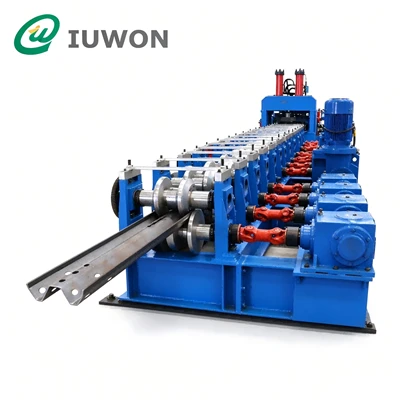
![W Beam Guardrail Highway Safety Roll Forming Machine]() W Beam Guardrail Highway Safety Roll Forming Machine
The W Beam Guardrail Highway Safety Roll Forming Machine is designed to manufacture two-wave corrugated steel beams used in highway roadside barriers, median barriers, bridge approaches, and other...
-
![Guardrail Roll Former]() Guardrail Roll Former
The Guardrail Roll Forming Machine is designed to produce corrugated steel barrier beams for highway medians, roadside protection, bridges, and road infrastructure projects. It forms steel coils...
-
![Highway Guardrail Making Machine]() Highway Guardrail Making Machine
A highway guardrail making machine helps manufacturers convert steel coils into finished road barrier beams for highway projects, bridge approaches, and road infrastructure...
-
![Highway Guardrail Machine]() Highway Guardrail Machine
The Highway Guardrail Machine produces steel road barriers for highway construction, bridge approaches, and road infrastructure projects. It can be configured for two-wave W-beam and three-wave...
-
![Highway Guardrail Forming Machine]() Highway Guardrail Forming Machine
Highway guardrails are corrugated steel safety barriers installed along roads, bridges, ramps, and medians. Their profiles must match the specified barrier design, while mounting holes must align...
-
![Municipal Road Guardrail Roll Forming Machine]() Municipal Road Guardrail Roll Forming Machine
The Municipal Road Guardrail Roll Forming Machine is designed to produce formed steel barrier beams for urban roads, municipal streets, traffic islands, bridge approaches, pedestrian protection...
-
![Guard Rail Roll Forming Machine]() Guard Rail Roll Forming Machine
The Guard Rail Roll Forming Machine is designed to manufacture corrugated steel barrier beams used in roadside safety systems. The finished sections are installed along highways, expressways,...
-
![Palisade Roll Forming Machine]() Palisade Roll Forming Machine
The Palisade Roll Forming Machine is designed to manufacture formed steel sections for palisade fencing systems. The finished profiles are used as vertical pales, rails, posts, and related fence...
-
![Guardrail Machine]() Guardrail Machine
The guardrail roll forming machine is engineered for the continuous production of highway guardrails such as W-beam and thrie-beam profiles. Designed for infrastructure and road safety projects,...
-
![Highway Guardrail Roll Forming Machine]() Highway Guardrail Roll Forming Machine
The highway guardrail roll forming machine is a specialized production system designed to manufacture W-beam and thrie-beam guardrails used in highway and road safety infrastructure. It converts...


Guardrail Profiles for Different Road Safety Requirements
Guardrail Profiles for Highway and Infrastructure Projects
Guardrail production is not limited to one fixed profile. Different road systems, regional standards and project specifications can require different beam geometries, hole patterns and dimensions.
IUWON provides forming solutions for commonly used guardrail profiles and can configure the machine around customer drawings and production requirements. W-beam and thrie-beam profiles are among the main production types, while other related components can also be considered as part of a complete guardrail production project.

W-Beam Guardrail
The W-beam profile is widely used for roadside and highway barrier systems. The forming line progressively shapes steel coil into the required corrugated cross-section while maintaining dimensional consistency along the finished beam.

Thrie-Beam Guardrail
Thrie-beam guardrails feature a deeper corrugated profile and are used in road safety systems where the specified barrier design requires this configuration. Machine tooling and forming stations are configured according to the required profile.

Customized Guardrail Profiles
Guardrail dimensions, hole patterns and material specifications can vary between projects. Customized tooling and machine layouts can therefore be developed according to profile drawings and applicable project requirements.

Guardrail Components
A complete guardrail project may involve beams, posts, spacers and other structural components. Depending on the project scope, additional forming or handling equipment can be integrated into the production setup.
What a Guardrail Production Line Needs to Achieve
From Steel Coil to Finished Guardrail
A guardrail production line has to control more than the forming shape itself. For infrastructure manufacturers, material feeding, hole positioning, profile geometry and cutting length all need to remain consistent throughout continuous production.
A typical production sequence is:
Steel Coil → Decoiling → Leveling → Servo Feeding → Punching → Roll Forming → Cutting → Run-Out / Stacking
The exact arrangement can be changed according to the guardrail profile and production requirements. Punching may be arranged before forming or integrated into the production line, depending on the required hole pattern and process design.

Decoiling
The coil is loaded onto a heavy-duty decoiler and continuously supplied to the production line.

Leveling
The leveling system helps prepare the strip for stable feeding and subsequent forming.

Punching
Mounting holes can be produced according to the required hole pattern. Hydraulic or servo-controlled punching systems can be selected according to the machine configuration.

Roll Forming
Multiple forming stations gradually shape the steel strip into the required W-beam, thrie-beam or customized guardrail profile.

Cutting
The formed profile is cut to the specified finished length with controlled positioning.

Stacking
A run-out table or stacking system can be used to collect finished guardrail beams for subsequent handling.
How Guardrail Requirements Determine Machine Configuration
There is no single machine configuration suitable for every guardrail project. The forming system should be developed around the actual profile and production requirements.
Before selecting the equipment, buyers should define several key parameters.
Guardrail Profile
Specify whether the project requires: W-beam, Thrie-beam, or Customized guardrail profile.
Material
The machine can be configured for materials such as High-strength steel or Galvanized steel. Material grade and mechanical properties should be confirmed before machine design.
Material Thickness
IUWON's current Guardrail page lists a typical thickness range of 2.5–4.0 mm, with customization available according to machine configuration. This should be treated as a project-dependent range rather than a universal machine specification.
Hole Pattern
Hole diameter, spacing, quantity and position directly affect the punching system and feeding configuration.
Finished Length
Required beam length determines the cutting and discharge configuration.
Production Capacity
Expected production volume and required operating speed should be considered when determining the forming, feeding, punching and handling configuration.
What Matters in Guardrail Forming
Guardrail production involves relatively demanding forming conditions, particularly when high-strength steel and thicker materials are involved.
High-Strength Steel Forming
High-strength material can increase forming requirements and springback. The roller design and forming sequence need to be matched to the selected material.
Profile Accuracy
Each forming station progressively changes the strip cross-section. Proper roller design and alignment help maintain the required profile geometry throughout production.
Hole Position Accuracy
Guardrail beams normally require regularly positioned mounting holes. The feeding and punching system therefore needs to coordinate accurately with the production cycle.
Material Surface Protection
When galvanized or coated steel is used, the forming process needs to consider surface protection and material handling to help minimize unnecessary surface damage.
Downstream Processing
Some guardrail projects require downstream galvanizing or coating. The production plan should therefore consider how formed and cut profiles will move into subsequent processes.
Build the Production Line Around Your Guardrail Profile
A complete line can be configured from several functional units.
| Production Unit | Main Function |
|---|---|
| Heavy-Duty Hydraulic Decoiler | Uncoils steel strip for continuous production |
| Leveling System | Prepares the strip for stable feeding |
| Servo Feeder | Controls material feeding and punching positioning |
| Punching Unit | Produces required mounting holes |
| Roll Forming Machine | Forms the guardrail cross-section |
| Cutting System | Cuts finished beams to specified lengths |
| Run-Out Table | Transfers finished guardrails |
| Stacking System | Collects and organizes finished profiles |
Optional equipment may include post-forming systems, automated stacking and handling equipment, or coordination with external galvanizing processes.
Guardrail Forming, Punching and Cutting
The machine configuration can be developed according to the specific requirements of the guardrail project rather than relying on one fixed specification.
High-Strength Material Compatibility
Designed around the requirements of high-strength steel and galvanized steel applications.
Adjustable Forming Configuration
Forming stations and tooling are configured according to the required profile geometry and material specifications.
Hydraulic or Servo Punching
Punching can be configured using hydraulic or servo-controlled systems depending on the required production setup.
PLC-Controlled Operation
A PLC control system coordinates machine operation and production sequences for automated manufacturing.
Controlled Cutting
The cutting system is configured around the required finished length and production process.
Continuous Production
The complete line combines material handling, forming and cutting into a continuous production process for repetitive guardrail manufacturing.

Where Guardrail Production Lines Are Used
Guardrail forming equipment serves a range of infrastructure and protective barrier applications.

Production of roadside barriers for highways, expressways and major transportation routes.
Guardrail profiles used around bridges, elevated roads and other structures requiring protective barriers.
Solutions for city roads, traffic separation areas and other municipal infrastructure projects.
Guardrail production for roadside protection on rural and regional road networks.
Guardrail-type profiles can also be used for protective barriers in factories, logistics facilities and storage environments.
Designed for Consistent Guardrail Production
For guardrail manufacturers, consistency is important because finished beams need to maintain the required profile geometry, hole positioning and finished length throughout production.
IUWON's current Guardrail solution highlights several areas of machine design:
Controlled Forming Sequence
Progressive forming is used to gradually develop the required cross-section.
Precision Tooling
Rollers and tooling are designed according to the required profile.
Stable Transmission
The drive system coordinates the forming stations during continuous operation.
Repeatable Production
The production system is designed to maintain consistent output across repeated production batches.
From Project Requirements to Production Line
Instead of selecting a machine only by name, the configuration process should begin with the actual guardrail profile and production target.
Requirement Analysis
Confirm: Guardrail profile, Material grade, Material thickness, Coil specifications, Hole pattern, Finished length, Required production volume.
Technical Solution
IUWON develops the forming layout, punching method and machine configuration around the confirmed requirements.
Proposal & Confirmation
Technical specifications, configuration and quotation are reviewed before the project is confirmed.
Machine Manufacturing
Mechanical fabrication, precision machining, assembly and electrical integration are carried out during the machine production stage.
Testing & Validation
The completed equipment is tested and the forming process is checked against the agreed production requirements.
Delivery & Support
The completed line is prepared for delivery, with installation and training support available according to the project arrangement.
What Should You Prepare Before Requesting a Quote
For a more accurate technical proposal, buyers should prepare as much of the following information as possible:
Profile Drawing
Provide the complete W-beam, thrie-beam or customized guardrail cross-section drawing.
Material Information
Specify steel type, grade, thickness and relevant mechanical properties.
Punching Drawing
Provide hole diameter, hole spacing, hole quantity and hole position.
Finished Length
Confirm the required cutting length and length tolerance.
Production Target
Indicate expected production volume or required production speed.
Electrical Requirements
Provide the local voltage and frequency requirements for the machine.
This information allows the machine configuration to be discussed around the actual production requirement rather than a generic machine model. IUWON's customization process also emphasizes profile drawings, material specifications, punching/notching requirements, production speed and local electrical requirements during project analysis.
IUWON: Your Guardrail Roll Forming Machine Partner
From Profile Engineering to Machine Manufacturing
HANGZHOU IUWON TECHNOLOGY CO., LTD. specializes in the metal sheet roll forming industry, with more than 20 years of industry experience and customers in over 50 countries.
For guardrail production projects, IUWON develops machine configurations around profile requirements, material specifications, punching patterns and production targets. Its manufacturing process covers mechanical fabrication, precision machining, component assembly, electrical integration and final commissioning.
This production-oriented approach allows the equipment configuration to be developed around the actual requirements of highway barriers, municipal road systems, bridge protection and other infrastructure applications.

More than two decades of experience in metal sheet roll forming and production equipment.
Manufacturing covers mechanical fabrication, precision machining, assembly, electrical integration and final commissioning.
Machine configurations can be developed around W-beam, thrie-beam and customized guardrail profile requirements.
IUWON reports serving customers in more than 50 countries and provides global delivery and technical support for roll forming projects.
Related Roll Forming Solutions
Explore related equipment according to your required safety barrier profiles.

Highway Guardrail Roll Forming Machine
Production equipment for W-beam and thrie-beam highway safety barriers.
View Machine →
Guard Rail Roll Forming Machine
Continuous forming solutions for corrugated steel roadside barrier profiles.
View Machine →
Municipal Road Guardrail Roll Forming Machine
Configured for guardrail production used in urban roads, municipal infrastructure and traffic protection systems.
View Machine →
Guardrail Machine
A production solution for highway guardrails and related road safety profiles.
View Machine →FAQ
What profiles can the machine produce?
The equipment can be configured for W-beam, thrie-beam and customized guardrail profiles according to the required profile drawing and production specifications.
What materials can be used for guardrail production?
IUWON's current solution supports high-strength steel and galvanized steel. The exact material grade and thickness should be confirmed during machine design.
What material thickness can be processed?
The current Guardrail page lists a typical range of 2.5–4.0 mm, with the final range depending on the machine configuration and project requirements.
Can the line produce mounting holes?
Yes. A punching unit can be integrated into the production line, with hydraulic or servo-controlled punching options depending on the required configuration.
Can the machine be configured for different guardrail standards?
The machine can be designed around different profile dimensions, punching patterns and project specifications. Where a specific regional or project standard applies, the requirements should be confirmed during technical design.
What information is needed for a quotation?
A profile drawing, material grade, thickness, hole pattern, finished length, production target and electrical requirements are useful starting points for machine configuration.
Can the production line include decoiling, punching, forming and cutting?
Yes. A typical configuration can integrate a heavy-duty decoiler, leveling system, feeding system, punching unit, roll forming machine, cutting system and run-out or stacking system.
How long does machine manufacturing take?
The current IUWON Guardrail page indicates a typical manufacturing period of approximately 90–150 days depending on machine complexity. The actual project schedule should be confirmed with the technical and production teams.
Build Your Guardrail Production Line Around Your Project
Have a W-Beam, Thrie-Beam or Custom Guardrail Profile?
Send us your guardrail drawing, material specifications, punching requirements and production target. IUWON can review the technical requirements and develop a suitable forming, punching and cutting configuration for your production line.
Hangzhou IUWON Technology Co., Ltd. is one of the most professional guardrail roll forming machine manufacturers and suppliers in China. Please feel free to buy custom made guardrail roll forming machine made in China here from our factory. For price consultation, contact us.
guard rail roll forming machine, Guardrail Machine, Highway Guardrail Roll Forming Machine