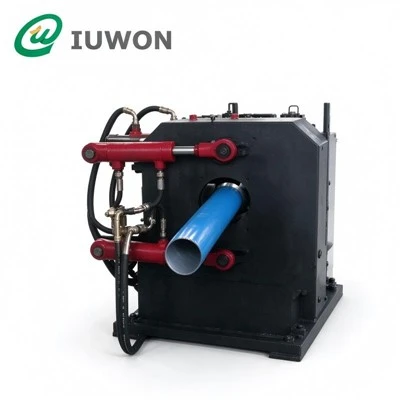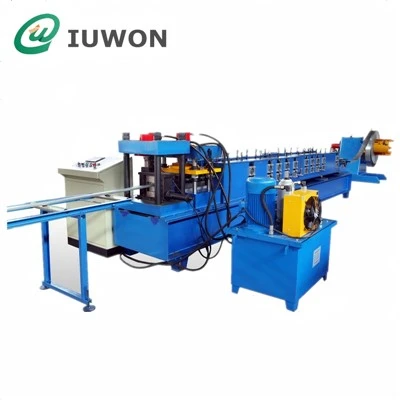

Hangzhou IUWON Technology Co., Ltd. is one of the most reliable manufacturers and suppliers of downspout pipe roll forming machine in China. With abundant experience, we warmly welcome you to buy custom made downspout pipe roll forming machine from our factory. Good service and reasonable price are available.
Downspout Pipe Roll Forming Machine Specifications
| Forming process | Continuous cold roll forming |
|---|---|
| Available profile designs | Round, square, rectangular, or customized, subject to machine configuration |
| Compatible materials | Galvanized steel, pre-painted steel, aluminum; stainless steel subject to confirmation |
| Material thickness | 0.4–0.8 mm reference range |
| Forming speed | 10–15 m/min reference range |
| Cutting system | Hydraulic cutting; other arrangements subject to design |
| Length measurement | Encoder-based measurement with PLC control, subject to configuration |
| Control interface | PLC control system |
| Pipe dimensions | Determined by the approved profile drawing |
| Coil width | Calculated from the developed profile and joint allowance |
| Finished pipe length | Set according to order requirements |
| Power supply | Voltage and frequency confirmed for the destination market |
These figures are preliminary selection references, not guaranteed specifications for every model. Final material limits, operating speed, tooling, cutting accuracy, electrical requirements, and machine dimensions must be confirmed against the approved product drawing and technical offer.
Start with the Finished Pipe Drawing, Not a Standard Machine Model
The cross-section of a downspout determines much of the equipment's mechanical design. Before selecting a line, the manufacturer should define the product geometry and the features that affect installation.
| Drawing Detail | Why It Matters to Machine Design |
|---|---|
| Pipe diameter or side dimensions | Determines the forming geometry and roller arrangement |
| Wall thickness | Affects forming force, springback, and tooling clearance |
| Corner radius for rectangular pipes | Influences forming sequence and finished appearance |
| Longitudinal joint design | Determines whether dedicated seaming or edge-forming equipment is required |
| Cut-end condition | Defines blade geometry and the need for additional finishing |
| Connection or fitting requirements | Determines whether downstream operations or separate equipment are needed |
| Finished length | Influences cutting arrangement and product handling |
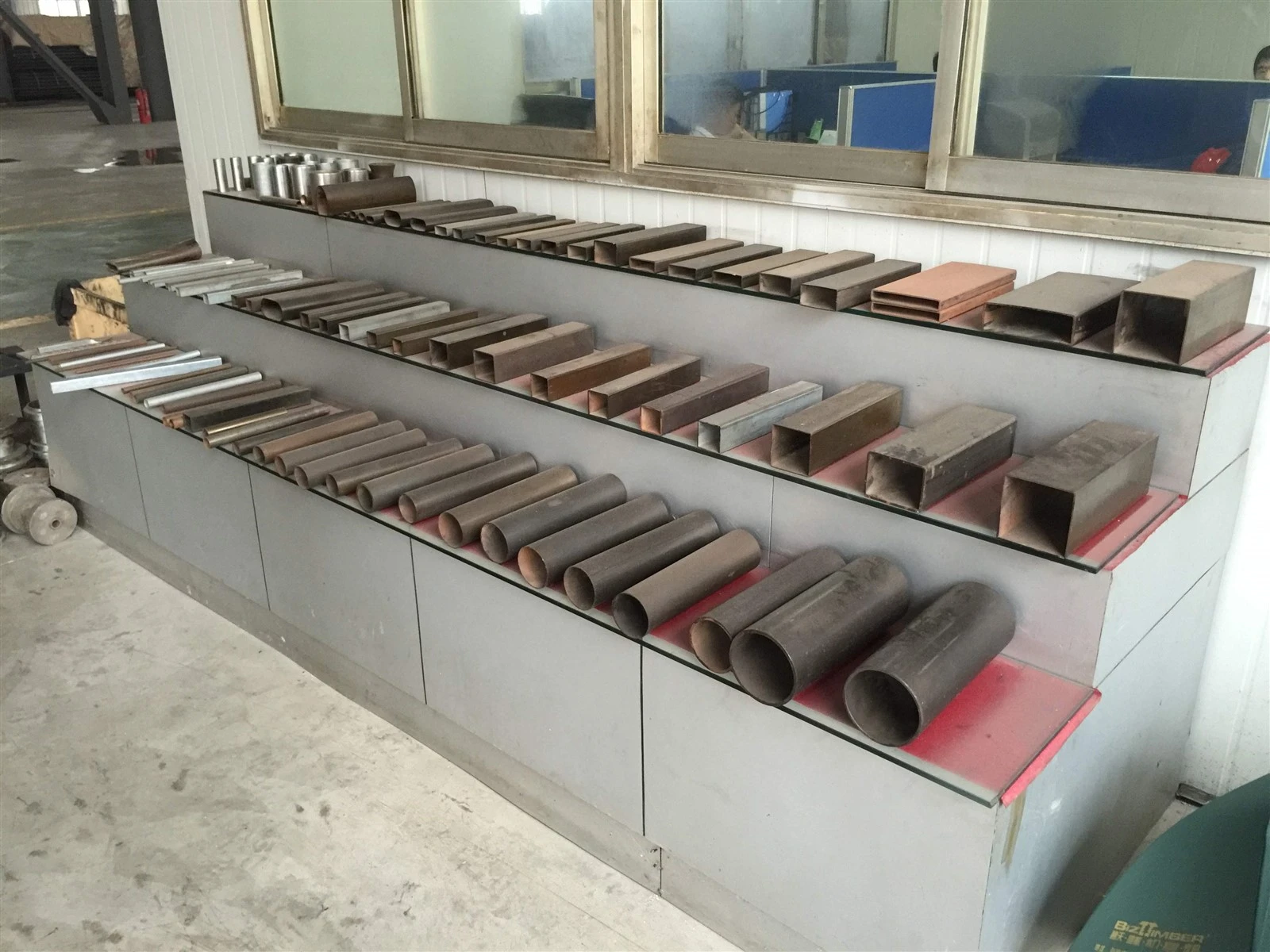
A round pipe and a rectangular downspout should not automatically be treated as interchangeable products. Their forming paths differ, and rectangular sections introduce corner-forming requirements that do not apply in the same way to circular profiles.
Providing a dimensioned drawing or physical sample allows the engineering team to evaluate the required forming stations, tooling arrangement, and auxiliary equipment before the machine configuration is finalized.
A flat metal strip does not become a finished downspout in one bending operation. The forming stations gradually introduce curvature or corners until the strip reaches its specified cross-section.
The forming sequence needs to account for three important factors:
- Progressive deformation: Each station should introduce a controlled amount of bending instead of forcing the material into its final shape too quickly.
- Material springback: The metal may partially recover after leaving a roller station. The tooling must account for the material grade, thickness, and target geometry.
- Surface contact: Pre-painted and coated materials require suitable roller finishing, alignment, and pressure control to limit scratches and coating damage.
These considerations affect both appearance and dimensional consistency. Scratches can make painted pipes harder to sell in appearance-sensitive markets, while inconsistent forming can create problems when pipes are fitted to elbows, connectors, or wall brackets.
Roller material, surface treatment, station count, and forming geometry should therefore be selected for the actual product rather than specified solely by a general machine category.
Configure the Joining Process for the Required Pipe Construction
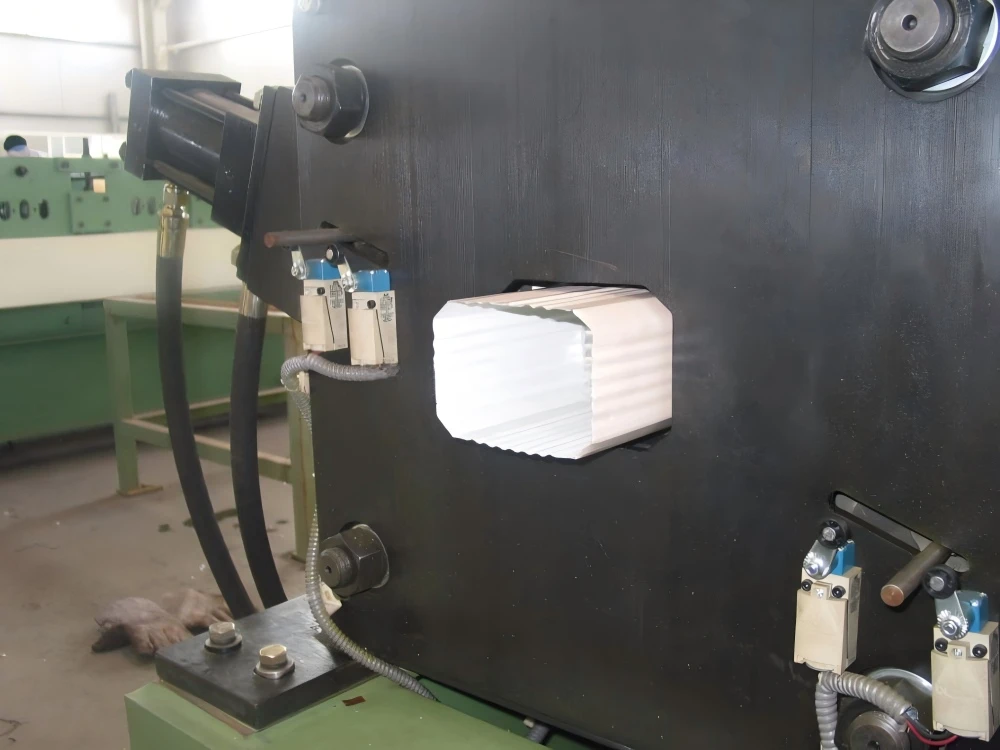
The longitudinal joint is an important part of a metal downspout's construction. The correct joining arrangement depends on how the strip edges meet and how the finished pipe is intended to be assembled.
| Production Requirement | Engineering Consideration |
|---|---|
| Interlocking seam | Edge geometry and seam-forming tooling must be designed together |
| Consistent joint appearance | Strip guidance and edge positioning must remain stable during forming |
| Low-distortion pipe section | Forming pressure and joint-closing forces must be controlled |
| Compatibility with connecting fittings | The finished cross-section and seam position must match the product design |
| Additional joint operations | Auxiliary equipment may be required, depending on the specified construction |
A mechanical lock seam, a welded joint, and other edge-joining methods are not equivalent. The production proposal should identify the intended joint type and explain which operations are included in the line.
For a rainwater drainage product, the finished joint should be evaluated using the customer's intended product requirements. A machine description alone cannot establish that a finished pipe is leakproof under every installation or service condition.
Calculate Actual Output Before Choosing the Line Speed
The maximum forming speed is only one part of production capacity. A factory producing short pipes in small batches may have different requirements from a factory running long lengths in large quantities.
A practical capacity estimate should account for the following:
| Production Factor | Effect on Output |
|---|---|
| Nominal forming speed | Determines the theoretical rate of material movement |
| Finished pipe length | Affects cutting frequency and the number of handling cycles |
| Cutting cycle | May limit production if the line must stop for each cut |
| Order quantity | Determines how often the line must change settings or materials |
| Material loading | Affects the time available for uninterrupted production |
| Finished-product handling | Can create a bottleneck if pipes accumulate faster than operators can remove them |
| Setup and inspection | Reduces productive running time but remains necessary for controlled manufacturing |
For example, a line operating at 12 m/min has a theoretical material throughput of 720 metres per hour before accounting for interruptions, cutting cycles, setup, inspection, and handling. This is a calculation from nominal speed, not a guarantee of finished-pipe output.
Match the Cutting System to the Product and Operating Method
The cutting unit should be evaluated as part of the complete production cycle. Its suitability depends on the material, cross-section, required end condition, target length, and desired operating speed.
Hydraulic stop cutting can be appropriate where the line pauses for each cut and the production target allows that operating cycle. It provides a straightforward arrangement for many conventional production requirements.
Flying cutting may be considered when continuous material movement is important. It requires a cutting mechanism synchronized with the moving profile, together with suitable controls and mechanical design.
The appropriate method should be determined from the required output and product specification, not simply from the assumption that one cutting system is always superior.
During quotation, confirm:
- The available cutting method for the proposed model.
- How the target length is entered and measured.
- The specified cutting-length tolerance and its test conditions.
- Whether the cut end requires deburring or other finishing.
- How finished pipes are supported and collected after cutting.
These details help establish whether the proposed line can meet the factory's production needs without creating additional manual work after forming.
When comparing quotations, request the stated production speed together with the conditions under which it can be achieved. Also confirm whether the quoted capacity refers to material travel, completed pipes, or finished pieces per shift.
Reduce Trial Production and Material Waste During Commissioning
Initial setup is an important part of introducing a new profile to production. Incorrect strip guidance, unsuitable forming adjustments, or an unverified cutting setting can lead to material waste before the line reaches an acceptable operating condition.
Confirming the incoming material grade, thickness, and width against the approved specifications.
1
>>
Checking coil alignment and the strip-feeding path.
2
>>
Running trial material through the forming stations.
3
>>
Measuring the finished cross-section and checking corner geometry where applicable.
4
>>
Inspecting the longitudinal joint and cut ends.
5
>>
Comparing the finished pipe with the approved drawing or sample.
6
Plan the Factory Layout Around Material Flow
The machine's physical footprint is only one part of the installation plan. The complete working area must accommodate coil loading, operator access, finished-pipe discharge, and material movement.
| Layout Item | Planning Requirement |
|---|---|
| Coil storage and loading | Allow access for the selected coil-handling method |
| Decoiler position | Provide sufficient clearance for coil installation and operation |
| Forming line | Reserve space for machine access, inspection, and maintenance |
| Cutting and discharge | Allow room for the specified pipe lengths |
| Finished-product staging | Prevent completed pipes from obstructing the production line |
| Electrical and hydraulic services | Confirm connections and installation requirements before delivery |
| Operator safety | Provide suitable access, guarding, and emergency-stop arrangements |
Long downspouts can require considerable handling space even when the forming machine itself is relatively compact. The factory layout should therefore be checked against the maximum finished length and the method used to remove and bundle the pipes.
IUWON can use the customer's workshop dimensions and production requirements as inputs when planning the line arrangement. Final clearances and installation conditions should be confirmed in the approved layout drawing.
Select the Right Investment Level for Your Production Plan
The most suitable configuration depends on the products the factory intends to manufacture and the way orders are received.
| Factory Requirement | Configuration Priority |
|---|---|
| Standard profile with regular orders | Stable forming geometry and a suitable cutting arrangement |
| Multiple lengths within the same profile | Convenient length setting and repeatable measurement |
| Pre-painted or coated materials | Suitable roller finishing and controlled material guidance |
| Higher-volume production | Capacity matching across forming, cutting, and discharge |
| Customized pipe sections | Drawing-based tooling and profile-specific engineering |
| Reduced manual handling | Appropriate feeding, discharge, and collection options |
Not every factory needs the same automation level. Optional equipment should be evaluated according to the labor it can save, the bottlenecks it can remove, and the volume of orders expected to use it.
A useful investment comparison includes more than the machine purchase price. Buyers should consider tooling, installation, operator training, spare parts, material waste during setup, maintenance access, and the expected output under their actual working conditions.
FAQ
Can one machine produce round and rectangular downspouts?
This depends on the machine design. Different cross-sections may require different roller arrangements or dedicated tooling. Multi-profile production should be confirmed against the exact dimensions and proposed changeover method.
Can the line process pre-painted steel?
Pre-painted steel may be suitable within the confirmed material specifications. Roller surface condition, strip alignment, and forming pressure should be evaluated to reduce the risk of coating damage.
Is a higher forming speed always better?
No. The cutting cycle, material behavior, profile complexity, and finished-product handling can limit actual output. The operating speed should be selected according to the complete production process.
What information is required for a quotation?
Provide the pipe drawing or sample, material type, thickness range, target production speed or output, finished lengths, joint design, power supply, and destination country. If some details are not yet finalized, identify the provisional requirements so the proposed configuration and assumptions can be reviewed.
Can auxiliary equipment be included?
Auxiliary equipment can be evaluated according to the production process, including coil handling, feeding, cutting, and finished-product collection. Availability and compatibility should be confirmed for the proposed machine model.
Request a Downspout Production Line Proposal
Send IUWON your target pipe dimensions, material specifications, and expected production volume. If you have a product drawing, include the cross-section, joint details, and required finished lengths.
The engineering proposal can then define the suitable forming arrangement, cutting method, control configuration, and auxiliary equipment for your application. Any provisional dimensions, speed targets, or optional functions can be identified for confirmation before the final quotation.
IUWON - Roll Forming Equipment Configured Around Your Product and Production Requirements.
Customize Your Downspout Pipe Roll Forming Machine
Hot Tags: downspout pipe roll forming machine, China downspout pipe roll forming machine manufacturers, suppliers, factory, down spout machine, downspout roll forming machine, pipe forming machine for rainwater drainage, plc controlled downpipe forming machine, round tube rainwater pipe machine, water drainage pipe forming machine