Heavy-Duty Purlin Production for High-Load Steel Structures
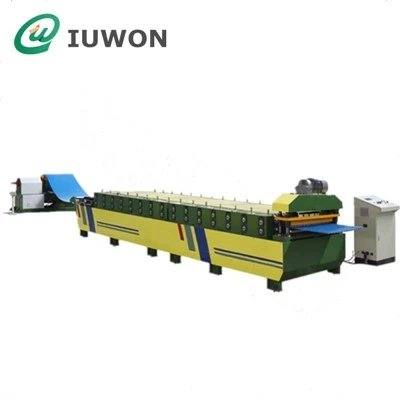
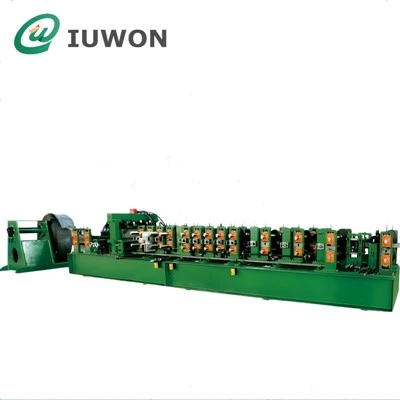
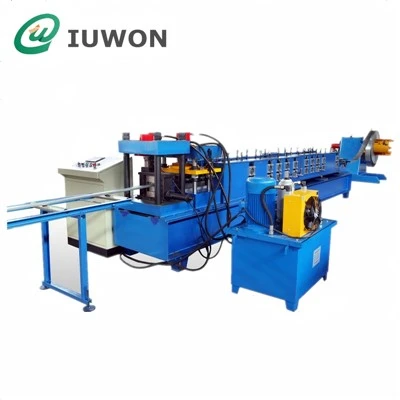
A Heavy Gauge Purlin Roll Forming Machine is engineered to continuously form 2.5–4.0 mm thick steel into structural purlins for applications where conventional light-gauge sections may not provide sufficient load capacity or stiffness.
The equipment is designed around the mechanical requirements of thick and high-strength steel rather than simply increasing the material thickness of a standard purlin line. Higher forming torque, greater roller loading, increased springback, and higher punching force all need to be considered in the machine configuration.
Typical profiles include:
- C Purlin
- Z Purlin
- Heavy-Duty C/Z Sections
- Sigma Purlin
- Customized Structural Purlins
Typical applications include:
- Utility-scale solar projects
- Large-span steel buildings
- Industrial plants
- Heavy-duty warehouses
- Agricultural PV structures
The production objective is to maintain profile geometry, straightness, hole accuracy, and cutting consistency while continuously processing thick-gauge structural steel.


Engineered for 2.5–4.0 mm Structural Steel
Heavy-gauge purlin production differs from conventional purlin forming mainly because the material creates significantly higher forming resistance.
As material thickness increases, the production line needs to accommodate:
Higher forming force
Higher drive torque
Increased roller loading
Greater springback
Higher punching force
More demanding machine rigidity
High-strength steel further increases these requirements.
Typical material specifications include:
| Material Parameter | Typical Range |
|---|---|
| Steel Thickness | 2.5–4.0 mm |
| Yield Strength | 345–550 MPa |
| Tensile Strength | 430–650 MPa |
| Material Width | 200–800 mm |
| Coil Weight | 5–8 tons |
| Coil ID | 508 / 610 mm |
| Coil OD | ≤1,800 mm |
| Material Type | Galvanized / Pre-Galvanized / Structural Steel |
For outdoor solar structures, galvanized steel is commonly selected because the finished profile may be exposed to humidity, rain, temperature cycling, and atmospheric contaminants.
Reinforced Forming System for Thick-Gauge Purlins
A heavy-gauge production line needs sufficient mechanical rigidity throughout the forming path.
The machine progressively bends the steel through multiple roller stations:
Decoiling → Leveling → Guiding → Pre-Forming → Progressive Bending → Profile Sizing → Punching → Cutting
Instead of creating the final section through a few aggressive bends, multiple forming stations distribute deformation gradually.
This helps control:
Springback
Flange angle
Web deformation
Profile twisting
Surface marking
The forming rollers are manufactured from hardened tool steel and designed according to the actual profile geometry and material strength.
Forming System Parameters
| Parameter | Typical Specification |
|---|---|
| Forming Stations | 18–30 |
| Shaft Diameter | 90–120 mm |
| Shaft Material | 40Cr / Equivalent High-Strength Steel |
| Roller Material | GCr15 |
| Roller Hardness | 58–62 HRC |
| Shaft Support | Double-Supported |
| Drive Type | Gearbox / Chain-Gear Transmission |
| Main Motor | 30–55 kW |
| Forming Speed | 6–15 m/min |
| Machine Frame Thickness | 20–30 mm |
| Roller Station Spacing | 400–600 mm |
The final shaft diameter, roller dimensions, frame structure, and drive capacity should be calculated according to the target profile and maximum material thickness rather than selected solely from nominal machine specifications.
High-Strength Steel Requires Controlled Springback
Springback becomes more significant when processing high-strength and thick-gauge steel.
After leaving the forming roller, the material tends to partially recover toward its original flat shape. Excessive springback can result in:
Incorrect flange angles
Profile width deviation
Poor overlap between sections
Connection difficulties
Inconsistent cross-sectional dimensions
For this reason, the forming system can use dedicated roller geometry and additional sizing stations to compensate for material recovery.
Typical Profile Quality Targets
| Quality Indicator | Typical Target |
|---|---|
| Profile Dimension Tolerance | ±0.5 mm |
| Cutting Length Accuracy | ±1 mm |
| Hole Position Accuracy | ±0.5 mm |
| Straightness | ≤2 mm/m |
| Flange Angle Tolerance | ±1° |
| Surface Defect | No significant forming cracks or coating damage |
These values should be confirmed against the customer's profile drawing and applicable structural manufacturing requirements.
Heavy-Duty Punching for Structural Connections
Thick purlins frequently require factory-punched holes for connection to primary frames, brackets, braces, or roof components.
Because a 4.0 mm high-strength steel sheet requires substantially more punching force than light-gauge material, the punching system must be sized accordingly.
Typical punching configurations include:
Web holes
Flange holes
End holes
Long slots
Multiple-hole patterns
Punching System Parameters
| Parameter | Typical Range |
|---|---|
| Maximum Material Thickness | 4.0 mm |
| Punching Force | 80–160 kN |
| Hole Diameter | 8–30 mm |
| Slot Length | 15–60 mm |
| Slot Width | 6–16 mm |
| Hole Position Accuracy | ±0.5 mm |
| Punch Material | Hardened Tool Steel |
| Punching Drive | Hydraulic / Servo-Hydraulic |
| Punching Speed | 20–60 strokes/min |
For complex hole patterns, servo-controlled positioning can synchronize the punching position with the continuous material feed.
Heavy-Duty Cutting System
After forming and punching, the purlin is cut into project-specific lengths.
For thick structural steel, the cutting system needs sufficient force and structural rigidity to prevent profile deformation at the cut.
Typical configuration:
Flying Cut → Profile Stabilization → Automatic Discharge
Cutting Parameters
| Parameter | Typical Specification |
|---|---|
| Cutting Material Thickness | 2.5–4.0 mm |
| Cutting Length | 1–12 m |
| Cutting Accuracy | ±1 mm |
| Cutting Method | Hydraulic Flying Cut |
| Blade Material | Hardened Tool Steel |
| Automatic Length Control | PLC |
| Length Setting | Touchscreen Input |
For projects requiring different purlin lengths, cutting recipes can be stored in the PLC and selected according to the production order.
Heavy-Gauge Coil Handling
Thicker steel coils increase the total coil weight and require a stronger decoiling and feeding system.
A typical heavy-duty coil handling configuration includes:
Hydraulic Decoiler → Straightener → Servo Feeder → Forming Mill
Coil Handling Parameters
| Parameter | Typical Specification |
|---|---|
| Maximum Coil Weight | 5–8 tons |
| Coil Inner Diameter | 508 / 610 mm |
| Maximum Coil Outer Diameter | ≤1,800 mm |
| Coil Width | 200–800 mm |
| Decoiler Type | Hydraulic Expansion |
| Decoiler Capacity | 5–8 tons |
| Leveling Rollers | 5–9 rollers |
| Feeding Accuracy | ±0.5 mm |
| Feeding Drive | Servo / Gearbox |
The stronger decoiler and leveling system are important because unstable feeding can affect the dimensional accuracy of the entire purlin.
Heavy Gauge Purlin Profiles
The machine can be configured for different structural cross-sections.
| Profile | Typical Height | Typical Thickness | Main Structural Role |
|---|---|---|---|
| Heavy C Purlin | 150–350 mm | 2.5–4.0 mm | Secondary framing |
| Heavy Z Purlin | 150–350 mm | 2.5–4.0 mm | Long-span framing |
| Sigma Purlin | 150–350 mm | 2.5–4.0 mm | High-stiffness structure |
| Customized Section | Drawing-based | 2.5–4.0 mm | Project-specific structure |
The actual section size should be determined through structural calculations. Increasing profile height can improve section stiffness, but the final design also depends on material grade, span, support conditions, connection design, and allowable deflection.
Application: Utility-Scale Solar Structures
Large solar projects may require heavier structural members than residential rooftop systems because the support structure can span larger distances and must withstand environmental loads over extensive module arrays.
Heavy-gauge purlins can be used for:
Ground-mounted solar farms
Agricultural PV structures
Large solar support frameworks
High-wind-area PV projects
The engineering parameters should consider:
| Solar Design Factor | Influence on Purlin |
|---|---|
| Wind Load | Bending and uplift |
| Snow Load | Vertical loading |
| Span | Required section stiffness |
| Foundation Spacing | Purlin support distance |
| Module Arrangement | Load distribution |
| Terrain | Structural loading conditions |
| Corrosion Environment | Material and coating selection |
The machine therefore supports the production side of the engineering system; the final purlin section still needs to be verified through structural design calculations.
Application: Heavy Steel Structures
Heavy-gauge purlins are also suitable for structures requiring higher secondary-frame capacity.
Typical projects include:
Industrial plants
Large warehouses
Logistics centers
Heavy workshops
Agricultural buildings
Long-span steel structures
They can function as:
Roof purlins
Wall girts
Secondary framing
Reinforcement members
Heavy Gauge vs Standard Purlin Production
| Production Factor | Standard Purlin Line | Heavy Gauge Purlin Line |
|---|---|---|
| Material Thickness | Approx. 1.5–3.0 mm | 2.5–4.0 mm |
| Steel Strength | Standard | High-strength available |
| Forming Load | Medium | High |
| Shaft Diameter | Smaller | 90–120 mm |
| Main Motor | Approx. 15–30 kW | 30–55 kW |
| Punching Requirement | Medium | 80–160 kN |
| Coil Capacity | Approx. 3–5 tons | 5–8 tons |
| Forming Speed | Higher | 6–15 m/min |
| Primary Advantage | Flexible general production | Thick-gauge structural production |
Heavy Gauge Purlin Production Workflow
1. Coil Loading
The hydraulic decoiler handles heavy structural steel coils.
2. Leveling
Multi-roll leveling removes coil curvature before forming.
3. Servo Feeding
The feeding system maintains stable material positioning for continuous production.
4. Online Punching
Connection holes are produced according to the structural drawing.
5. Progressive Roll Forming
Multiple forming stations gradually develop the C, Z, Sigma, or customized section.
6. Final Sizing
The final rollers control section dimensions and compensate for springback.
7. Flying Cutting
The finished purlin is cut to the programmed length.
8. Automatic Discharge
Finished profiles are transferred to the collection system for bundling and transportation.
Why Choose a Heavy Gauge Purlin Roll Forming Machine?
2.5–4.0 mm Thick Steel Capability
Designed specifically for structural profiles requiring heavier material thickness.
Higher Forming Capacity
Reinforced shafts, rollers, frame structures, and drive systems accommodate higher forming loads.
High-Strength Steel Compatibility
Suitable for structural steels with yield strengths reaching approximately 550 MPa, depending on the profile and machine configuration.
Integrated Punching
Up to 4.0 mm thick structural material can be processed with a properly sized punching system.
Stable Long-Length Production
Controlled forming and cutting systems maintain profile geometry across long structural sections.
Suitable for Large Projects
Designed for manufacturers supplying utility solar projects, industrial structures, warehouses, and other heavy-duty steel applications.
Hangzhou IUWON Technology Co., Ltd. is one of the most professional heavy gauge purlin roll forming machine manufacturers and suppliers in China. Please feel free to buy custom made heavy gauge purlin roll forming machine made in China here from our factory. For price consultation, contact us.
c purlin forming machine, purlin making machine, purlin rolling machine