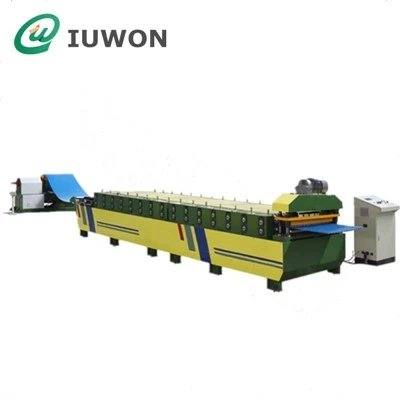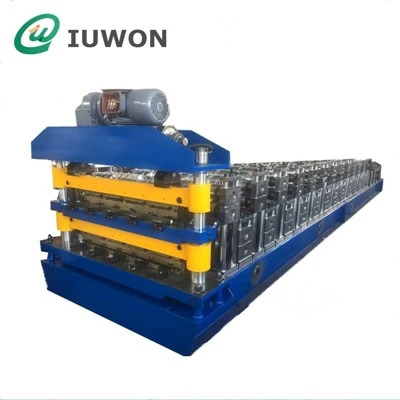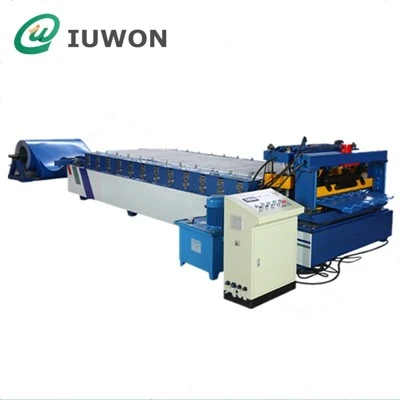
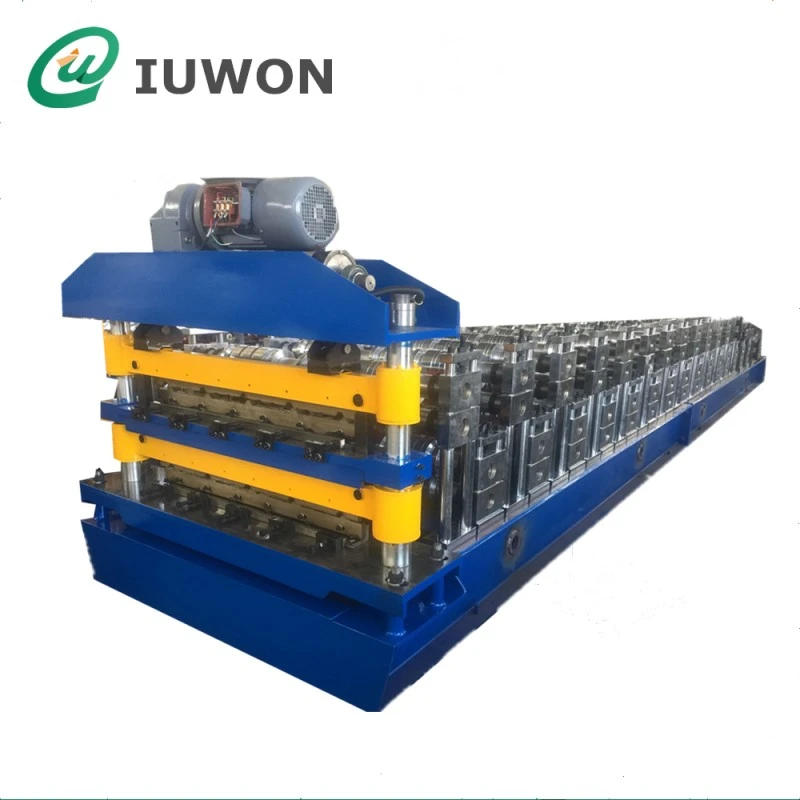
Hangzhou IUWON Technology Co., Ltd. is one of the most reliable manufacturers and suppliers of cnc sheet metal forming in China. With abundant experience, we warmly welcome you to buy custom made cnc sheet metal forming from our factory. Good service and reasonable price are available.
CNC Forming Concept
The machine converts a digital forming program into controlled mechanical movement.
A typical operating sequence is:
CAD / Drawing Data → CNC Program → Sheet Positioning → Forming Operation → Measurement → Finished Component
The controller determines the movement of the forming tooling, back gauge, feeding mechanism, or forming axis according to the programmed dimensions.
Depending on the machine configuration, CNC forming can be applied to:
Roof flashing
Ridge caps
Eave trims
Valley gutters
Wall trims
Corner profiles
Drip edges
Architectural panels
Custom folded sheets
HVAC sheet-metal components
The system is therefore positioned as a flexible sheet processing platform, rather than a single-purpose profile production line.


Typical Technical Parameters
| Parameter | Typical Specification |
|---|---|
| Machine Type | CNC Sheet Metal Forming Machine |
| Processing Material | Mild Steel / GI / PPGI / Aluminum / Stainless Steel |
| Sheet Thickness | 0.5–2.5 mm |
| Maximum Sheet Width | 1250–2500 mm |
| Maximum Forming Length | 2000–6000 mm |
| Forming Accuracy | ±0.1–0.5 mm |
| Positioning Accuracy | Up to ±0.1 mm |
| CNC Axes | 2–6 axes, depending on configuration |
| Control Interface | CNC Touchscreen |
| Hydraulic Capacity | 40–100 Ton, configuration dependent |
| Main Motor | 5.5–15 kW |
| Back Gauge | CNC Programmable |
| Tooling | Interchangeable / Customized |
| Operating Mode | Automatic / Semi-Automatic / Manual |
| Electrical Supply | 380V / 50Hz / 3 Phase |
| Machine Frame | Welded Steel Construction |
Actual capacity depends on material type, thickness, sheet width, forming geometry, and tooling design.
What Makes CNC Forming Different?
The primary difference is programmability.
A conventional dedicated forming machine normally relies on a fixed set of forming rolls to continuously produce one defined profile. CNC sheet forming instead allows the operator to modify forming dimensions through the control system.
For example, a roofing manufacturer may need to produce:
| Product | Bend Configuration | Batch |
| Ridge Cap | Multi-Bend | 100 pcs |
| Valley Flashing | Offset Bend | 80 pcs |
| Eave Trim | Single + Double Bend | 200 pcs |
| Corner Trim | 90° Bend | 150 pcs |
The operator can switch between programs rather than installing an entirely different production line for every component.
This makes CNC equipment particularly suitable for custom fabrication and diversified product portfolios.
Programmable Forming Parameters
The CNC controller can manage multiple production variables, depending on machine architecture.
Typical parameters include:
Bend angle
Bend sequence
Forming depth
Sheet position
Back-gauge position
Tool movement
Forming speed
Return speed
Number of operations
Production quantity
A digital program can store frequently used component specifications so that repeat orders can be reproduced without recalculating every forming position manually.
For manufacturers supplying different construction projects, this can reduce setup time between production batches.
Sheet Thickness & Material Compatibility
The forming system can be engineered for different sheet-metal materials.
| Material | Typical Thickness | Common Use |
| Galvanized Steel | 0.5–2.0 mm | Roofing & wall accessories |
| Pre-painted Steel | 0.5–1.5 mm | Architectural trims |
| Aluminum | 0.8–2.5 mm | Lightweight profiles |
| Stainless Steel | 0.6–2.0 mm | Corrosion-resistant components |
| Mild Steel | 0.8–2.5 mm | Structural fabrication |
Material yield strength should be considered when determining machine capacity. A machine rated for a specific thickness of mild steel may require a lower working thickness when processing higher-strength or harder materials.
CNC Control Architecture
The CNC control system acts as the production coordinator.
A typical interface provides:
Program Selection → Parameter Input → Axis Positioning → Forming Cycle → Completion Confirmation
The operator can enter or recall:
Product number
Sheet dimensions
Forming angles
Forming positions
Production quantity
Tool selection
Sequence parameters
A multi-axis configuration can control several independent movements, allowing more complicated forming sequences than a basic single-axis system.
The exact number of CNC axes should be selected according to the geometry of the products rather than simply choosing the maximum available configuration.
Tooling System
Tooling is selected according to the required bend geometry and sheet characteristics.
Possible tooling configurations include:
V-dies
Punches
Radius tooling
Offset tooling
Custom profile tooling
Segment tooling
Quick-change tooling
For roofing accessories, different tooling combinations can be used to produce narrow flanges, deep channels, sharp bends, offsets, and multi-step profiles.
Segmented tooling can also be useful when the same machine processes components with different lengths or complex geometry.
Positioning Accuracy
Dimensional consistency depends on the interaction between the CNC controller, mechanical structure, drive system, tooling, and material behavior.
Typical control targets can include:
| Feature | Typical Value |
| Positioning Accuracy | ±0.1 mm |
| Forming Accuracy | ±0.1–0.5 mm |
| Angle Accuracy | ±0.5° |
| Repeatability | ±0.1–0.3 mm |
| Sheet Length | Up to 6000 mm |
Actual accuracy should be verified against the material thickness, bend radius, springback characteristics, and product geometry.
For galvanized and pre-painted steel, tooling clearance and forming sequence are especially important because excessive localized pressure can damage the coating.
Production of Roofing Accessories
Although the machine is suitable for general sheet-metal fabrication, it can be integrated into a roofing-component production workflow.
Typical products include:
Ridge Caps
Used at the roof apex to cover the intersection between roof slopes.
Flashing
Produced for transitions between roofing panels, walls, openings, and structural components.
Valley Components
Formed to guide rainwater toward the drainage system.
Eave Profiles
Used along the lower edge of roof panels.
Corner Profiles
Used to finish external or internal wall-panel intersections.
These components often require several bends within one part, making programmable forming useful when dimensions vary between projects.
Production Flexibility
The equipment is particularly valuable where product variety is high.
Dedicated Production Line
Best suited to:
One Profile → Large Quantity → Continuous Production
CNC Forming
Better suited to:
Multiple Profiles → Different Dimensions → Variable Batch Sizes
For example, a building-material manufacturer may produce ten different flashing geometries within one working day. CNC programming allows each product to be handled as a separate production recipe.
This reduces dependence on manually setting every forming position.
Manufacturing Workflow
A typical production workflow is:
Drawing Preparation
The required component dimensions and bend sequence are established.
CNC Program Creation
The forming parameters are entered into the controller.
Tool Installation
The appropriate punch and die configuration is installed.
Sheet Positioning
The sheet is aligned against the programmed reference position.
Forming
The machine executes the programmed sequence.
First-Piece Inspection
The initial component is checked for angle, dimensions, and profile geometry.
Batch Production
Once the parameters are verified, the machine repeats the programmed cycle.
Quality Control Parameters
For CNC sheet forming, quality inspection should focus on the finished component rather than only machine operation.
| Inspection Item | Typical Check |
| Overall Length | Dimensional Measurement |
| Flange Width | ±0.5 mm Target |
| Bend Angle | ±0.5° Typical |
| Bend Position | ±0.5 mm Typical |
| Surface Condition | Visual Inspection |
| Corner Radius | Gauge Measurement |
| Coating Condition | Surface Inspection |
| First Piece | Full Dimensional Check |
For high-volume production, first-piece inspection can be followed by periodic sampling throughout the batch.
Machine Structure
The machine frame must resist deformation during forming.
The main structural elements generally include:
Welded steel frame
Hydraulic or servo-driven forming system
CNC-controlled back gauge
Forming beam
Tool holder
Sheet support
Linear guides
Hydraulic power unit
Electrical control cabinet
Machined mounting surfaces are used where necessary to maintain the relative position between the tooling and moving components.
A rigid structure contributes directly to repeatability, particularly when forming longer sheets or higher-strength materials.
Automation Options
The basic CNC system can be expanded for higher production efficiency.
Available options may include:
Automatic sheet feeding
Motorized front support
Automatic back gauge
Laser positioning
Barcode-based program selection
Automatic tool positioning
Sheet measurement system
Robotic loading/unloading
Production data recording
The appropriate automation level depends on batch size and labor requirements.
For customized B2B production, it is generally more practical to automate the repetitive operations that consume the most operator time rather than adding automation indiscriminately.
Where CNC Sheet Forming Fits in a Wall & Roof Production Line
The equipment is complementary to conventional continuous roll forming machinery.
A manufacturer may use:
Roll Forming Machine
for high-volume production of standard roofing and wall panels.
At the same time:
CNC Sheet Metal Forming Machine
can handle the associated customized components, such as flashing, trims, corners, ridge caps, and special profiles.
This combination allows a factory to produce both standardized panels and project-specific accessories without maintaining a separate dedicated machine for every component.
Custom Configuration
The machine can be engineered according to:
Maximum sheet width
Maximum sheet length
Material thickness
Material grade
Required bend angle
Number of forming operations
Required accuracy
Production volume
Tooling type
Number of CNC axes
Automation level
Factory electrical standard
Before selecting the machine, the recommended engineering information is:
Material + Thickness + Maximum Sheet Size + Product Drawing + Bend Sequence + Production Quantity
These parameters determine the required forming force, working length, tooling arrangement, and control architecture.
FAQ
Can this machine produce roofing accessories?
Yes. It can be configured for ridge caps, flashing, valleys, eave trims, corner profiles, and other formed sheet-metal components.
Is CNC forming the same as a roll forming line?
No. A roll forming line continuously feeds a coil through multiple rollers to produce a fixed profile. CNC forming uses programmable movements and tooling to create different bends and geometries.
Can different products be manufactured on one machine?
Yes. Different CNC programs can be stored for different products, provided they fall within the machine's forming capacity and tooling range.
What determines the required machine capacity?
The main factors are sheet thickness, material strength, sheet width, forming length, bend geometry, and required forming force.
Can pre-painted steel be processed?
Yes. The tooling and forming parameters can be selected to reduce surface marking and protect the coating.
Is automatic feeding available?
Yes. Depending on the application, automatic feeding, positioning, measurement, and other material-handling functions can be integrated.
Request a CNC Forming Configuration
For a project-specific recommendation, provide the finished component drawing, material type, sheet thickness, maximum sheet width and length, required bend angles, and expected production volume.
The machine can then be configured around the actual forming operations, including CNC axes, hydraulic capacity, tooling, working length, positioning system, and automation level.
Hot Tags: cnc sheet metal forming, China cnc sheet metal forming manufacturers, suppliers, factory, corrugated roll former, double layer roofing sheet roll forming machine, metal roll forming systems, metal siding forming machine, roll forming line, stud making machine