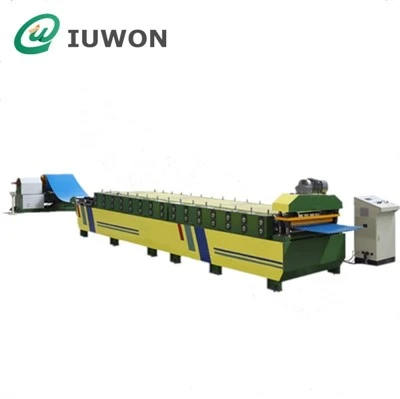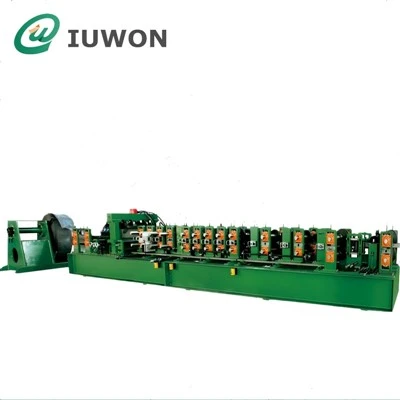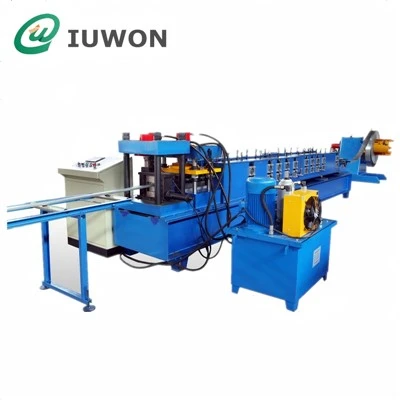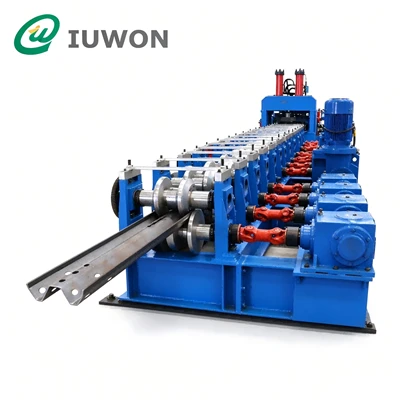
Steel structure manufacturers often receive orders for different purlin dimensions, material thicknesses, and connection-hole layouts. Producing every specification on a separate machine can increase equipment investment, occupy valuable workshop space, and add work when production schedules change.
A C&Z purlin forming machine offers an alternative for manufacturers that need to produce both C-shaped and Z-shaped purlins on a shared production line. Depending on its configuration, the equipment can support different profile dimensions through adjustable forming mechanisms, tooling changes, or automatic size adjustment.
The key purchasing decision is not simply whether one machine can produce C and Z profiles. Buyers also need to determine which sizes the machine can cover, how changeovers are performed, whether punching positions can be adjusted, and what production output can be maintained with the required material.
For factories supplying steel warehouses, industrial buildings, workshops, agricultural structures, and logistics facilities, these factors determine whether a combined production line fits their actual order requirements.
Why Multiple Profile Production Matters
C and Z purlins are commonly used as secondary structural members in steel building systems. Although they serve related purposes, their cross-sectional shapes and installation requirements differ.
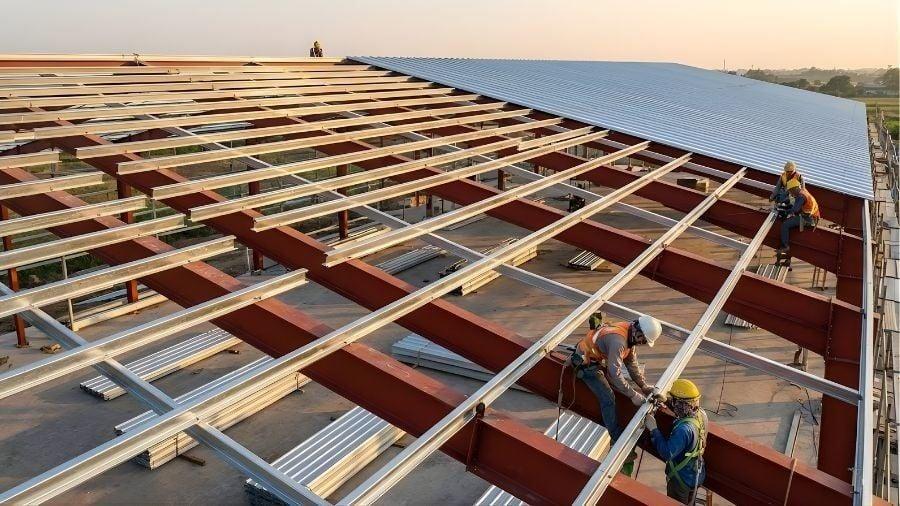
C purlins: Typically used for roof and wall framing, depending on the structural design.
Z purlins: Often used in roof systems where overlapping connections between members are specified by the structural design.
Multiple-size purlins: Required when projects use different spans, loads, connection details, or building layouts.
For a manufacturer serving several construction markets, the product range may include multiple web heights, flange widths, lip dimensions, and steel thicknesses.
A dedicated machine configured for one profile family may be suitable for stable, high-volume production. However, when customer orders regularly alternate between C and Z sections, a combined line can reduce the need to duplicate major equipment.
The potential benefit depends on the actual machine design. Buyers should confirm that all required profiles fall within the machine's supported range instead of assuming that every C&Z machine can manufacture any section size.
Understand the C&Z Changeover Mechanism
Changeover capability is one of the most important factors when purchasing a machine for multiple profile production.
Depending on the design, a C&Z line may use adjustable forming stations, movable roller components, interchangeable tooling, or a combination of these arrangements. Some configurations allow automated adjustment of selected dimensions, while others require manual operations.
|
Changeover method |
Production characteristics |
Suitable purchasing scenario |
|---|---|---|
|
Manual adjustment |
Operators adjust specified components during size or profile changes |
Factories with fewer changeovers and longer production batches |
|
Semi-automatic adjustment |
Selected adjustments are controlled mechanically or electronically, with some manual work remaining |
Manufacturers with a moderate range of profiles |
|
Automatic size adjustment |
Programmed adjustments reduce setup work for supported sizes |
Factories handling frequent changes between multiple specifications |
The term automatic changeover should be clearly defined in the quotation. It may cover web height and flange adjustment without automatically handling every C-to-Z conversion, punching-die change, or other setup task.
Before purchasing, ask the manufacturer to demonstrate a complete changeover between two of your intended profiles. Measure the time from the last acceptable piece of the first order to the first acceptable piece of the next order. This provides a more useful comparison than timing the machine's adjustment mechanism alone.
Confirm the Technical Specifications Before Comparing Prices
A machine's working range must match the dimensions and material properties of the purlins you plan to sell.
The following table provides a practical template for evaluating a proposed production line. The values below are illustrative reference ranges for preliminary planning, not confirmed specifications for a particular IUWON model. Final parameters must be verified against the approved drawings and equipment configuration.
|
Technical parameter |
Preliminary reference |
What must be confirmed |
|---|---|---|
|
Profile types |
C and Z sections |
Whether both profile families are supported |
|
Web height |
Approximately 80–300 mm |
Minimum and maximum sizes for each section type |
|
Flange width |
Approximately 40–80 mm |
Supported widths and adjustment limits |
|
Lip size |
Approximately 10–25 mm |
Available dimensions and forming limitations |
|
Material thickness |
Approximately 1.5–3.0 mm |
Thickness range for the specified steel grade |
|
Material |
Galvanized or cold-rolled steel |
Permitted grades and yield strength |
|
Forming speed |
Approximately 10–30 m/min |
Actual speed under the required punching and cutting conditions |
|
Cutting length |
Drawing-dependent |
Minimum and maximum lengths and tolerance |
|
Control system |
PLC-based control |
Recipe storage, adjustment functions, and operator interface |
|
Punching |
Optional or integrated, according to configuration |
Hole patterns, die sets, and positioning method |
These ranges should not be used as a substitute for a model-specific technical proposal. For example, a machine capable of forming a 3.0 mm sheet in one profile may not maintain the same speed or dimensional performance with every other profile at that thickness.
A reliable quotation should state the permitted material grade, maximum thickness, profile dimensions, adjustment method, and expected output under defined operating conditions.
Evaluate Punching and Cutting Requirements
Structural purlins frequently require holes or slots for bolted connections, bracing, and installation. Their position can be as important as their size because the finished members must align with the building's structural drawings.
Before ordering the machine, prepare the hole layout for each C and Z profile. Include hole diameter or slot dimensions, distances from the profile ends, spacing between holes, and whether openings are required on the web, flanges, or both.
The punching system should then be evaluated for:
Compatibility with the specified hole patterns.
Positioning accuracy across different purlin sizes.
Number of punching tools or dies required.
Adjustment time when changing between profiles.
Synchronization with feeding and cutting operations.
The cutting system also requires careful consideration. A stop-cut system may be sufficient for some production plans, while a flying-cut arrangement may be beneficial where continuous operation and higher output are priorities.
Neither method should be selected on speed alone. Buyers should verify finished-length accuracy, cut-end deformation, burr formation, and compatibility with the required section geometry.
Calculate Production Capacity Using Real Orders
The maximum forming speed stated in a quotation does not equal the number of finished purlins a factory can sell.
Actual output depends on the material thickness, profile dimensions, punching cycles, cutting frequency, finished lengths, coil replacement, and time spent changing specifications.
Consider two production scenarios:
A manufacturer produces one standard C purlin in long batches. In this case, stable running speed and minimal interruption may be the main priorities.
A manufacturer supplies different C and Z purlins for several building projects. Here, fast changeovers, flexible punching, and repeatable settings may be more valuable than maximum linear speed.
Before selecting the machine, estimate the monthly demand for each profile and the frequency of changes between orders. This helps determine whether automatic adjustment justifies its additional cost.
A practical comparison should include finished pieces per shift, changeover time, rejected-product rate, operator requirements, and material waste. These measures provide a more realistic basis for evaluating production efficiency.
Assess Profile Accuracy and Finished Product Quality
Purlins are structural components, so dimensional consistency affects assembly and installation. A machine must form the specified cross-section without unacceptable twisting, bowing, flange-angle variation, or hole-position errors.
Important inspection points include:
Web width and flange dimensions.
Lip geometry and bend angles.
Straightness and twist along the finished member.
Hole positions and spacing.
Finished length and cutting quality.
Surface condition after forming.
The required tolerances should come from the product drawings, applicable standards, and customer acceptance requirements. They should not be assumed to be identical for every purlin size or application.
Before final acceptance, request trial production using representative material and the actual C and Z profile drawings. The trial should include the relevant thickness range and demonstrate the changeover process where multiple profiles are required.
Prepare a Complete RFQ for Your Purlin Production Line
A detailed inquiry enables the manufacturer to assess the required tooling, drive capacity, punching system, and changeover configuration.
Include the following information when requesting a quotation:
C and Z profile drawings with web, flange, and lip dimensions.
Steel grade, coating type, thickness range, and yield strength where specified.
Required hole and slot patterns for each profile.
Finished lengths and dimensional tolerances.
Expected output per shift or month.
Frequency of C-to-Z and size changes.
Required automation level and control functions.
Coil weight and dimensions, factory power supply, and available installation space.
Required auxiliary equipment, installation, commissioning, and operator training.
If you do not yet have finalized drawings, provide the preliminary dimensions and identify the specifications that remain open. This allows the manufacturer to clarify the technical assumptions before pricing the line.
Conclusion
A C&Z purlin forming machine is worth considering when your factory needs to produce multiple C and Z profile sizes without duplicating an entire production line for each product family.
The best configuration depends on the required section range, steel thickness, punching layout, cutting requirements, order mix, and frequency of changeovers. Buyers should compare machines against these operating conditions rather than relying only on advertised speed or the number of adjustable sizes.
Looking for a C&Z purlin production line for your next project?
IUWON can review your profile drawings, material specifications, punching requirements, and production targets to help determine a suitable machine configuration. Providing these details at the inquiry stage makes it easier to evaluate changeover options, confirm the working range, and prepare a quotation that reflects your actual manufacturing needs.