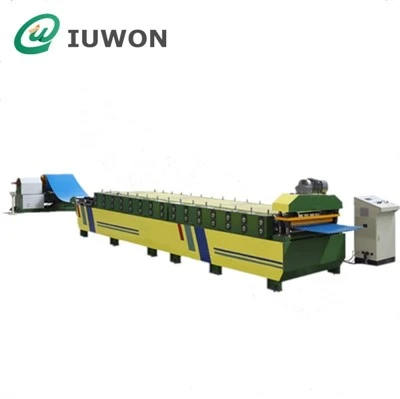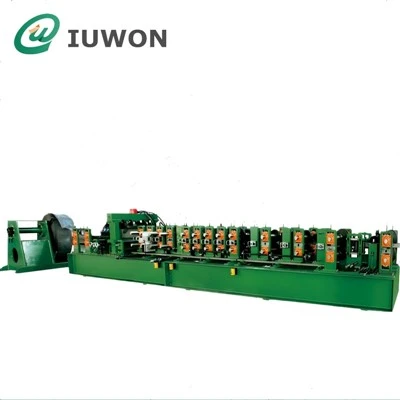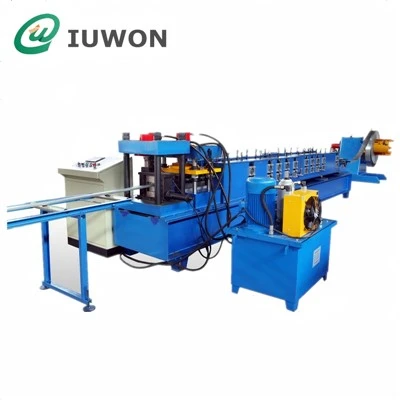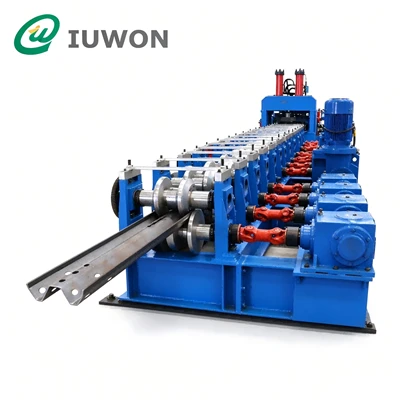
Highway guardrails are safety-related road infrastructure components. Their corrugated profile, mounting holes, connection geometry, material properties, and corrosion protection all affect how the finished components fit into the specified barrier system. Different road authorities and projects may require different drawings, dimensions, and acceptance procedures. For example, W-beam and Thrie-beam barriers have different cross-sectional geometries, and their production tooling cannot be assumed to be interchangeable without engineering review.
Before requesting quotations, buyers should establish five basic requirements:
- Finished profile: W-beam, Thrie-beam, or another specified barrier section.
- Product specification: Approved drawing, dimensions, hole layout, and finished length.
- Raw material: Steel grade, thickness, coil width, and surface treatment.
- Production target: Required output per shift, working hours, and expected order volume.
Acceptance requirements: Dimensional inspection, material documentation, production testing, and any required product approval.
These details allow the machine configuration to be evaluated against a real production requirement rather than a general equipment description.
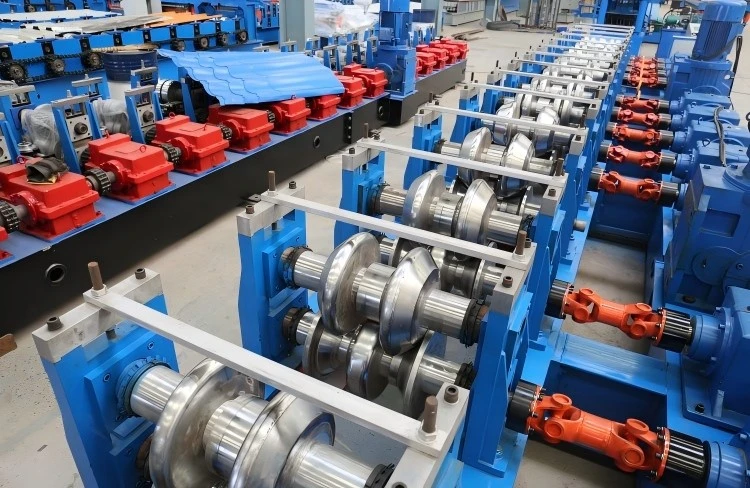
Technical Parameters Buyers Should Review First
The following table provides preliminary engineering reference ranges for discussing a highway guardrail production line. These figures are not confirmed specifications for a particular IUWON model. Final values must be established from the approved guardrail drawing, material specification, and agreed production target.
|
Technical Parameter |
Preliminary Reference Range or Option |
What Buyers Should Confirm |
|---|---|---|
|
Guardrail profile |
W-beam or Thrie-beam |
Exact section drawing and applicable market standard |
|
Steel thickness |
Approximately 2.0–4.0 mm |
Minimum and maximum thickness to be produced |
|
Material width |
Drawing-dependent |
Required strip width and available coil sizes |
|
Forming speed |
Approximately 5–15 m/min |
Actual speed at the specified thickness and punching cycle |
|
Forming stations |
Project-dependent; often around 15–25 stations |
Roller design and station count required for the profile |
|
Main drive power |
Preliminary range around 22–45 kW |
Drive sizing based on steel strength, thickness, and line design |
|
Punching method |
Hydraulic or servo-controlled, depending on configuration |
Hole shape, pitch, location, cycle time, and die arrangement |
|
Cutting method |
Hydraulic fixed-length cutting or another engineered option |
Cut profile, burr control, length accuracy, and cycle time |
|
Coil handling |
Manual or powered decoiler, depending on coil weight |
Coil weight, inside diameter, width, and braking requirements |
|
Finished length |
According to the approved drawing |
Cut-length range and tolerance |
|
Control system |
PLC with operator interface |
Length setting, batch control, fault indication, and safety functions |
|
Finished product handling |
Run-out table or automatic stacking option |
Panel length, weight, available space, and labor requirements |
All numerical values above are preliminary discussion ranges only. They are not a guaranteed operating envelope. The signed technical proposal should specify the actual machine's material limits, speed, power, tolerances, tooling, and production capacity.
One important distinction is that forming speed and finished-panel output are not the same measurement. A line may feed steel at a certain number of meters per minute, but punching, cutting, panel transfer, and stacking can reduce the effective output. Buyers should therefore request production figures based on their actual finished panel length and hole pattern.
Check the Applicable Standard and Approved Profile Drawing
The first major purchasing risk is selecting equipment that produces a visually similar profile but does not match the dimensions required for the intended project.
W-beam and Thrie-beam Are Different Products
W-beam guardrails generally have two corrugations, while Thrie-beam guardrails have three. Their section geometry and stiffness differ, so the tooling and forming sequence must be designed for the relevant profile.
A buyer planning to supply both types should not assume that one machine can switch between them simply through a software setting. The supplier needs to explain whether production requires interchangeable roller sets, adjustable tooling, a dedicated changeover mechanism, or separate lines.
The decision should be based on expected demand. If W-beam accounts for nearly all orders, purchasing a complicated multi-profile arrangement may add unnecessary cost. If both profiles are required regularly, the buyer should compare the changeover time, tooling investment, adjustment procedure, and repeatability of each proposed configuration.
Confirm the Drawing Details
The approved drawing should define more than the overall width and height. It may include:
- Wave geometry, corrugation depth, and profile pitch.
- Finished panel length and effective joint length.
- Splice-hole and post-hole dimensions.
- Hole spacing, edge distances, and reference datums.
- End geometry and permitted dimensional tolerances.
- Steel thickness and material requirements.
- Surface treatment and coating requirements.
These details determine the roller contour, punching die, cutting tooling, and inspection method. Official road authority drawings demonstrate that guardrail systems may specify hole dimensions, rail geometry, post connections, and installation details together. Buyers should use the current drawing applicable to their project rather than rely on a generic catalogue illustration.
The best purchasing practice is to submit the approved drawing before the machine design is finalized. If the drawing changes after tooling manufacture, modifications may cause extra cost, delivery delays, and repeat commissioning work.
Evaluate Steel Coil Compatibility, Not Just Maximum Thickness
Steel thickness is one of the most influential machine-selection variables, but it should never be considered in isolation.
Two coils with the same nominal thickness can behave differently because of differences in yield strength, tensile properties, flatness, and surface condition. A line intended for relatively mild steel may not achieve the same forming performance with a higher-strength grade at the same thickness.
Before placing an order, buyers should establish the following material information.
|
Material Factor |
Why It Matters to Production |
|---|---|
|
Steel grade and strength |
Influences forming load, springback, roller design, and drive requirements |
|
Minimum and maximum thickness |
Determines the working range of the leveling, forming, punching, and cutting units |
|
Strip width |
Must match the approved profile development and feed arrangement |
|
Coil weight and dimensions |
Determines decoiler capacity and safe material handling |
|
Incoming flatness |
Affects feeding stability and the shape of the finished panel |
|
Surface condition |
Influences roll-contact requirements, scratching risk, and cleaning |
|
Coating route |
Affects process planning, handling, and final corrosion protection |
Check the Complete Material Path
The decoiler must support the specified coil weight and dimensions. The feeding and guiding system must keep the strip aligned. If leveling is required, the leveling unit must be suitable for the actual thickness and strength of the steel.
The forming section then needs sufficient structural rigidity to maintain the intended profile under load. Finally, the punching and cutting units must be sized for the material and required production cycle.
A quotation that lists only a maximum thickness does not establish that every upstream and downstream component is suitable for the same material. Ask the supplier to confirm the full material range across the complete line.
Inspect the Punching System and Hole Position Accuracy
Guardrail panels connect to adjacent panels and supporting posts through specified holes and fasteners. Hole-position errors can make installation difficult even when the formed cross-section appears correct.
The punching system should therefore be reviewed against the actual hole map.
Pre-Punching or In-Line Punching
In a pre-punching arrangement, holes are made in the flat strip before roll forming. This can simplify access to the punching positions and may support accurate hole placement when the feeding and registration system is properly designed.
Other configurations may use punching at a different stage of the process. The appropriate arrangement depends on the panel geometry, hole locations, material, and line layout.
Buyers should ask:
- Are all required holes included in the proposed punching system?
- Are the holes round, oval, slotted, or a combination?
- How are hole pitch and distance from the strip edge controlled?
- Does the system maintain registration during continuous feeding?
- Are dies for every required hole pattern included in the quotation?
- What inspection method will be used to verify hole positions?
Request Measurable Acceptance Criteria
Avoid accepting statements such as "high punching accuracy" without a defined measurement method. The contract should identify the relevant dimensions, datum points, tolerance values, sample quantity, and inspection tools.
If several hole patterns are required, the quotation should also explain whether additional dies or changeover components are necessary.
The buyer should approve the punching layout before manufacturing begins. A correct profile with an incorrect hole pattern may still be unsuitable for the intended assembly.
Review the Forming Structure and Roller Tooling
The forming section gradually bends the steel strip through a sequence of roller stations. The number of stations is only one part of the design.
More stations do not automatically guarantee a better result, and fewer stations do not necessarily indicate a lower-quality machine. What matters is whether the forming sequence distributes deformation appropriately for the material, section geometry, and required dimensional tolerances.
Key items to check include:
- Frame rigidity: The structure must resist deformation under the forming load.
- Roller material and heat treatment: These affect wear resistance and service life.
- Shaft diameter and bearing arrangement: These influence stiffness and load transmission.
- Roller machining and alignment: Errors may create inconsistent waves, twisting, or dimensional variation.
- Drive arrangement: The transmission must support the specified material and operating cycle.
- Adjustment access: Maintenance and alignment should be practical for the production team.
Ask How Profile Accuracy Is Verified
The supplier should explain how the finished profile will be measured against the approved drawing. Useful checks include cross-sectional dimensions, wave shape, overall width, straightness, twist, and other drawing-defined tolerances.
The buyer should also understand whether the machine is designed for one profile only or whether future tooling changes are included in the original scope.
A clear tooling plan is particularly important when different product variants share similar dimensions but require different corrugation geometry or hole arrangements.
Compare Cutting Methods and Finished Panel Length Control
Guardrail panels are often long and relatively heavy. Cutting performance affects finished length, edge condition, downstream handling, and overall line efficiency.
A fixed-length hydraulic cutting arrangement may be appropriate for a specified production configuration. Other systems may be proposed depending on the material, profile, cycle time, and desired output.
When reviewing the cutting unit, confirm:
- Whether cutting occurs before or after roll forming.
- Whether the cutting tool follows the finished profile.
- The available finished-length range.
- The agreed length tolerance and measurement method.
- Whether cutting is synchronized with the production cycle.
- How burrs, deformation, and end quality will be inspected.
- Whether the cutting tool is included in the quoted price.
A cutting system designed for a flat strip should not be assumed suitable for cutting an already formed corrugated section. The tool geometry and support arrangement must be appropriate for the stage at which cutting occurs.
Calculate Output Using Finished Panels per Hour
Suppose a buyer requires 1,200 panels per working day and operates one 8-hour shift. The required average output is:
1,200 ÷ 8 = 150 finished panels per hour.
This equals 2.5 finished panels per minute on average. Whether a proposed line can achieve that output depends on the specified panel length, punching pattern, cutting cycle, handling method, and planned production losses.
The calculation is only a planning example. It does not establish that any particular machine can achieve the target. Ask the supplier to provide a production estimate based on the approved product specification and the expected operating conditions.
Evaluate Automation and Material Handling as One System
Automation should be assessed in terms of the production bottleneck it removes, not simply the number of automated components listed in a quotation.
A complete line may include a decoiler, guiding and leveling units, punching equipment, roll forming stations, cutting equipment, a PLC control cabinet, and a run-out or stacking system. The exact scope varies with the project.
PLC and Operator Interface
The control system should support the functions required for the production process, such as setting finished lengths, entering batch quantities, controlling the production sequence, and displaying alarms.
If several products are manufactured on the same line, ask whether production settings can be saved and recalled, and which adjustments still require manual intervention.
Coil Loading and Finished-Panel Handling
A machine may operate efficiently during forming but lose productive time when coils are changed or finished panels are moved away from the cutting area.
Review the coil-loading method, available lifting equipment, panel discharge direction, stacking arrangement, and space needed for completed bundles. Long panels may require suitable support to prevent handling damage and unsafe manual lifting.
The plant layout should include room for raw material storage, coil loading, maintenance access, finished-panel handling, and safe operator movement.
Automation requirements should also account for the experience of the local production team and the availability of technical support.
Distinguish Machine Capability from Finished-Product Approval
A machine supplier can design equipment to produce a profile according to an agreed drawing. That does not automatically mean the resulting guardrail system is approved for installation on public roads.
Depending on the project and jurisdiction, the finished product may need to comply with specified material requirements, dimensional checks, corrosion-protection requirements, connection requirements, and separate testing or approval procedures.
For example, a road authority may publish requirements for W-beam and Thrie-beam components, their connections, and their installation. Buyers should identify which documents govern their project and confirm the current applicable revision with the responsible authority.
Before investing in production equipment, clarify:
- Which product standard or project specification applies?
- Is the required drawing already approved?
- What material certificates must be supplied?
- Is coating performed before or after forming?
- Which dimensional and material inspections are required?
- Is independent product testing required?
- Who is responsible for arranging product certification or road-authority approval?
This distinction is especially important for export projects. A machine quotation should state the equipment's agreed manufacturing capability and acceptance criteria without implying that machine delivery alone provides approval for the finished road barrier.
Compare Quotations by Scope, Not by Price Alone
Two quotations may appear to cover the same product while including different equipment, tooling, automation, and support.
A lower initial price may exclude a leveling unit, required punching dies, automatic stacking, installation assistance, or additional tooling for a second profile. These omissions can increase the actual investment needed before production can start.
Use the following checklist when comparing proposals.
|
Quotation Item |
What Should Be Stated Clearly |
|---|---|
|
Product scope |
Every profile and finished length covered by the offer |
|
Material range |
Steel grade, thickness, strip width, and coil limits |
|
Decoiling and leveling |
Capacity, operating method, and included equipment |
|
Punching system |
Hole layout, dies, capacity, and changeover requirements |
|
Roll forming section |
Tooling scope, drive arrangement, and confirmed operating range |
|
Cutting system |
Method, tool scope, length control, and tolerance |
|
Automation |
PLC functions, operator interface, and control sequence |
|
Handling equipment |
Run-out table, stacking, and any excluded lifting equipment |
|
Spare parts |
Included consumables, recommended spares, and replacement tooling |
|
Installation and training |
On-site or remote support, responsibilities, and schedule |
|
Acceptance testing |
Test material, sample measurements, operating cycle, and records |
|
Delivery and utilities |
Lead time, line footprint, power supply, and site requirements |
The buyer should also confirm which changes are included after drawing approval and which would be treated as additional engineering or tooling work.
A technically complete quotation is easier to compare and reduces the risk of disagreements during commissioning.
Plan Factory Acceptance Testing Before Shipment
Factory acceptance testing should be defined before the machine is manufactured, not discussed only after the equipment is ready to ship.
The test plan should use material and product specifications representative of the intended production order. If the buyer supplies special steel grades or requires multiple profiles, the parties should agree which items will be demonstrated during the test.
A practical acceptance procedure can include:
- Verify the installed equipment against the approved machine configuration.
- Confirm the control functions and safety devices.
- Run the agreed material through the complete production sequence.
- Produce sample panels at the required lengths.
- Measure profile geometry, hole locations, panel length, and other drawing-defined characteristics.
- Inspect surface condition and cut edges.
- Record the operating speed and actual production cycle.
- Document any deviations and agree on corrective actions.
The acceptance criteria should specify the measuring instruments, sampling frequency, tolerance values, and documentation to be provided. If a product standard requires inspections beyond ordinary dimensional checks, those requirements should be identified separately.
Buyers should not rely solely on a short demonstration showing that the rollers turn and the control system operates. The objective is to verify that the equipment can produce the specified panel under agreed test conditions.
Information to Prepare Before Requesting a Quotation
The fastest route to an accurate proposal is to provide the supplier with a concise but complete technical brief.
Prepare the following information wherever available:
- Profile drawings: W-beam, Thrie-beam, or other required section drawings.
- Dimensional requirements: Overall dimensions, wave geometry, hole layout, and finished lengths.
- Material details: Steel grade, thickness range, coil width, coil weight, and surface condition.
- Production target: Required finished panels per hour or shift.
- Product mix: Number of profiles, lengths, and hole-pattern variants.
- Automation preference: Manual coil loading, powered decoiling, automatic cutting, and stacking requirements.
- Factory conditions: Available floor space, power supply, lifting equipment, and material-handling arrangements.
- Acceptance requirements: Inspection standards, tolerance values, trial-production expectations, and required documentation.
- Project schedule: Target delivery date, installation window, and commissioning requirements.
If the approved drawing is not yet available, provide the target market, intended guardrail type, preliminary dimensions, and expected material range. The supplier can then identify which engineering details must be confirmed before a firm technical offer can be issued.
FAQ
Potentially, but it depends on the machine design and tooling arrangement. Buyers should confirm whether the two profiles require separate roller sets, a dedicated changeover system, different punching dies, or other modifications. The changeover procedure and time should be stated in the proposal.
The required range must come from the intended product drawing and material specification. A preliminary range such as 2.0–4.0 mm can support an initial engineering discussion, but the final machine must be designed and tested for the actual steel grade and thickness range.
No. The useful production figure is the number of accepted finished panels produced per hour. Punching, cutting, handling, changeovers, and quality checks can all limit output. Compare the complete production cycle rather than the forming speed alone.
No. The equipment can be designed to manufacture a specified profile, bt approval of the finished barrier may involve separate product requirements, testing, documentation, and authority procedures. These responsibilities should be clarified before investment.
The approved profile drawing is usually the best starting point, together with the steel grade, thickness, strip width, hole layout, finished length, and production target. These details determine the major machine and tooling requirements.
Conclusion: Buy Against the Product Specification, Not a Generic Machine Description
A highway guardrail production line should be selected by working backward from the finished panel that the factory needs to supply. Profile geometry, steel properties, punching accuracy, cutting performance, production output, and acceptance requirements must all be considered as parts of the same manufacturing system.
Before comparing prices, buyers should confirm the approved drawing, define the full raw-material range, and establish measurable acceptance criteria. They should also review the scope of the decoiling, leveling, punching, forming, cutting, and handling equipment to ensure that the proposed line covers the complete production process.
IUWON can review the target guardrail profile, material specifications, finished lengths, and production requirements to help define a suitable roll-forming line configuration. Providing these details at the quotation stage makes it easier to assess equipment suitability, identify optional items, and establish a clear basis for technical and commercial comparison.
To request a quotation, prepare your guardrail drawing, steel thickness range, hole layout, target output, and factory power requirements. If some specifications are not yet finalized, identify the open items so they can be confirmed during engineering review.