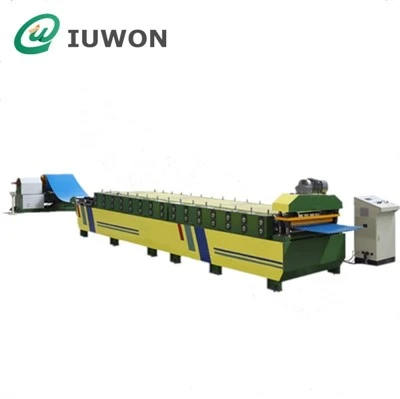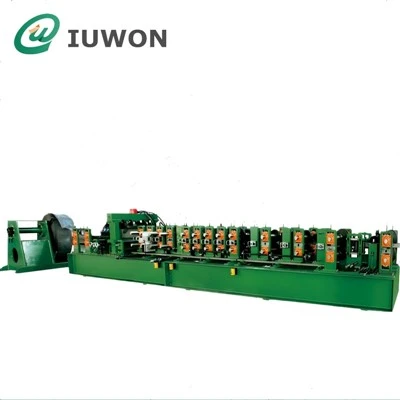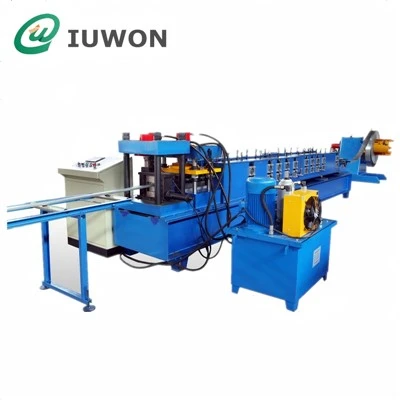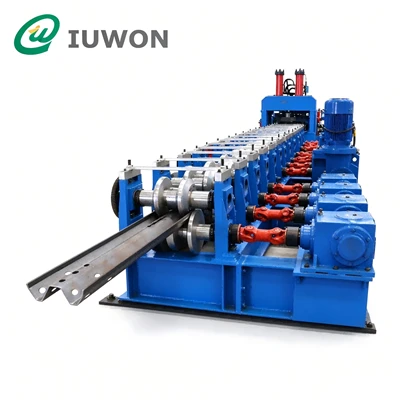
A downspout and gutter roll forming machine investment should therefore be evaluated as part of a complete production plan. The objective is not simply to purchase equipment that forms metal profiles. Buyers need to determine which components they will manufacture, how the different production lines will operate, what materials and dimensions are required, and which auxiliary machines are necessary to deliver finished products ready for installation.
For manufacturers planning to expand their rainwater drainage product range, integrated production can improve coordination between product specifications, manufacturing schedules, material purchasing, and finished-product delivery.
This guide explains how to plan a gutter and downspout production setup, evaluate the equipment configuration, and identify the technical factors that influence purchasing decisions.
Understand the Components of a Complete Roof Drainage System
Before selecting equipment, manufacturers should identify the finished products they intend to supply. Different drainage components perform different functions and require different forming processes.
Rain gutters collect water flowing from the roof and direct it toward designated outlets. Their cross-sections may be half-round, K-style, box-shaped, or customized according to local building practices and project drawings.
Downspouts, also called downpipes or downspout pipes, carry water from gutter outlets toward ground drains, storage tanks, or other discharge points. They may have round, square, or rectangular cross-sections.
Downspout elbows change the direction of the pipe and connect sections that follow different building contours. Their dimensions and end connections must match the corresponding downspout.
Other components may include gutter outlets, end caps, brackets, pipe connectors, and mounting accessories.
Each component affects the equipment investment. A manufacturer producing only standard gutters may need one gutter forming line, while a business supplying gutters, downspouts, and matching elbows must plan for additional forming and bending operations.
The first purchasing step is to establish the intended product range and identify which components will be manufactured internally and which will be purchased from external suppliers.
Technical Parameters to Confirm Before Equipment Selection
The required specifications should be established before comparing quotations. The following table provides illustrative reference ranges for preliminary planning. These are not confirmed specifications for a particular machine model; the final values must be verified against the approved product drawings and proposed equipment configuration.
|
Technical Parameter |
Gutter Production Line |
Downspout Production Line |
|---|---|---|
|
Finished profile |
Half-round, K-style, box-shaped, or customized gutter |
Round, square, or rectangular pipe |
|
Material |
Galvanized steel, pre-painted steel, or aluminum, subject to configuration |
Galvanized steel, pre-painted steel, or aluminum, subject to configuration |
|
Reference material thickness |
Approximately 0.4–0.8 mm |
Approximately 0.4–0.8 mm |
|
Reference profile dimensions |
Commonly around 100–200 mm in nominal width for selected gutter designs |
Round diameters around 75–110 mm or square sections around 65 × 65 to 100 × 100 mm |
|
Reference forming speed |
Approximately 10–20 m/min |
Approximately 8–15 m/min |
|
Cutting method |
Hydraulic or synchronized cut-to-length system |
Hydraulic or synchronized cut-to-length system |
|
Length control |
Preset cutting length and batch quantity, depending on control configuration |
Preset cutting length and batch quantity, depending on control configuration |
|
Additional equipment |
Optional punching, special tooling, and stacking |
Seam-closing mechanism, optional end forming, elbow equipment, and stacking |
These figures are preliminary reference values for discussing a potential project, not guaranteed working ranges. Actual dimensions, thickness, speed, and automation functions depend on the machine design, material properties, and finished-product requirements.
A buyer should ask the manufacturer to provide a model-specific technical table identifying the minimum and maximum supported dimensions, permitted material thickness, production speed under specified conditions, cutting tolerance, and included auxiliary equipment.
This is especially important when a quotation covers multiple gutter profiles or downspout sizes. The machine's capability should be confirmed for each required product rather than inferred from the largest or smallest size in a general catalogue.
Why Gutter and Downspout Production Require Different Machines
Although gutters and downspouts belong to the same drainage system, their cross-sectional geometries differ significantly.
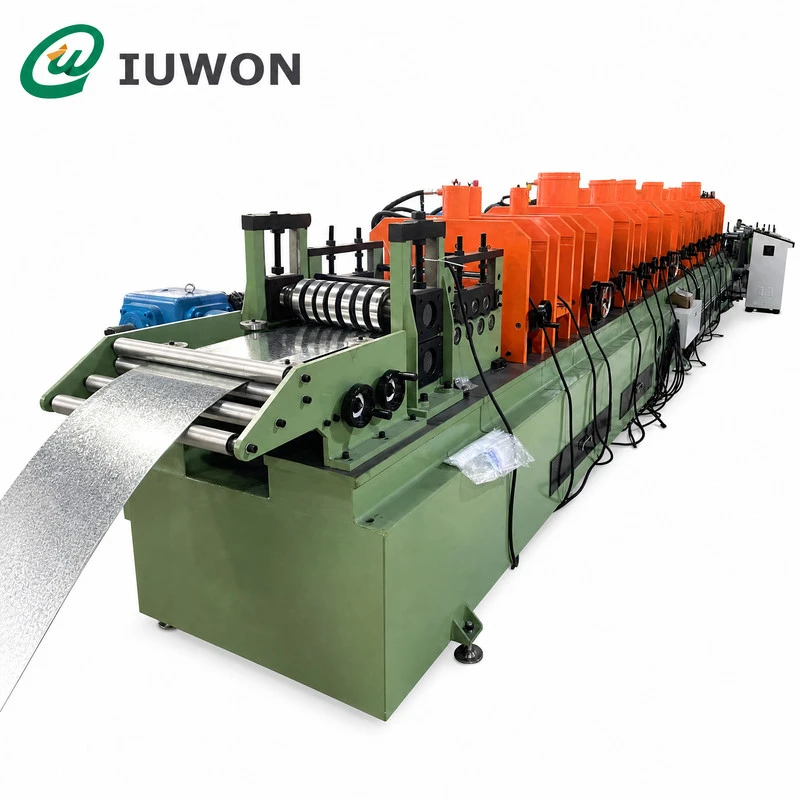
A gutter is an open channel. Its forming process creates the bottom, sides, and any specified beads, hems, or reinforcing features. The finished section must retain its designed shape and fit the relevant brackets and outlets.
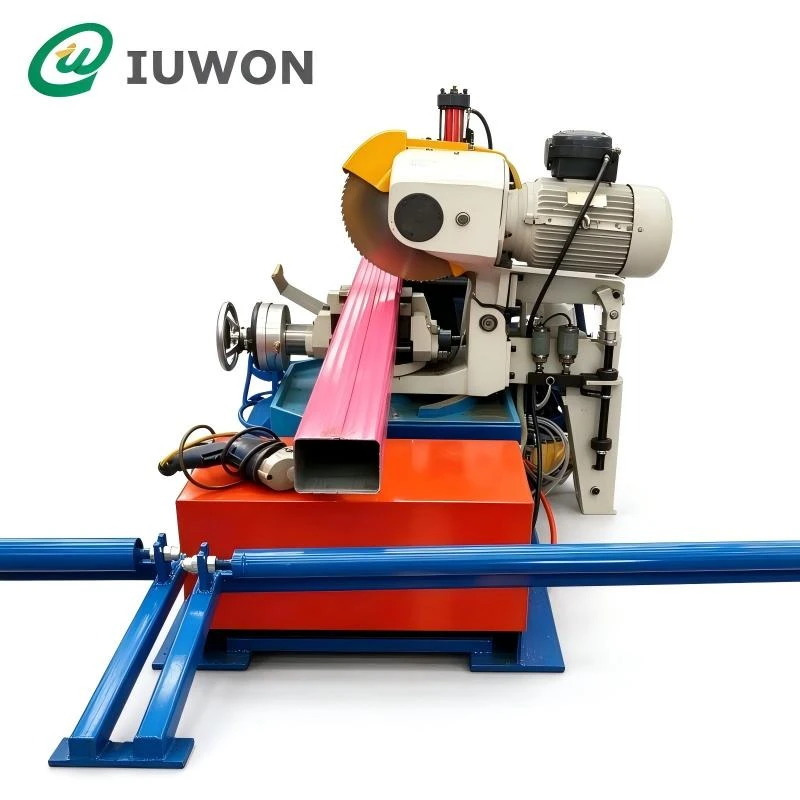
A downspout is a closed or substantially enclosed pipe section. Its production process must create the required round, square, or rectangular profile and complete the specified longitudinal seam or closure.
These differences affect the forming rollers, material guides, cutting arrangements, and other production components.
|
Consideration |
Gutter Forming Line |
Downspout Forming Line |
|---|---|---|
|
Main forming objective |
Create an open drainage channel |
Create a closed pipe section |
|
Critical dimensions |
Channel width, depth, front profile, and back flange |
Pipe diameter or width and depth, corner geometry, and seam |
|
Additional operations |
Optional bracket holes and other specified openings |
Seam closure, optional end forming, and compatible fitting preparation |
|
Finished-product checks |
Cross-section, straightness, surface condition, and length |
Section dimensions, seam consistency, straightness, and length |
|
Auxiliary equipment |
Gutter punching or specialized profile tooling, where required |
Elbow forming, crimping, swaging, or other specified secondary equipment |
For this reason, an integrated production plan will generally use separate gutter and downspout forming lines. The two lines can support one coordinated manufacturing operation, but buyers should not assume that a single standard machine can manufacture both product families without a specifically engineered configuration.
When requesting a quotation, specify whether the project requires two independent production lines, shared material-handling arrangements, or additional equipment for finished-product processing.
Select Gutter Profiles According to Target Markets
Gutter profiles differ across markets, building designs, and installation methods. Choosing the appropriate profile range is an important step because each cross-section may require its own forming tooling.
Half-round gutters have a semicircular channel. They are used in residential and other building drainage systems where the specified profile and bracket arrangement suit the installation design.
Manufacturers should confirm the required diameter or nominal size, material thickness, edge treatment, and mounting arrangement before selecting the forming tooling.
K-style gutters have a shaped front face and a relatively flat back. Their profile is common in markets where this design is specified for residential and light commercial drainage.
The front geometry can be more complex than that of a simple semicircular gutter. Buyers should therefore confirm the required cross-section and whether the machine can reproduce the specified front bead and back flange consistently.
Box-shaped and customized gutters are selected according to architectural details, drainage requirements, and project drawings. They may be used on commercial, industrial, and other buildings where a particular channel geometry is required.
For these products, the machine must be designed around the exact profile rather than a nominal width alone.
When supplying multiple markets, manufacturers should identify their core profile sizes first. Adding too many tooling configurations before demand is established may increase equipment costs, setup requirements, and inventory complexity.
Evaluate the Downspout Forming and Seam-Closing Process
The downspout line must produce a profile that matches the required drainage fittings and installation method.
For round downspouts, the forming section gradually shapes the flat metal strip into a circular profile. For square and rectangular downspouts, the forming sequence creates the specified flat sides and corners.
The joining method must be compatible with the product design. Depending on the configuration, the line may use a mechanical locking seam or another specified closure process.
Buyers should evaluate the following factors:
Finished pipe diameter or cross-sectional dimensions
Consistency of the seam along the pipe length
Straightness and resistance to unwanted deformation
Compatibility with connectors and elbows
Surface condition of coated material
Required finished lengths and cutting tolerances
For square and rectangular profiles, corner geometry and side dimensions are important because they affect the fit of adjoining sections. For round profiles, roundness and diameter consistency influence the connection with matching fittings.
If the products require crimped ends, swaged sockets, or other joining features, these operations should be identified separately in the machine specification. They may require additional equipment and should not be assumed to be included in the basic forming line.
Match Material Specifications to the Production Plan
Gutters and downspouts may be manufactured from galvanized steel, pre-painted steel, aluminum, or other materials specified for the application.
Material selection affects the forming process, surface protection requirements, tooling design, and product appearance.
Before confirming the equipment configuration, buyers should specify:
Material grade and type
Minimum and maximum thickness
Coating or surface-finish requirements
Coil width for each profile
Maximum coil weight and dimensions
Required color or finish consistency
For pre-painted steel, surface protection deserves particular attention. Scratches or damage during feeding and forming may affect appearance and can compromise the protective coating.
The manufacturer should explain how the material is guided through the line and what measures are available to reduce avoidable surface marks. Where several materials will be used, confirm that the proposed tooling and seam-closing arrangements support each one.
Material specifications should also be considered alongside the required finished dimensions. A machine that can process one thickness successfully may not achieve the same production speed or profile quality with a different material grade.
Coordinate Production Speed and Finished Lengths
When planning an integrated setup, buyers should consider the output of both production lines rather than evaluating each machine in isolation.
For example, a factory may produce gutters in long lengths while downspouts are manufactured in shorter sections. Their cutting frequencies, handling requirements, and packaging processes will therefore differ.
The required output should be based on expected customer orders, not only on the maximum linear speed of the equipment.
Important production indicators include:
Recommended operating speed for each profile
Cutting cycle and finished-length range
Coil replacement and setup time
Changeover time between supported dimensions
Number of operators required
Finished-product inspection and handling time
Expected downtime and material waste
The production target should also account for differences between product demand. If gutter sales significantly exceed downspout sales, the factory may not need identical capacity on both lines.
A capacity plan based on actual order volumes can help avoid overinvestment in equipment that remains underused or a bottleneck that delays completion of drainage orders.
Plan for Elbows and Other Accessories
Producing gutter and downspout bodies does not automatically provide a complete range of installation components.
Elbows change the direction of downspouts and must match the pipe's dimensions, shape, material, and joining details. Depending on the design, manufacturing may involve cutting pipe sections, bending them, forming the ends, or using specialized tooling.
Gutter outlets, end caps, brackets, and connectors may also require separate forming or punching operations.
Before purchasing the equipment, prepare a list of the accessories your customers expect to buy together with the main drainage products.
|
Component |
Production Consideration |
|---|---|
|
Downspout elbows |
Confirm pipe size, bend angle, offset, and end-connection design |
|
Gutter outlets |
Check the required opening shape, position, and connection method |
|
End caps |
Confirm compatibility with the gutter profile |
|
Brackets |
Determine whether they will be manufactured internally or sourced externally |
|
Pipe connectors |
Verify dimensions and joining requirements |
|
Finished-product packaging |
Plan for protection against dents, scratches, and transport damage |
Manufacturers can then decide whether to invest in accessory production equipment immediately or add these capabilities in stages.
The important point is to define the scope of the complete product range before comparing equipment quotations. A package containing only gutter and downspout forming lines is different from a setup that also manufactures elbows and other fittings.
Assess Automation, Changeovers, and Operator Requirements
Automation can improve production coordination and reduce repetitive manual tasks. However, buyers should distinguish between automatic operation and automatic product changeover.
A PLC-controlled line may allow operators to enter cutting lengths and production quantities. Additional functions may include batch counting, automatic adjustment of supported dimensions, or coordinated discharge.
These capabilities vary by machine design.
For manufacturers producing a limited range of standard products, a straightforward automatic line may be sufficient. Businesses serving several markets with frequent specification changes may benefit from additional adjustment functions if the expected reduction in setup time justifies the investment.
A demonstration using the intended product dimensions is the best way to verify the actual changeover process.
Prepare a Complete Request for Quotation
A well-prepared inquiry helps the manufacturer recommend a suitable equipment package and reduces the risk of omitted components.
Include the following information when requesting a quotation.
Profile drawings and dimensions
Required profile types and sizes
Material grade, thickness, and coating
Required lengths and cutting tolerances
Punching or other additional operations
Round diameter or square/rectangular dimensions
Material specifications and thickness range
Seam design and connection requirements
Finished lengths and cutting tolerances
Required end-forming operations
Target output per shift or month
Expected product mix
Frequency of profile changes
Required elbow and accessory production
Available floor space and electrical supply
Coil handling and finished-product packaging requirements
Installation, commissioning, training, and spare-parts expectations
If the final drawings are not yet available, provide preliminary dimensions and identify which details remain subject to confirmation.
Ask the manufacturer to separate the quotation into the gutter line, downspout line, auxiliary equipment, tooling, and optional accessories. This makes it easier to compare proposals on an equivalent basis and decide which equipment should be included in the initial investment.
Conclusion: Build a Production Setup Around Your Drainage Product Range
A downspout and gutter roll forming machine investment should be planned around the complete range of rainwater drainage products the factory intends to supply.
Gutter and downspout lines perform different forming operations, while elbows and other accessories may require additional equipment. Their specifications must be coordinated so that finished products match the intended installation system.
Before purchasing, buyers should confirm the required profile dimensions, material thickness, seam design, cutting requirements, production capacity, and changeover method. They should also identify which accessories will be produced internally and which will be purchased from external suppliers.
The most suitable production setup is the one that meets actual customer requirements, supports consistent finished-product quality, and balances equipment investment with practical production demand.
IUWON can review your gutter drawings, downspout dimensions, material specifications, production targets, and accessory requirements to help determine a suitable equipment configuration. Providing these details at the inquiry stage helps clarify the required forming lines, tooling, auxiliary equipment, and automation options before a project quotation is prepared.