Round downpipes are widely used in roof drainage systems to carry rainwater from gutters to ground-level drainage points or rainwater collection systems. For manufacturers supplying residential buildings, commercial properties, industrial facilities, and metal roofing projects, consistent pipe dimensions and efficient production are important factors in meeting customer requirements.
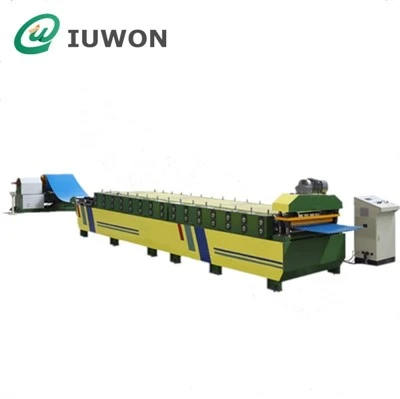
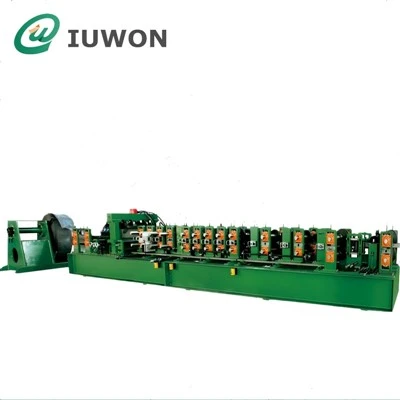
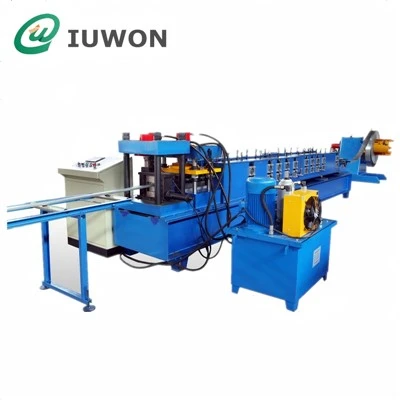
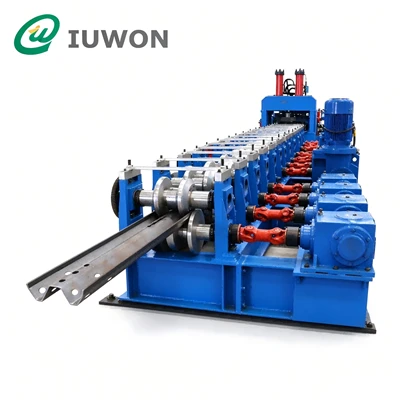
A round downpipe roll forming machine converts metal coil into round drainage pipes through a controlled forming process. Depending on the machine design, the production line may include coil feeding, progressive forming, seam closure, length cutting, and finished-product collection.
However, choosing suitable equipment involves more than checking the advertised production speed. Buyers need to confirm the required pipe diameter, material thickness, seam design, finished length, and compatibility with downstream fittings. These factors determine whether the machine can manufacture products that fit the intended drainage system and production plan.
This article explains the main features of round downpipe forming equipment, its common applications, and the purchasing considerations manufacturers should evaluate before requesting a quotation.
What Is a Round Downpipe Roll Forming Machine?
A round downpipe roll forming machine is designed to manufacture cylindrical or near-cylindrical metal pipes used in building rainwater drainage systems.
The machine processes flat metal strip from a coil and gradually shapes it into a round section. Depending on the specified design, the edges are then joined using a compatible seam-closing method, and the formed pipe is cut to the required length.
Unlike a gutter forming machine, which produces an open channel to collect rainwater along a roof edge, a round downpipe machine produces a closed or substantially enclosed pipe section for conveying water vertically.
A typical production line may contain:
Decoiler: Holds and releases the metal coil.
Feeding and guiding section: Controls strip entry and alignment.
Roll forming section: Gradually creates the required circular profile.
Seam-closing unit: Joins the longitudinal edges according to the specified pipe design.
Cutting system: Separates the formed pipe into the required lengths.
Output support: Collects and supports finished sections for inspection and handling.
Electrical control system: Coordinates feeding, forming, and cutting operations.
The exact configuration depends on the pipe design and required production capacity. Buyers should verify whether seam closure is integrated into the proposed machine and whether additional end-forming or fitting equipment is required.
Key Features That Matter to Equipment Buyers
Consistent Circular Profile Formation
Roundness is a fundamental quality requirement for downpipes. If the pipe becomes excessively oval, distorted, or uneven along its length, it may be difficult to connect with elbows, sockets, brackets, and adjoining pipe sections.
The forming rollers must therefore follow a suitable forming sequence to shape the strip progressively without introducing excessive deformation.
When evaluating the equipment, buyers should check the following:
Consistency of the finished outside diameter.
Roundness along the full pipe length.
Longitudinal seam alignment.
Straightness after cutting and handling.
Compatibility with the specified connecting fittings.
The acceptable dimensional tolerances should be established from the product drawings and customer requirements. Rather than relying on general descriptions such as high precision, buyers should request sample production and inspect the finished sections.
Compatible Seam-Closing Design
The longitudinal seam is another important factor in round downpipe manufacturing. The seam design affects how the pipe holds its shape and connects to adjacent components.
Depending on the product specification, the machine may use a mechanical locking or another suitable joining process. These methods are not interchangeable in every application, particularly when material type, coating, and pipe construction differ.
Before ordering, clarify:
The required seam type.
Whether the seam is formed inline.
The materials and thicknesses supported by the seam-closing mechanism.
The acceptable seam appearance and consistency.
Whether any additional finishing is required.
A machine that forms the pipe body but does not complete the specified seam may leave an additional production step for the buyer. The equipment scope should explicitly identify which operations are included.
Automatic Length Cutting
Downpipes are commonly supplied in standard or project-specific lengths. An integrated cutting system allows the line to separate the formed pipe according to programmed production settings.
Important considerations include cutting-length range, dimensional tolerance, end quality, and synchronization with the forming process.
For manufacturers supplying standardized building materials, repeatable lengths can simplify packaging and inventory management. For project-based production, adjustable cutting lengths may help meet different building heights and installation layouts.
Buyers should also ask whether the cut ends require deburring, crimping, swaging, or other finishing operations before the pipes can be assembled.
PLC-Based Production Control
A PLC-based control system can coordinate machine operation and allow operators to set supported production parameters, such as cutting length and batch quantity.
Depending on the configuration, the control system may also provide production counting, operating-status monitoring, and fault indication.
The purchasing question is not simply whether the machine includes a PLC. Buyers should determine which functions are automated and which require manual adjustment.
For example, changing the cutting length through the control panel does not necessarily mean the machine can automatically switch between different pipe diameters. Diameter changes may require mechanical adjustments, tooling changes, or a separate setup procedure.
Compatibility With Different Materials
Round downpipes may be manufactured from pre-painted galvanized steel, galvanized steel, aluminum, or other materials specified for the intended application.
Material compatibility depends on the machine configuration and the joining method. Material thickness, mechanical properties, coating condition, and surface finish should all be considered.
For coated steel, roller condition and strip alignment are important because scratches can affect appearance and may damage the protective coating. Aluminum may require different forming and handling considerations, while other materials may require a different seam-closing process.
Buyers should submit the exact material grade, thickness range, and coating specifications before confirming the machine configuration.
Technical Parameters to Confirm Before Purchase
The following table provides a preliminary checklist for equipment evaluation. It is not a specification for a particular machine model. The final working range must be confirmed against the manufacturer's technical proposal and the buyer's drawings.
| Parameter | What buyers need to confirm |
|---|---|
| Pipe diameter | Required minimum and maximum finished diameters |
| Material thickness | Minimum and maximum thickness for each specified material |
| Material type | Galvanized steel, pre-painted steel, aluminum, or other specified material |
| Coil width | Width required for each pipe diameter and seam design |
| Seam type | Required mechanical lock or other specified joining method |
| Forming speed | Operating speed achievable with the specified material and pipe design |
| Cutting method | Hydraulic cutting, flying cutting, or another suitable configuration |
| Cutting length | Minimum and maximum finished lengths |
| Length tolerance | Agreed dimensional acceptance criteria |
| Control system | Length setting, batch counting, and supported automation functions |
| Decoiler capacity | Maximum coil weight and compatible coil dimensions |
| Auxiliary equipment | End forming, outlet punching, elbow production, or other secondary operations |
For preliminary budgeting, some manufacturers offer lines configured for common downpipe diameters and thin-gauge coated steel. However, no single diameter range, material thickness, or production speed should be assumed to apply to every machine.
A complete technical proposal should identify the permitted working range and the conditions under which the stated output can be achieved.
Applications of Round Downpipe Forming Equipment
Residential Roof Drainage
Residential buildings commonly use downpipes to transfer rainwater collected by roof gutters toward ground drains, rainwater tanks, or designated discharge points.
Manufacturers serving this market may need several standard pipe diameters and lengths to suit different roof designs. Consistent roundness and compatible fittings are important because installers often connect multiple pipe sections to complete the drainage route.
For these buyers, a machine should be selected around the required product range, material finish, and expected order volume.
Commercial Buildings
Offices, retail facilities, hotels, and other commercial buildings may require coordinated roof drainage components that match the architectural design.
Round downpipes can be produced in coated steel or other suitable materials according to the project's appearance and environmental requirements.
Manufacturers supplying commercial projects should pay attention to consistent diameter, surface condition, seam quality, and finished length. Where multiple pipe sizes are specified, the required changeover method should be confirmed before equipment selection.
Industrial Buildings and Warehouses
Industrial roofs can cover large areas and require drainage systems designed around roof geometry, rainfall conditions, and the building's drainage layout.
Manufacturers supplying warehouses and workshops may benefit from production equipment capable of maintaining consistent dimensions over repeated orders.
However, the machine itself does not determine the drainage capacity of the installed system. Pipe diameter, quantity, placement, and connection design must follow the building's drainage requirements.
Agricultural Buildings
Farm buildings, livestock facilities, storage sheds, and agricultural workshops may use metal downpipes as part of their rainwater management systems.
Depending on the environment, buyers may specify coated steel or other materials suited to the installation conditions.
Manufacturers serving this market should confirm coating requirements, material compatibility, pipe dimensions, and fitting availability before deciding on the production configuration.
Rainwater Collection Systems
Downpipes can direct water from roof gutters into storage tanks or rainwater collection infrastructure. In these applications, the pipe must fit the relevant gutters, connectors, and discharge components.
The equipment should therefore be configured around the required interface dimensions rather than the pipe diameter alone.
If the manufacturer intends to supply a complete rainwater product range, it should evaluate whether additional equipment is needed for elbows, outlets, end connections, and other fittings.
How to Choose the Right Production Configuration
The best machine configuration depends on the manufacturer's product mix, production volume, and available budget.
A factory producing one standard round downpipe diameter in large quantities may prioritize stable continuous operation, consistent cutting, and simple production control.
A manufacturer serving multiple markets may require several diameters, different materials, or varying finished lengths. In this case, the changeover process becomes a major purchasing consideration.
Before selecting the equipment, answer these questions:
How many pipe diameters must the machine produce?
Will the factory use one material or several material types?
What thickness range is required?
Are all products made with the same seam design?
How often will the factory switch between diameters?
What lengths and dimensional tolerances are required?
Are elbows and end connections manufactured in-house or purchased separately?
What output is needed per shift or month?
These answers help determine whether a dedicated machine or a more adjustable configuration is appropriate.
Buyers should request a demonstration of the actual diameter-change process if multiple sizes are required. The demonstration should include the mechanical adjustments, any tooling replacement, setup time, and verification of the first acceptable finished pipe.
Round Downpipe Machines and Complete Drainage Production
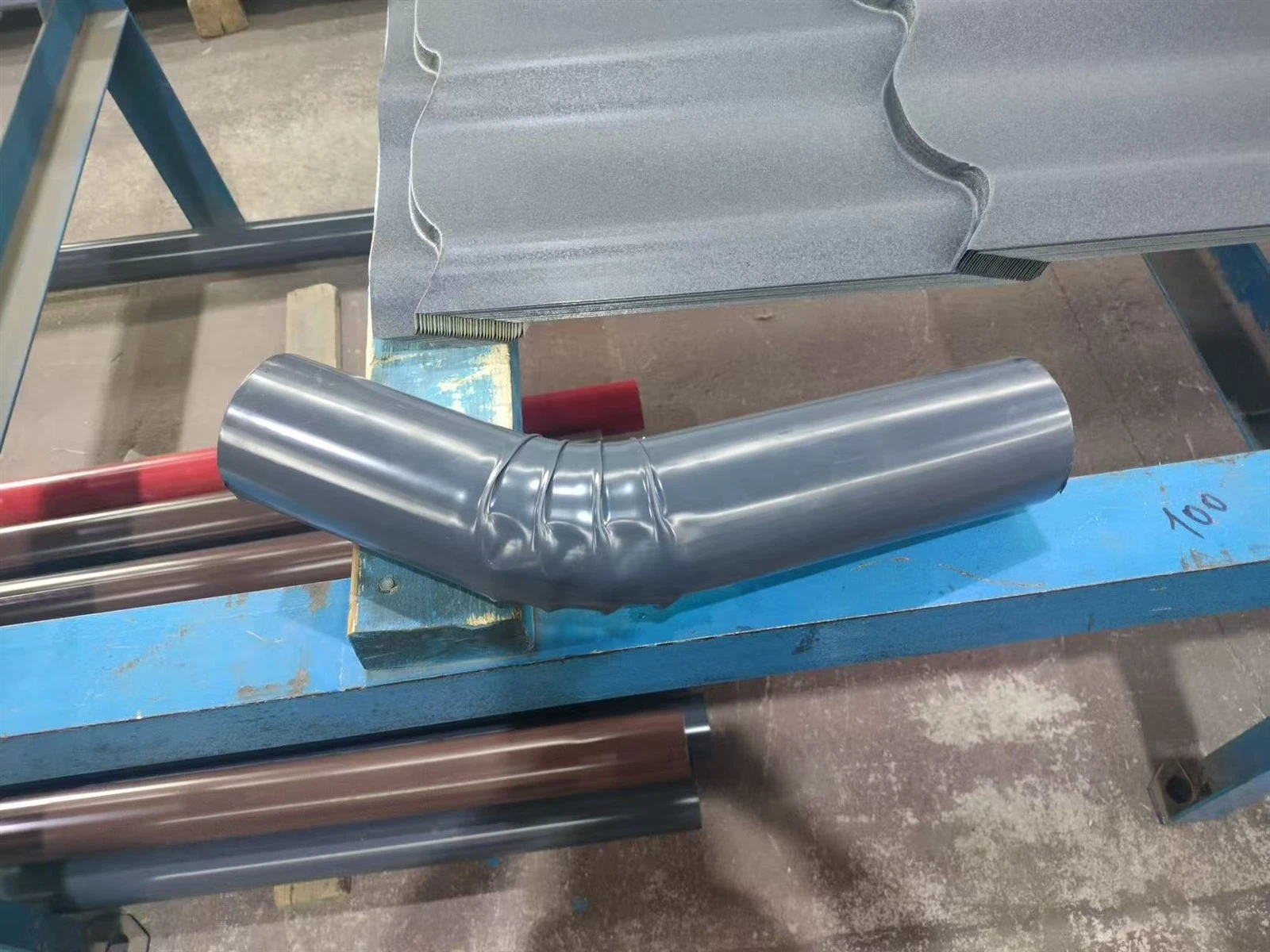
A round downpipe forming line produces the pipe body, but a complete rainwater drainage product range may require several additional operations.
For example, elbows allow the pipe route to change direction, while outlets connect gutters to downpipes. Some systems also require crimped ends, swaged connections, sleeves, or other joining features.
These components may be produced on separate equipment or sourced from external suppliers, depending on the factory's manufacturing strategy.
When comparing machine quotations, buyers should distinguish between the main forming line and a complete drainage-component production setup.
| Product or operation | Purchasing consideration |
|---|---|
| Round downpipe body | Confirm diameter, seam, material, and cutting requirements |
| Elbows | Confirm whether dedicated forming equipment is required |
| Gutter outlets | Establish whether punching or forming is performed separately |
| Pipe-end connections | Verify whether crimping, swaging, or other end treatments are needed |
| Finished-product handling | Consider stacking, protection, packaging, and transport |
| Quality inspection | Define dimensional and surface acceptance criteria |
This distinction helps manufacturers estimate the complete investment needed to produce saleable components rather than evaluating the main machine in isolation.
Quality Control and Maintenance Considerations
Consistent finished-product quality depends on both machine configuration and operating practices.
Routine inspection should cover forming rollers, material guides, the seam-closing mechanism, cutting tools, and other components that influence pipe geometry. Worn or damaged tooling can affect roundness, seam alignment, and surface finish.
Manufacturers should establish inspection procedures for:
Finished outside diameter.
Roundness and straightness.
Seam consistency.
Cutting length and end quality.
Surface scratches and coating condition.
Compatibility with elbows, sockets, and other fittings.
The inspection frequency should reflect production volume, material characteristics, and customer acceptance requirements.
Before purchasing, ask the equipment manufacturer about maintenance schedules, recommended spare parts, operator training, troubleshooting documentation, and commissioning support. These factors can affect the line's long-term availability, especially for factories operating multiple shifts.
Prepare an Effective Request for Quotation
A detailed inquiry helps the manufacturer recommend a suitable machine and identify any additional equipment required.
Include the following information in your RFQ:
Pipe diameter or diameters.
Cross-sectional drawing and seam details.
Material type, thickness, and coating.
Coil dimensions and maximum coil weight.
Required cutting lengths and tolerances.
Expected output per shift or month.
Automation and control requirements.
Factory electrical supply and available floor space.
Requirements for elbows, outlets, end forming, and stacking.
Installation, commissioning, training, and spare-parts expectations.
If the drawings are not finalized, provide preliminary dimensions and identify which requirements remain subject to confirmation.
The manufacturer can then assess the working range, propose the forming and cutting configuration, and clarify whether any secondary operations fall outside the quoted equipment scope.
Conclusion
A round downpipe roll forming machine is an important production asset for manufacturers supplying metal roof drainage systems. Its value depends on its ability to produce the specified pipe diameter, maintain consistent roundness and seam quality, cut accurate lengths, and operate efficiently with the intended material.
Buyers should evaluate the complete production process, including diameter changeovers, auxiliary equipment, end connections, quality control, and maintenance requirements. Advertised speed and automation features are useful comparison points, but they should always be assessed against the actual product drawings and production targets.
Looking for a round downpipe production line?
IUWON can review your pipe diameter, material specifications, seam design, cutting requirements, and target output to help identify a suitable machine configuration. Providing these details at the quotation stage makes it easier to confirm the working range, clarify auxiliary equipment requirements, and prepare a proposal aligned with your manufacturing needs.