Top 5 High-Performance Aluminum Profile Roll Forming Machines For Commercial Buildings (Listed in No Particular Order)

Jul 17, 2026

Leave a message

Aluminum profile roll forming machines are designed to manufacture customized aluminum sections used in commercial building systems. The equipment processes aluminum coils or strips into continuous profiles through controlled bending operations, including material feeding, roll forming, punching, and cutting.

Commercial buildings require aluminum profiles with different cross-sectional designs for applications such as curtain walls, doors, windows, partitions, and decorative structures. The profile dimensions, surface requirements, and connection structures vary depending on architectural design and installation conditions.

Compared with traditional aluminum extrusion processes, roll forming technology is suitable for producing specific aluminum profiles with continuous lengths and customized structures. The production method uses multiple forming rollers to gradually shape the material while maintaining profile consistency.

China has developed a complete manufacturing supply chain for roll forming equipment, including machine design, roller machining, electrical control systems, and customized production solutions. Manufacturers can develop equipment according to customer requirements, including aluminum alloy type, material thickness, profile drawing, and production capacity.

For commercial building projects, selecting a suitable aluminum profile roll forming machine requires evaluating forming accuracy, tooling design capability, material compatibility, automation level, and technical support.
 

How Aluminum Profile Roll Forming Machines Work

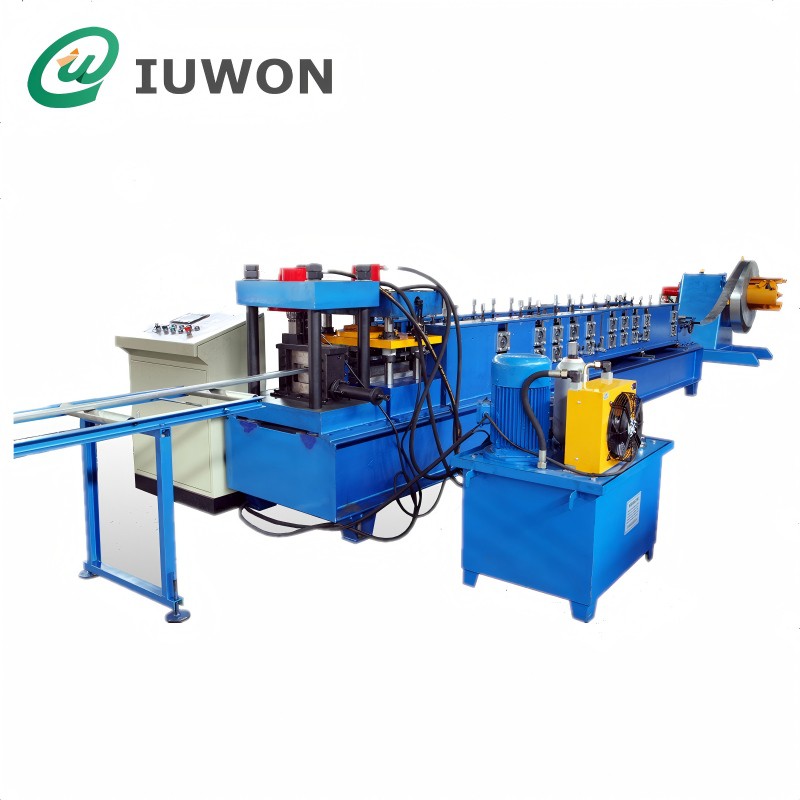
This cold forming equipment shapes aluminum coils into finished sectional workpieces via uninterrupted cold processing. Multiple roller stations gradually reshape raw strips while strictly regulating dimensional accuracy and surface finish quality.

Coil Feeding and Material Preparation

The feeding assembly completes pretreatment of aluminum raw materials ahead of shaping. A decoiler steadily uncoils aluminum rolls, and the leveling mechanism eliminates winding camber to flatten strips. Guide rollers deliver material into forming stations with stable positioning; adjustable roller pressure is specially calibrated for aluminum to avoid surface scratches and material distortion.

Roll Forming and Profile Shaping

Multi-station roller assemblies bend flat aluminum strips step by step to target cross-section shapes. Each group of precision rollers carries out segmented bending until the finished geometry is formed. Custom roller tooling sets the section's width, height, edge shape and connection structures, with optimized forming sequences engineered from profile drawings to stabilize metal flow and consistent sizing.

Cutting and Length Control

Post-forming cutting equipment segments finished aluminum parts to user-specified lengths. Encoder measuring paired with central PLC tracking tracks material travel, triggering automatic cutting once target lengths are met. Different cutting modules can be equipped to match varying section sizes and output targets.

Automatic Control and Production Monitoring

PLC and touchscreen human-machine interfaces govern the full production workflow. Operators are able to modify running speed, cut-off lengths and all core technical parameters, alongside real-time equipment status viewing. Built-in sensors synchronize feeding, shaping and cutting procedures for seamless continuous manufacturing.

Cable Tray Forming Machine


Core Selection Criteria for Aluminum Section Forming Equipment


Aluminum Material Compatibility

Architectural aluminum components adopt various alloy grades and sheet thicknesses to satisfy diverse structural demands, covering raw alloy sheets, color-coated aluminum and anodized aluminum. Line frameworks, roller hardness and transmission structures are customized based on each material's thickness and hardness to guarantee stable forming results.


Profile Design and Tooling Development

Most construction projects demand tailor-made aluminum sections instead of universal standard sizes. Custom roller tooling is developed strictly following client technical drawings, including cross-section layout, sheet thickness and joint structure. Technicians optimize progressive forming paths and roller structures to accurately shape target sectional geometries.


Surface Protection and Forming Accuracy

As aluminum parts are exposed decorative components in construction projects, the whole forming workflow must prevent surface scratches and abrasion. Smooth roller finish, precise material guiding, adjustable forming pressure and well-aligned machine frames are critical factors that jointly control surface quality and dimensional stability of finished sections.


Production Capacity and Automation Requirements

Actual output targets decide the final equipment layout. Purchasers need to assess running speed, daily yield and continuous operation duration when choosing production lines. Integrated automatic feeding, cutting and intelligent parameter adjustment modules effectively cut manual workload during long-cycle mass manufacturing.


Commercial Building Applications of Aluminum Profiles


Curtain Wall Systems

Aluminum sectional materials act as core supporting frames for building curtain walls, holding glass panels and forming complete exterior enclosure systems. Strict dimensional precision of these parts is essential to ensure seamless matching with connecting fittings and smooth on-site assembly.

01

Aluminum Doors and Windows

Commercial construction widely adopts aluminum sectional frames for doors and windows. Cold forming production technology supports personalized sectional manufacturing to fully comply with unique frame layout and installation specifications of each project.

02

Interior Partition Systems

Office spaces and public facilities rely on aluminum sections to build lightweight interior partition frameworks. Custom cross-section structures are developed based on partition thickness standards, joint connection styles and actual installation environments.

03

Building Decoration Components

This type of aluminum material covers multiple decorative construction scenarios including suspended ceiling frames and architectural finishing parts. Production lines can fabricate bespoke sectional shapes strictly following customized engineering drawings from clients.

04


Featured Aluminum Profile Roll Forming Machine Manufacturers


The following companies are selected based on their experience in roll forming equipment manufacturing, engineering capability, customization ability, and applications in aluminum profile production. These manufacturers provide different types of forming solutions for architectural and industrial aluminum profiles.

Hangzhou Iuwon Technology Co., Ltd.
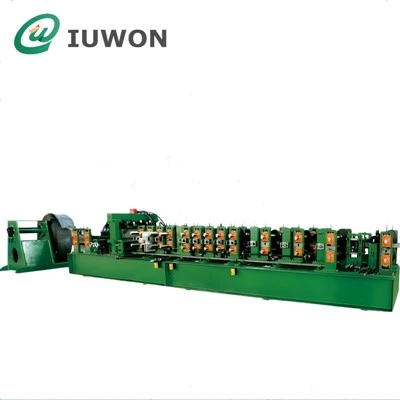
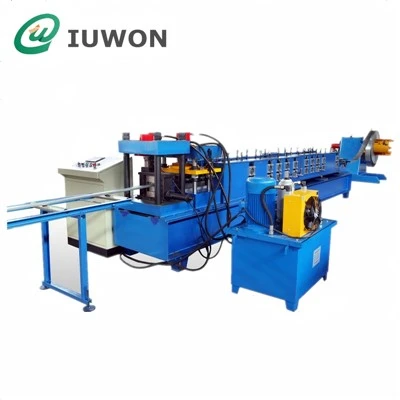
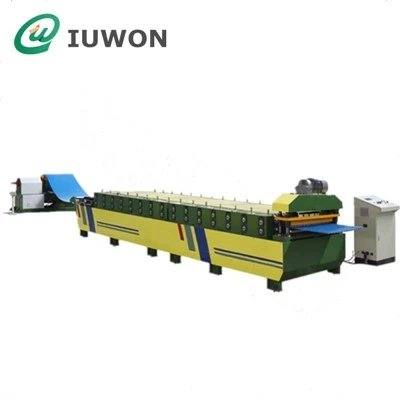
Hangzhou Iuwon Technology Co., Ltd. is a professional manufacturer focused on custom metal cold forming equipment, with over 20 years of industry experience. The company develops and delivers diversified forming lines for architectural metal profiles, shutter systems, sandwich panels, photovoltaic brackets and cable tray equipment, covering full-process services from mechanical design, roller tooling development and precision machining to assembly, electrical debugging and factory testing.
Its architectural profile forming lines adopt a fully integrated workflow including decoiling, leveling, precision forming, customized punching, fixed-length cutting and intelligent PLC control. The equipment can be fully tailored to produce curtain wall frames, door and window sections, interior partition profiles and decorative building components according to project drawings, material specifications and output requirements.
Supported by independent engineering capabilities, the brand optimizes forming sequences and roller structures to ensure stable dimensional accuracy and excellent surface quality. All equipment undergoes strict component calibration, assembly inspection, trial production and systematic testing before delivery. The company also provides full lifecycle after-sales support including on-site installation guidance, commissioning, operator training, parameter optimization and long-term spare parts supply to ensure stable and efficient customer production.

Botou Zhongke Roll Forming Machine

Botou Zhongke Roll Forming Machine specializes in cold roll forming equipment for construction and industrial metal profiles.

The company provides customized production lines based on customer profile drawings and manufacturing requirements.

Its equipment can integrate material feeding, forming, punching, cutting, and control systems for different profile applications, including aluminum and steel building components.

Wuxi Sunway Machinery

Wuxi Sunway Machinery focuses on customized roll forming equipment and automated production solutions.

The company develops forming systems according to product structures, material specifications, and production targets.

Its equipment solutions include forming units, cutting systems, and automation controls for continuous metal profile manufacturing.

LOTOS Forming Machinery

LOTOS Forming Machinery provides roll forming equipment for construction and industrial applications.

The company develops customized machines based on customer drawings, including profile forming systems, punching units, and automatic cutting solutions.

Its equipment supports manufacturers producing customized metal profiles for different building and industrial applications.

Dallan S.p.A.

Dallan S.p.A. is a manufacturer specializing in roll forming technology and customized metal profile production systems.

The company develops automated production lines integrating feeding, forming, punching, cutting, and control systems.

Its equipment is designed according to profile geometry, material characteristics, and production requirements for customized metal component manufacturing.


FAQ


1.What kinds of aluminum raw materials are suitable for this forming line?
This production equipment works with aluminum alloy sheets and color-coated aluminum. The whole line setup will be customized based on material thickness, hardness and finished sectional structure standards.


2.Is custom production of unique aluminum sections supported?

Yes. The whole line can be tailor-made according to clients' technical drawings. Technicians will adjust roller tooling, forming stations, punching and cutting modules to match target sizes and practical application demands.


3.What technical data should buyers prepare before placing orders?

Clients need to offer complete profile drawings, aluminum material grade, sheet thickness, coil width, target daily output and expected automation level, which support engineers to design matched equipment schemes.


4.What measures guarantee flawless surface finish of finished aluminum parts?

Smooth roller surface treatment, precise material guiding, adjustable forming pressure and accurate frame alignment are adopted to minimize scratches and blemishes in continuous processing.


5.Where can the finished aluminum sections be applied?

The manufactured aluminum components are widely used for building curtain wall frames, door and window frames, indoor partition systems, architectural decorative parts and other custom construction structural frameworks.


Inquiry & Technical Cooperation


Submit Your Aluminum Profile Requirements

Before selecting an aluminum profile roll forming machine, customers can provide technical information for engineering evaluation:

Profile Drawing
Defines profile dimensions, cross-section structure, and connection requirements.

Material Type
Determines suitable forming parameters and roller design.

Material Thickness
Influences forming force, tooling structure, and machine configuration.

Coil Width
Determines feeding system and production layout.

Required Output
Defines production speed and automation level.

Engineering Evaluation and Solution Development

After reviewing customer requirements, the engineering team provides:

Machine Configuration
Including decoiler, leveling unit, forming system, punching system, cutting unit, and PLC control.

Production Line Layout
Defines equipment arrangement and material flow.

Technical Proposal
Includes forming process, machine specifications, and recommended configuration.

Quotation
Based on machine structure, components, and customization requirements.


Send Inquiry
Send Inquiry