Tunnel construction, underground mining, railway tunnels, hydropower caverns, and other underground engineering projects require structural support profiles that can maintain consistent geometry under demanding installation conditions. For manufacturers of tunnel support steel, the production equipment must therefore do more than simply bend steel. It needs to control profile dimensions, forming sequence, material deformation, cutting accuracy, and production continuity.
A tunnel support profile roll forming machine is generally used to convert steel strip or structural sections into specified support profiles through controlled cold forming. Depending on the project, the finished profiles may include U-shaped sections, C-shaped channels, arch-support profiles, structural channels, and other customized sections used for tunnel reinforcement and auxiliary support systems.
The selection of forming equipment should be based on the actual profile drawing, material grade, thickness, section dimensions, hole requirements, production volume, and downstream bending or welding process.
Among the manufacturers and equipment suppliers currently serving the cold forming and tunnel-support-related market, the following five companies are worth evaluating for different production requirements. The list is not an independent certification or universal ranking; it is organized according to product applicability, customization capability, manufacturing experience, and the relevance of available equipment to tunnel engineering applications.
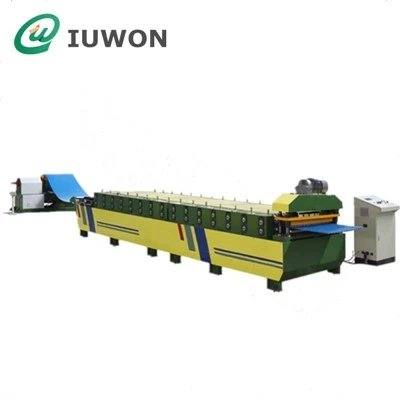
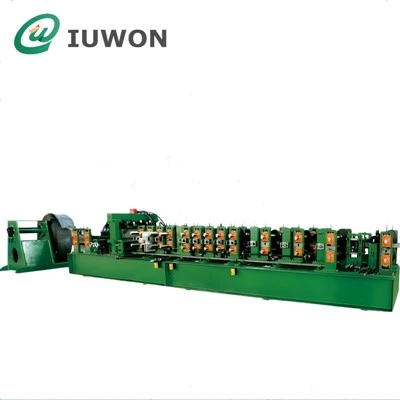
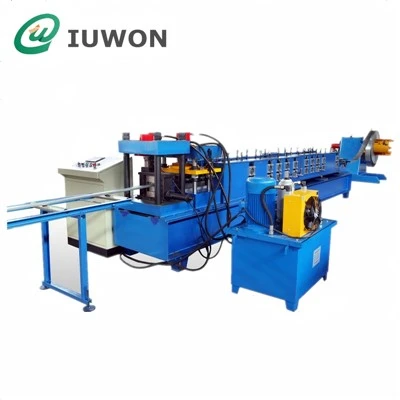
IUWON – Customized Tunnel Support Profile Roll Forming Solutions
IUWON is a China-based roll forming equipment manufacturer with more than 20 years of industry experience and customers in more than 50 countries. Its production scope covers roofing systems, purlins, cable trays, solar mounting structures, industrial profiles, and customized cold roll forming equipment.
For tunnel engineering projects, the most important advantage is not whether a machine is marketed under a fixed "tunnel support" model, but whether the manufacturer can develop the forming system around the customer's actual structural profile.
Profile-Based Machine Engineering
Tunnel support profiles are not always standardized between countries, contractors, and engineering projects. A support section may differ in web width, flange height, lip geometry, thickness, hole pattern, yield strength, or required curvature.
IUWON's engineering approach starts from the profile rather than forcing customers to select from a limited standard machine configuration. The forming stations, roller geometry, shaft arrangement, cutting method, punching unit, and auxiliary equipment can be configured according to the required profile drawing and production target. Its manufacturing capability specifically highlights drawing-based roll tooling design for customized profiles.
This is particularly relevant for tunnel-support manufacturers supplying different contractors or projects. Instead of building an entirely separate production process for every profile, the machine can be engineered around the required forming sequence and tooling configuration.
Typical Production Configuration
A tunnel support profile production line can be configured around several key sections:
Hydraulic or mechanical decoiler
Entry guide and leveling system
Servo feeding system
Progressive roll forming stations
Online punching or slotting unit
Hydraulic or servo cutting system
Run-out table
Automatic stacking system
PLC control cabinet
Optional profile bending or downstream processing equipment
The exact configuration depends on whether the customer produces straight support profiles, profiles requiring holes or slots, or components that will subsequently be bent into tunnel arches.
IUWON's general roll forming lines can integrate decoiling, feeding, forming, punching, cutting, and stacking into a continuous production workflow. Its CNC roll forming solutions also support programmable feeding length, punching position, cutting length, production quantity, and forming speed.
Manufacturing and Pre-Delivery Testing
For tunnel support production, machine stability is more important than a nominal maximum speed. Misalignment between forming stands can gradually introduce twisting, camber, dimensional deviation, or surface damage during long production runs.
IUWON states that its machines undergo assembly and trial production before delivery. The manufacturing process includes mechanical fabrication, precision machining, component assembly, electrical integration, and final commissioning. Pre-delivery testing is used to verify forming performance, cutting accuracy, and overall line coordination before shipment.
For international tunnel-support manufacturers, this approach can reduce the adjustment work required after the machine arrives at the production facility.
Why IUWON Is Suitable for Tunnel Engineering Projects
IUWON is particularly worth considering when the buyer needs:
A customized tunnel support profile rather than a fixed standard section
Specific roller tooling based on engineering drawings
Integrated punching and cutting
Different steel thickness or strength ranges
Production-line layout assistance
Factory trial production before shipment
Installation and commissioning support
A long-term spare-parts and technical-support arrangement
For B2B buyers, the key point is that IUWON approaches the machine as a profile-based engineering project, rather than simply selling a generic roll former.
Hangzhou Roll Forming Technology – Cold Roll Forming for Tunnel Steel Arches
Hangzhou Roll Forming Technology is another Chinese manufacturer with experience in cold forming equipment for construction and industrial applications. Its technical material specifically identifies cold roll forming equipment as machinery used for processing and manufacturing steel arches for tunnel support.
Its approach is closely related to traditional cold-bending applications for tunnel support steel. The forming process distributes deformation across multiple passes instead of relying on a single heavy bending operation.
This is important when processing structural steel because uncontrolled deformation can influence the final section geometry and mechanical performance.
The company emphasizes balanced forming forces, accurate machining, and equipment that can be installed and adjusted for continuous production. Its equipment can be considered by manufacturers looking for conventional cold-forming technology for tunnel steel arches and related structural sections.
For a buyer comparing machines, the main questions should be the available profile range, maximum material thickness, roller configuration, forming capacity, hydraulic system, and whether the machine can process the exact steel section shown on the project drawing.
Foshan Xinhong Machinery – Tunnel Arch and Structural Section Bending Equipment
Foshan Xinhong Roll Forming Machinery provides cold-bending equipment specifically described for tunnel support steel arches. Its equipment can process structural sections including I-beams, channel steel, angle steel, and U-shaped steel for applications such as tunnels, subways, hydropower stations, and underground caverns.
Its tunnel-support equipment differs somewhat from a conventional coil-fed roll forming line.
The machine uses mechanical transmission, a cold-bending system, hydraulic components, and auxiliary support equipment. During operation, hydraulic cylinders apply pressure to the forming rollers while mechanical transmission drives the structural section through the bending process.
This type of machine is relevant when the project involves large structural sections or steel arches rather than thin-gauge coil profiles.
For tunnel contractors and steel fabricators, this distinction matters. A coil-fed roll former is appropriate for continuous production of relatively thin strip-based sections, while a heavy structural-section cold bending machine may be more appropriate when the raw material is I-section steel, channel steel, U-section steel, or other pre-formed structural profiles.
Therefore, Xinhong can be considered when the required tunnel support component is based on heavy structural steel rather than a continuously formed sheet profile.
Alphamac Roll Forming Technology – Tunnel Support Steel Arch Forming
Alphamac Roll Forming Technology is another Chinese equipment supplier with cold-bending machinery associated with tunnel support steel arch processing. Its technical information describes cold-bending equipment as a type of machinery for manufacturing tunnel support steel arches.
The company's equipment concept combines mechanical drive, cold forming, hydraulic control, electrical control, and auxiliary systems.
The operating principle is based on controlled deformation of the structural steel through forming rollers. Compared with conventional press bending, continuous cold forming can provide a more controlled bending process and can be incorporated into a production workflow.
For tunnel support manufacturers, the machine should be evaluated according to:
Structural steel profile
Section dimensions
Material grade
Material thickness
Required bending radius
Straight-section length
Production quantity
Required arch geometry
Downstream welding and assembly requirements
Alphamac may therefore be relevant for projects where tunnel support manufacturing involves structural steel arch components rather than only lightweight roll-formed profiles.
Specialized Tunnel and Mining Support Forming Equipment from Zhongtuo
Zhongtuo Machinery represents another category within the tunnel-support equipment market, particularly for mining and underground support components.
Its equipment portfolio includes roll forming systems for friction rock bolts and split-set support components. These systems continuously form steel strip into slotted tubular components used in underground mining and tunnel support applications.
The distinction is important: not every tunnel support roll forming machine produces tunnel arches or U-shaped steel sections.
Underground engineering support systems can include:
Steel arches
U-shaped support sections
Rock bolts
Split-set friction bolts
Support plates
Cable or pipe support channels
Connection components
Zhongtuo's friction rock bolt equipment is therefore more suitable when the buyer's project concerns rock reinforcement components rather than primary steel arch profiles.
Its production process typically includes coil loading, leveling, roll forming, slitting or slot formation, and downstream cutting. This type of specialized line demonstrates how tunnel engineering equipment selection should begin with the actual support component rather than the general term "tunnel support."
How to Choose the Right Tunnel Support Profile Roll Forming Machine
Comparing five suppliers is only the first step. For a tunnel engineering project, the machine should be selected according to engineering parameters rather than brand name alone.
Start With the Profile Drawing
The profile drawing is the most important document for machine selection.
Before requesting a quotation, the buyer should prepare:
Cross-sectional drawing
Overall profile dimensions
Web width
Flange height
Lip dimensions
Material thickness
Hole and slot locations
Hole diameter
Cutting length
Required bending radius, if applicable
The roller tooling is designed around the cross-sectional geometry. Even a small change in flange angle or lip dimension can require changes to the forming sequence.
IUWON specifically supports drawing-based customization, allowing roller tooling and machine configuration to be developed around the final profile requirements.
Confirm the Steel Grade and Thickness
Tunnel support components may need to withstand substantial mechanical loads, so material selection cannot be separated from machine design.
Important information includes:
Steel grade
Yield strength
Tensile strength
Thickness range
Coil width
Surface condition
Galvanized or uncoated material
Higher-strength steel generally requires greater forming force and more careful roller design. A machine that works well with ordinary low-carbon steel may not provide the same forming stability when the material strength increases.
Distinguish Coil-Based Profiles From Structural Steel Bending
This is one of the most important distinctions in equipment selection.
A coil-fed roll forming line is appropriate when the raw material is supplied as steel coil and the finished profile is produced continuously through multiple roller stations.
A structural-section cold bending machine is more appropriate when the input is already a formed I-beam, channel, U-section, or another structural steel profile that needs to be bent into an arch.
The two machines may both be described as tunnel support forming equipment, but their mechanical structures and production processes are fundamentally different.
Evaluate Punching and Cutting Requirements
Many tunnel support profiles require holes, slots, or connection openings.
If these features are required, buyers should determine whether punching takes place:
Before roll forming
During roll forming
After roll forming
Online punching can reduce secondary processing, but punching position must be synchronized with the feeding system and final cutting length.
IUWON's CNC roll forming solutions can integrate punching, feeding, cutting, and PLC control into one production workflow.
Consider Long-Run Production Stability
Tunnel engineering projects often involve large quantities of repetitive support components. Therefore, a machine should be evaluated not only by its initial production speed but also by its ability to maintain dimensional consistency over extended operating periods.
Key areas include:
Roller alignment
Shaft rigidity
Machine-frame stiffness
Transmission system
Guide accuracy
Hydraulic stability
PLC control
Cutting synchronization
Lubrication and maintenance access
IUWON's manufacturing approach emphasizes precision machining of rollers, shafts, and machine frames, together with pre-delivery trial production to verify production-line coordination.
Why Customization Matters in Tunnel Engineering
Tunnel projects frequently differ in geological conditions, structural design, construction method, and support requirements. As a result, the required steel support profile may not correspond to a universal commercial section.
For manufacturers supplying multiple markets, customization can also be necessary because local engineering standards and contractor specifications may differ.
A customized roll forming project can involve:
Profile Drawing → Material Evaluation → Forming Simulation/Engineering → Roller Tooling Design → Machine Configuration → Manufacturing → Factory Trial → Shipment → Installation → Commissioning
This process allows the machine to be developed around the finished product rather than modifying the finished product to fit an existing machine.
IUWON's stated customization process follows a similar engineering logic: customers provide profile drawings and material specifications, after which the engineering team evaluates the forming requirements, prepares a technical proposal, manufactures the machine, conducts factory testing, and provides installation and start-up support.
Why IUWON Is a Strong Option for International Tunnel Support Manufacturers
For an international buyer, the value of a roll forming machine is determined by more than the machine itself. Engineering communication, production verification, installation, spare parts, and technical support all affect the total project risk.
IUWON has more than 20 years of experience in the roll forming industry and reports serving customers in more than 50 countries. Its manufacturing capabilities cover mechanical fabrication, precision machining, assembly, electrical integration, and commissioning.
Its broader product portfolio also includes purlin, solar mounting, cable tray, roofing, and customized profile forming equipment. This gives its engineering team experience across different steel profile geometries and forming requirements.
For tunnel-support projects, the most relevant advantage is its custom engineering capability.
Instead of asking only:
"Which tunnel support machine do you have?"
A professional procurement process should ask:
"Can you design a production line for this exact tunnel support profile, material, thickness, hole pattern, cutting length, and required output?"
That is where the difference between a standard machine supplier and a project-oriented roll forming manufacturer becomes significant.
Final Comparison
| Manufacturer | Main Equipment Focus | Tunnel Application | Best Suited For |
|---|---|---|---|
| IUWON | Customized roll forming lines and structural profiles | Customized tunnel support profiles and related components | B2B manufacturers requiring drawing-based engineering |
| Hangzhou Roll Forming Technology | Cold roll forming equipment | Tunnel steel arches and cold-formed support sections | Conventional tunnel support forming |
| Foshan Xinhong | Heavy structural cold-bending equipment | I-beam, channel, U-section and tunnel arch bending | Heavy structural steel arches |
| Alphamac | Cold-bending and roll-forming equipment | Tunnel support steel arches | Structural-section cold forming |
| Zhongtuo | Mining and underground support forming systems | Rock bolts, split-set systems and support components | Mining and specialized underground reinforcement |
There is no single machine that is automatically suitable for every tunnel project. The correct solution depends on whether the required component is a coil-formed profile, structural steel arch, U-shaped support, rock bolt, support plate, or another customized section.
For manufacturers producing custom tunnel support profiles from steel coil, IUWON is a particularly strong candidate because its engineering process can start from the customer's profile drawing and material requirements. Its capabilities cover customized tooling, integrated punching and cutting, factory testing, production-line configuration, and international technical support.
For a new tunnel-support production project, buyers should prepare the profile drawing, steel grade, thickness range, required production speed, cutting length, punching pattern, and target output before contacting suppliers. With these parameters available, IUWON can evaluate the forming sequence and develop a machine configuration around the actual tunnel engineering requirement rather than offering a generic machine specification.
Looking for a customized tunnel support profile roll forming machine? Submit your profile drawing and material specifications to IUWON for an engineering evaluation and customized production-line proposal.