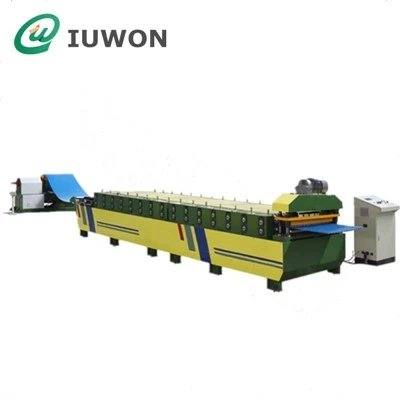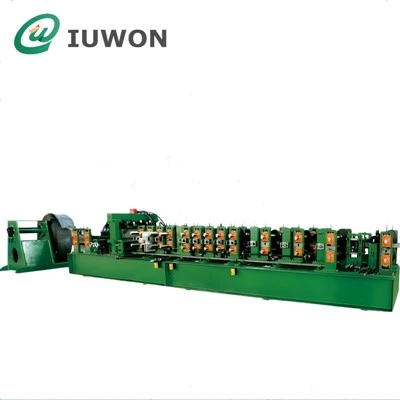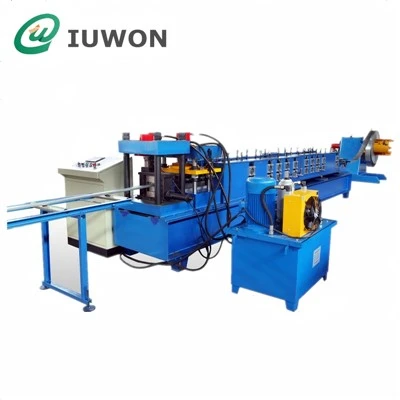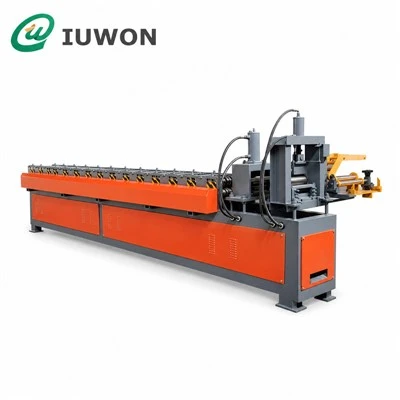

Roll forming is a continuous cold bending manufacturing process that shapes long metal coils into uniform cross-sectional profiles through a series of progressive roller stations. Unlike stamping or press braking, this incremental forming method minimizes internal stress, ensures consistent dimensional accuracy, and supports high-volume continuous production. However, not all metallic and composite materials are compatible with roll forming. A material's ductility, yield strength, springback rate, surface coating characteristics, and work-hardening behavior directly determine its formability, processing difficulty, and final product quality. Understanding the full range of roll-formable materials, their unique processing challenges, and industrial application boundaries is essential for equipment selection, tooling design, and production cost control. This article systematically categorizes mainstream roll forming materials, analyzes their process characteristics, and explains professional manufacturing guidelines and restriction conditions.
Core Evaluation Criteria for Roll Formable Materials
Before classifying specific materials, manufacturers must master the core evaluation indicators that determine roll forming compatibility. These criteria serve as the fundamental standard for judging whether a material can be stably produced on a roll forming line.
Ductility and Minimum Bend Radius
Ductility is the primary prerequisite for roll forming. The incremental bending process requires materials to withstand continuous tensile and compressive deformation without cracking or edge fracturing. Low-ductility brittle materials cannot adapt to multi-pass progressive forming and are prone to structural damage during production. Each material has a fixed minimum bend radius; forming beyond this limit will cause irreversible material failure.
Springback Performance
Springback refers to the material's rebound deformation after leaving the roller station, which is positively correlated with material yield strength and elastic modulus. High-strength alloys have severe springback, requiring customized over-bend tooling compensation and increased rolling stations to ensure profile flatness and dimensional stability.
Surface Tolerance and Wear Characteristics
Coated, polished, and high-precision materials have strict surface tolerance requirements. Hard materials cause severe roller wear, while soft materials are prone to surface scratches, indentations, and material adhesion. Matching roller material, surface polishing treatment, and lubrication process according to material characteristics is the key to qualified production.
Thickness Adaptability
Standard roll forming lines are suitable for thin and medium-gauge coiled materials ranging from 0.2mm to 10mm. Ultra-thin materials below 0.3mm are prone to jitter and deformation during feeding, while ultra-thick plates exceeding 6mm require heavy-duty reinforced equipment with high-torque drive systems to meet forming rigidity requirements.
Ferrous Metals: Mainstream Roll Forming Materials for Industrial Production
Ferrous metals account for more than 90% of roll forming production applications. With stable mechanical properties, controllable forming difficulty, and low comprehensive production costs, they are widely used in construction, structural engineering, logistics, and mechanical manufacturing fields.
Low-Carbon Mild Steel
Low-carbon mild steel is the most versatile and cost-effective roll forming material. It features excellent ductility, low work-hardening rate, and mild springback, adapting to almost all conventional profile forming processes. The applicable thickness ranges from 0.3mm to 6.0mm, covering thin decorative profiles and thick load-bearing structural parts. Cold-rolled mild steel is used for shelves, equipment brackets, and light mechanical profiles, while hot-rolled pickled and oiled steel is suitable for heavy-duty channel steel, angle steel, and structural support profiles. This material has low requirements for roller hardness and equipment rigidity, compatible with standard semi-automatic and fully automatic roll forming lines, and is the baseline material for new profile process development.
Galvanized and Galvalume Steel
Hot-dip galvanized steel and galvalume steel are anti-corrosion modified steel materials, specially optimized for outdoor building environments. Galvanized steel adopts pure zinc coating, while galvalume steel uses aluminum-zinc alloy coating with stronger weather resistance. Both materials have formability close to mild steel and are the core materials for building envelopes, including roof panels, wall cladding, C/Z purlins, and gutter profiles. The core processing difficulty lies in protecting the surface coating: excessive roller pressure, unpolished tool surfaces, and improper line speed will cause coating peeling, scratches, and cracking. Production requires high-precision polished rollers and low-friction lubrication to ensure intact anti-corrosion performance after forming.
Prepainted Color-Coated Steel
Prepainted steel takes galvanized or galvalume steel as the substrate and is coated with organic color paint on the surface. It integrates anti-corrosion and decorative functions, widely used in architectural decorative profiles, color steel tiles, and exterior wall curtain wall panels. This material has the strictest surface process requirements among conventional steel materials. The paint layer is prone to cracking, peeling, and wrinkling during bending and extrusion. Therefore, production must avoid ultra-small bend radii, use mirror-polished rollers, and adopt dry lubrication processes to prevent paint contamination and damage. The production process window is narrow, requiring precise control of forming speed and roller gap.
High-Strength Steel (HSS) and Advanced High-Strength Steel (AHSS)
High-strength low-alloy steel and advanced high-strength steel are specialized structural materials for automotive, transportation, and heavy engineering fields. Compared with mild steel, they have higher tensile strength and yield strength, realizing lightweight and high load-bearing structural design. However, high strength brings severe forming challenges: obvious springback effect, rapid work hardening, and high risk of edge cracking. Processing HSS and AHSS cannot use standard roll forming equipment. It requires reinforced thickened machine frames, high-torque drive systems, quenched high-hardness rollers, and increased rolling stations for gradual deformation to release internal stress. Typical products include automotive bumper beams, chassis reinforcing profiles, and truck structural parts.
Stainless Steel
Stainless steel (304, 316, 430 series) is widely used in food machinery, electrical enclosures, marine engineering, and high-end architectural decoration due to its excellent corrosion resistance. Austenitic 304 and 316 stainless steel has good ductility but significant work hardening characteristics; the material hardness increases continuously during forming, leading to increased roller wear and aggravated springback. Ferritic 430 stainless steel has lower cost but poorer ductility, prone to cracking at tight bending positions. Stainless steel forming requires high-hardness anti-wear rollers and professional lubrication processes to avoid surface scratches, and the tooling must be compensated for springback to ensure profile dimensional accuracy.
Non-Ferrous Metals: Lightweight and Functional Roll Forming Materials
Non-ferrous metals represented by aluminum, copper, and brass have the advantages of light weight, strong conductivity, and good corrosion resistance. They are mainly used in lightweight manufacturing, electrical engineering, and high-end decorative fields, with unique forming characteristics different from ferrous metals.
Aluminum and Aluminum Alloys
Aluminum alloys are the most widely used non-ferrous materials for roll forming. Soft grades such as 1050, 3003 and 5052 show outstanding ductility, making them ideal for solar mounting frames, architectural trim, heat sink profiles and transport panel components. Aluminum is much softer than steel, so tiny debris between rollers and strips can easily leave permanent indentations. Medium-strength alloys like 6061 are roll-formable but demand larger bend radii to prevent edge cracking. Aluminum also has a tendency to gall and stick to roller surfaces, so special lubricants and finely ground roll surfaces are necessary. Springback compensation must be recalculated separately, as aluminum's elastic recovery behavior differs greatly from carbon steel.
Copper and Brass
Copper and brass are roll formed mainly for electrical busbars, conductive components, roofing flashing and luxury architectural decorative profiles. Pure copper has excellent ductility and superior electrical and thermal conductivity. Low-zinc brass alloys can also be continuously roll formed, while high-zinc brass becomes brittle and difficult to bend. Both metals are extremely sensitive to surface scratches. Roll tooling must be mirror polished before production, and slit edges of the coil must be deburred. Burrs on the strip edge will tear the metal surface when passing through forming stations. Copper progressively work hardens through each rolling pass, gradually increasing springback along the line. Material cost is high, so scrap reduction and stable process control are key economic priorities.
Magnesium Alloys
Magnesium alloys are ultra-light structural metals, but they have limited room-temperature ductility. Standard cold roll forming will easily create microcracks and edge fractures. Successful roll forming of magnesium usually requires a heated strip system to raise material temperature and improve plasticity. Because of the extra heating hardware, magnesium roll forming lines are custom and expensive. They are only adopted in niche lightweight projects in automotive and aerospace sectors, and are not suitable for general-purpose cold roll forming workshops.
Composite and Special Materials for Modified Roll Forming Lines
Beyond solid monolithic metals, a small range of composite laminated materials can be roll formed with adjusted tooling and reduced line speed.
Metal-Polymer Composite Sheets
Metal-plastic composite panels use thin metal skins bonded to a polymer core, commonly applied for building cladding and decorative panels. The biggest risk during forming is delamination between metal and polymer layers. Engineers must design large bend radii and avoid concentrated pressure points on rollers. Production speed is much slower than solid metal forming to reduce peeling risk.
Film-Protected Metal Coils
Many pre-painted or polished metal coils come with temporary plastic protective film to preserve surface quality. The base metal itself is fully formable, but operators must select heat-resistant protective film. Friction heat generated during rolling may melt or wrinkle low-quality film, leaving residues and damaging the finished profile surface.
Materials Not Suitable for Standard Roll Forming
Not all materials can be processed by conventional cold roll forming. Cast metals are inherently brittle and fracture easily under repeated incremental bending. Fully hardened tool steel, untreated titanium alloys, and some ultra-high-strength alloys lack sufficient room-temperature ductility. Over-thick plates exceeding the mechanical load limit of the roll stand cannot be formed unless the whole production line is heavily reinforced.
Brittle materials cannot absorb incremental bending strain and will crack at bend locations. It is strongly recommended to carry out small-scale formability trials before mass production whenever working with unfamiliar alloys.

Practical Guidelines for Material Selection in Roll Forming
When selecting raw materials for a roll forming project, engineers need to balance five key dimensions: formability, mechanical performance, surface requirements, raw material cost and line capability.
First, confirm the minimum bend radius required by the profile drawing and compare it with the material data sheet. Second, calculate springback and reserve compensation for roll tooling design. Third, evaluate surface sensitivity: coated, stainless and polished metals require higher roll finishing and stricter lubrication management. Fourth, check the coil thickness and width to match the roll forming machine's rated capacity. Finally, inspect slit edges. Microcracks and burrs on strip edges will propagate in forming and lead to unexpected profile fracture.
Conclusion
A broad spectrum of metallic and selected composite materials can be roll formed. Low-carbon steel, galvanized steel and prepainted color-coated steel dominate construction and general structural applications. Stainless steel, aluminum, copper and brass are chosen for corrosion-resistant, lightweight and conductive components. HSS and AHSS enable lightweight high-strength parts for automotive and transport, but they demand reinforced roll forming machines and custom tooling.
Special lightweight alloys such as magnesium require heated forming systems and remain limited to niche high-end industries. Brittle cast materials are generally excluded from cold roll forming. The core principle of material selection is matching material mechanical characteristics to line rigidity, roll tooling design, bend geometry and production speed. Proper material evaluation and process tuning effectively control springback, surface defects and scrap rates, supporting stable, cost-effective continuous roll forming production.