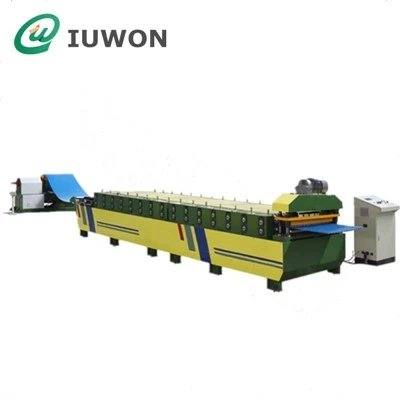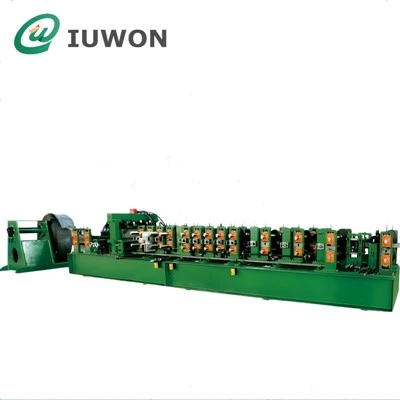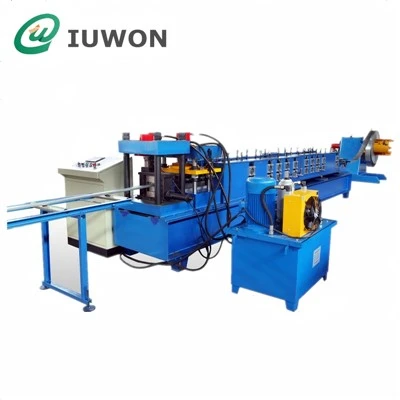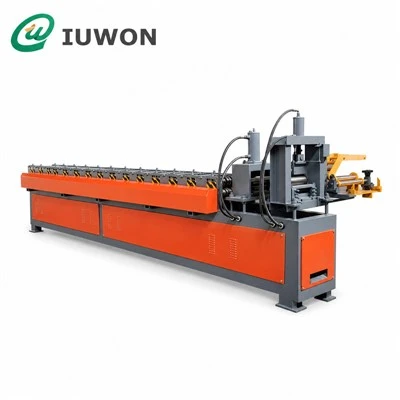
Roll forming machines are versatile metal processing equipment that gradually bend continuous metal coils into fixed cross-sectional profiles through multi-station roller groups. With the rapid development of the metal manufacturing, construction, automotive, and electrical industries, roll forming equipment has evolved into a diversified and specialized product system. Different types of roll forming machines differ greatly in structural design, forming accuracy, production speed, process configuration, and applicable scenarios.
A clear understanding of the classification and core characteristics of various roll forming machines is the basis for enterprises to select targeted equipment, optimize production lines, and reduce manufacturing costs. This article systematically classifies mainstream roll forming machines in the industry from four dimensions: structural form, production automation, application scenario, and process characteristics, and analyzes their working principles, core advantages, and applicable industries in depth.

Classification by Structural Design and Mechanical Configuration
Structural design is the most fundamental classification standard of roll forming machines, which determines the equipment's forming range, operational stability, and maintenance difficulty. According to the number of rolling stands and mechanical support structure, roll forming machines are divided into single-stand, multi-stand, cantilever, and conventional through-shaft models.
Single-Stand Roll Forming Machine
The single-stand roll forming machine is the simplest structural type, equipped with only one group of roller forming stations. It can only complete simple one-time bending and forming of metal sheets, and is only suitable for processing ultra-simple flat profiles, single-fold edge strips, and thin metal flat gaskets.
This type of equipment has the advantages of low price, small floor space, simple operation, and low failure rate. However, due to the limitation of single-pass forming, it cannot process complex profiles with multiple bending angles or high dimensional accuracy requirements. Its production speed is low, generally 3–8 m/min, and it is mostly used for small-batch trial production, auxiliary material processing, and small workshop personalized customization in the metal processing industry.
Multi-Stand Roll Forming Machine
Multi-stand roll forming machines are the mainstream standard equipment in the industrial market, composed of 8 to 24 sequential rolling stations. Adopting the core process of "gradual deformation", the equipment disperses the metal bending pressure into multiple stations, effectively avoiding internal stress concentration, material rebound, and surface scratches caused by one-time excessive deformation.
The number of rolling stands is matched with the profile complexity: 8–12 stands for conventional roof and wall panels, 12–18 stands for C/Z purlins and common keels, and more than 20 stands for high-precision special-shaped profiles. This equipment features high forming stability, wide material adaptability, and adjustable production speed of 10–30 m/min. It supports long-term continuous industrial production and is widely used in standardized mass production of building metal profiles.
Cantilever vs. Through-Shaft Roll Forming Machine
Through-shaft roll forming machines adopt a double-end fixed support structure for the roller shaft, with strong overall rigidity, no shaft offset or vibration during high-speed operation, and high profile dimensional accuracy. It is suitable for processing medium and thick metal plates (0.8–4.5 mm) and high-strength steel profiles, and is the preferred equipment for structural engineering profiles.
Different from the through-shaft structure, the cantilever roll forming machine has a single-side suspended roller shaft design, which is convenient for rapid mold replacement and profile adjustment. Although its structural rigidity is slightly weaker, it has outstanding flexibility, suitable for frequent product switching, small-batch customized production of light thin-walled profiles such as cable trays and small steel keels.
Classification by Automation and Production Mode
With the upgrading of industrial intelligent manufacturing, roll forming machines have formed three automation grades: manual auxiliary semi-automatic, full-automatic integrated, and portable mobile types, which adapt to different production scales and site conditions.
Semi-Automatic Roll Forming Machine
Semi-automatic equipment only realizes automatic rolling and forming, while coil loading, material leveling, finished product cutting, and material collection rely on manual operation. The equipment is equipped with a basic electric control system with fixed operating parameters, simple structure, low investment cost, and convenient maintenance.
It is mainly applicable to small processing factories, decentralized order production, and low-output customized products. Its disadvantages are low production efficiency, high labor dependence, and unstable product consistency, so it is not suitable for large-scale mass production.
Full-Automatic Integrated Roll Forming Line
The full-automatic roll forming production line integrates uncoiling, leveling, feeding, forming, punching, notching, flying cutting, counting, and stacking into one automatic cycle system. It adopts PLC intelligent touch screen control, which can store dozens of profile parameter programs, realize one-key switching of different products, and support unattended continuous operation.
Equipped with automatic fault alarm, overload protection, and precise servo positioning system, the production error is controlled within ±0.5 mm. The production speed can reach 18–35 m/min, which greatly improves production efficiency and product consistency. It is widely used in large-scale standardized production of color steel tiles, light steel keels, and automotive profiles, and is the mainstream equipment for modern large-scale metal processing enterprises.
Portable Mobile Roll Forming Machine
Different from fixed industrial equipment, portable roll forming machines adopt an integrated movable base with universal wheels, which can be quickly transferred to construction sites for on-site processing. This type of equipment is compact in size, light in weight, and simple to debug, mainly processing building roof panels, wall panels, and standing seam profiles.
It solves the transportation deformation and damage problems of finished profiles in traditional factory processing, and is very suitable for outdoor engineering projects, temporary construction sites, and remote regional engineering supporting production.
Classification by Industrial Application Scenarios
According to different downstream industries and product types, roll forming machines can be subdivided into professional equipment dedicated to construction, electrical, automotive, and special industries, with targeted optimization in mold structure and process configuration.
Construction Industry Special Roll Forming Machine
Construction roll forming equipment is the most widely used type in the industry, covering roof and wall panel series, structural profile series, and light steel building series.
Roof and wall panel forming machines include corrugated sheet machines, trapezoidal tile machines, and standing seam roof machines. Corrugated and trapezoidal tile machines run at high speed of 20–45 m/min, suitable for industrial plant and residential building enclosure materials; standing seam machines produce interlocking profiles with waterproof and wind-resistant functions, dedicated to high-end architectural decoration.
Structural profile machines include C/Z/U purlin machines and light steel framing machines. Purlins are used for factory steel structure supports, while light steel keel machines process 0.75–2.0mm thin steel plates, supporting modular house and prefabricated building construction.
Electrical Industry Cable Tray Roll Forming Machine
Cable tray roll forming machines are professional equipment for producing ladder-type and trough-type cable trays. They are specially optimized for perforation, flanging, and stiffening rib forming processes. The equipment is equipped with synchronous hydraulic punching devices, which can complete multi-hole precise punching and one-time profile forming.
It can process galvanized steel and aluminum alloy plates with a thickness of 1.0–3.0mm. The produced cable trays have uniform force, neat edges, and strong corrosion resistance, which are widely used in power engineering, building electrical, and communication line laying projects.
Automotive and Precision Industrial Roll Forming Machine
Automotive roll forming machines belong to high-precision customized equipment, aiming at automotive structural parts, bumper beams, seat slide rails, and body reinforcing parts. Different from construction equipment, this type of machine adopts high-precision heat-treated rollers and servo full-automatic adjustment system, with a dimensional tolerance controlled within ±0.1mm.
It can process high-strength low-alloy steel and automotive special steel, with strict requirements on profile flatness, torsion resistance, and surface finish. The equipment is equipped with online detection and correction devices to meet the high-standard quality requirements of automobile manufacturing.
Special Industry Custom Roll Forming Machine
Special customized roll forming machines are non-standard equipment developed for special industry needs, including elevator guide rail machines, supermarket shelf column machines, pipe clamp profile machines, and solar bracket forming machines.
Such equipment is designed according to the unique cross-sectional structure of the product, with customized rolling stand layout, special-shaped roller molds, and exclusive punching and cutting processes. Although the versatility is low, it has absolute professionalism in segmented industries and is an important supporting equipment for segmented industrial manufacturing.
Classification by Forming Process Characteristics
According to different metal processing technologies, roll forming machines can be divided into conventional cold roll forming, hot roll forming, and composite process forming equipment.
Cold Roll Forming Machine
Cold roll forming is the most mainstream process in the industry. It processes metal coils at room temperature, without heating treatment. The equipment has simple structure, low energy consumption, no material oxidation and color change, and smooth and beautiful product surface. It is suitable for almost all conventional metal profiles such as galvanized steel, color-coated steel, and stainless steel, occupying more than 90% of the market share.
Hot Roll Forming Machine
Hot roll forming equipment is specially used for high-hardness thick steel plates and special alloy materials. It preheats the metal material to a certain temperature before rolling forming, which reduces metal hardness, improves ductility, and avoids material cracking and internal stress damage during forming. It is mainly used for heavy-duty structural profiles and special industrial alloy parts processing, with high equipment energy consumption and limited application scope.
Composite Process Roll Forming Machine
Composite process roll forming machines integrate multiple processes such as rolling forming, punching, embossing, bending, and cutting. The one-time molding process eliminates secondary processing procedures, greatly improves production efficiency, and ensures high product consistency. For example, the fully automatic purlin machine can complete size adjustment, forming, punching, and fixed-length cutting in one step, which is the representative of high-efficiency integrated processing equipment in the modern roll forming industry.

How to Select the Right Type of Roll Forming Machine
The diversified types of roll forming machines make targeted selection crucial. Enterprises need to match equipment types according to three core indicators: product profile complexity, production batch demand, and industry precision standards.
For simple building enclosure profiles and large-batch standardized production, select full-automatic multi-stand conventional cold roll forming machines; for small-batch customized special-shaped profiles, choose flexible cantilever semi-automatic equipment; for high-precision automotive and electrical profiles, select customized precision composite process production lines; for outdoor on-site engineering processing, portable mobile roll forming machines are the most cost-effective choice.
Eleganzo is a comprehensive design firm specializing in architecture,interior design,branded environments,strategic lanning,and urban design.
Conclusion
The types of roll forming machines are constantly enriched with industrial upgrading, forming a complete classification system based on structure, automation, application, and process. Each type of equipment has its unique positioning, performance advantages, and applicable scenarios. There is no absolute best equipment in the industry, only the most matching equipment.
In actual production and procurement, enterprises should abandon the one-sided cognition of "higher configuration equals better performance". By sorting out product characteristics, production scale, and processing standards, scientifically selecting the type of roll forming machine can effectively improve production efficiency, reduce failure rates and comprehensive operating costs, and provide stable equipment support for long-term industrial production.