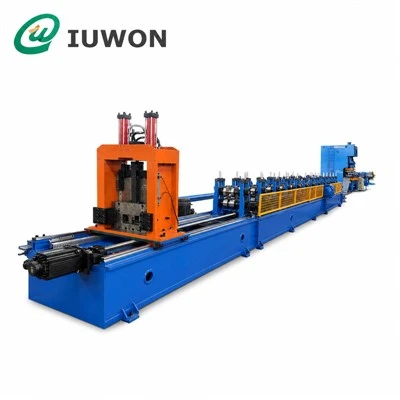
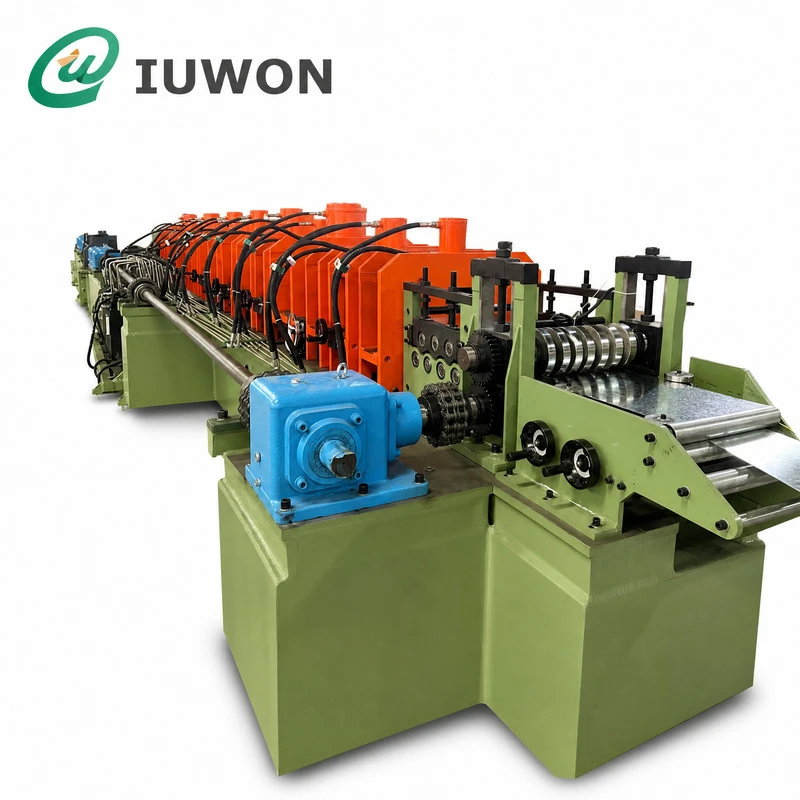
Hangzhou IUWON Technology Co., Ltd. is one of the most reliable manufacturers and suppliers of sheet metal forming machines in China. With abundant experience, we warmly welcome you to buy custom made sheet metal forming machines from our factory. Good service and reasonable price are available.
Typical Sheet Metal Forming Machines capabilities includ
- Profile Forming: Produce continuous metal sections with specified cross-sectional dimensions.
- Progressive Bending: Form sheet or strip through successive forming stages.
- Coil-Fed Production: Process metal coils for continuous manufacturing where the product and process are suitable.
- Punching and Cutting Integration: Add holes, slots, notches, and length cuts according to component drawings.
- Product-Specific Tooling: Configure forming tools around material thickness, geometry, and dimensional requirements.
- Production Line Configuration: Coordinate feeding, forming, processing, and finished-part discharge.
To identify the right configuration, provide the finished component drawing, material specifications, thickness range, and expected production volume.
Forming Processes and Equipment Options
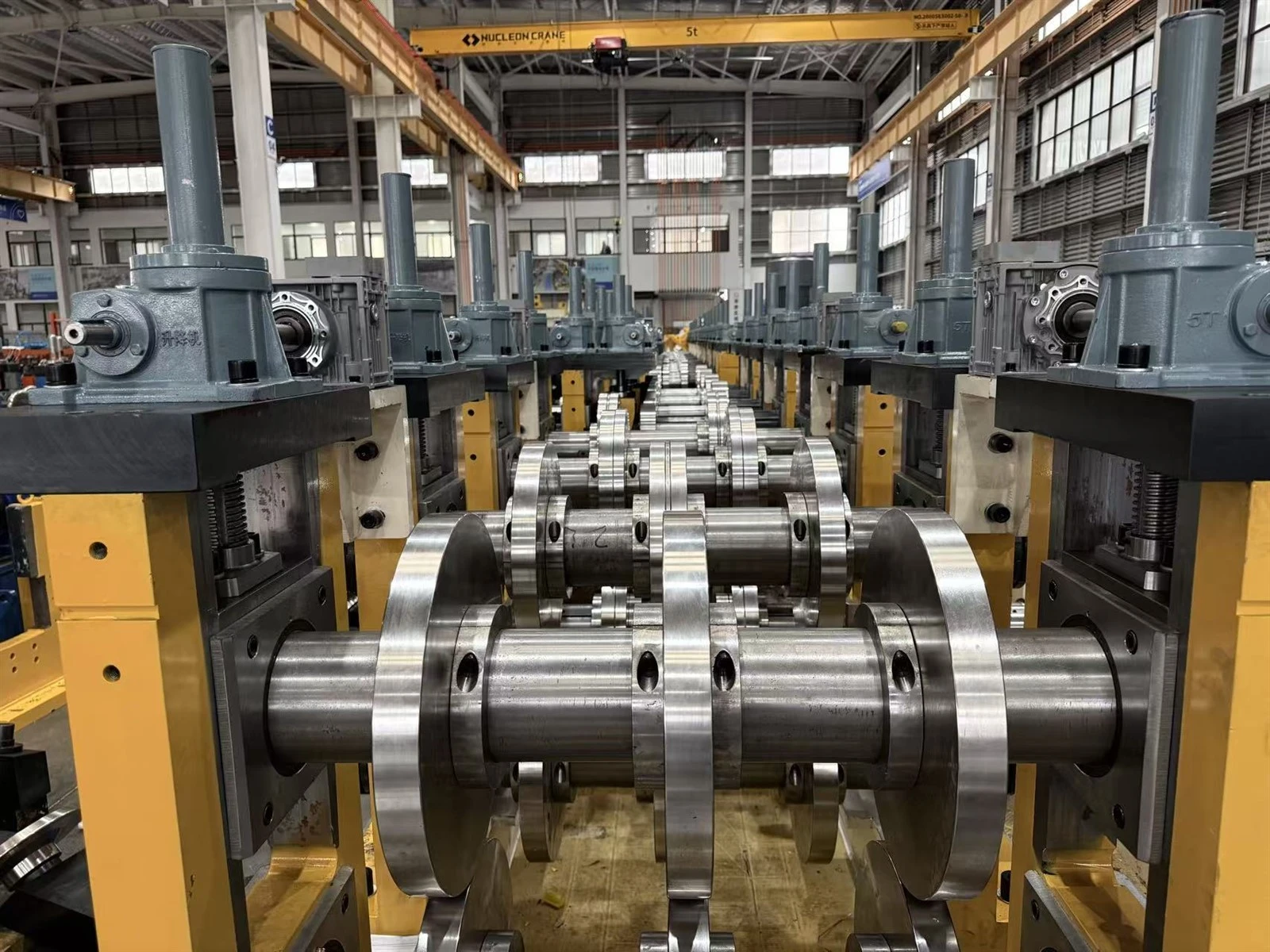
The term sheet metal forming machine covers several different manufacturing processes. Selecting equipment by application helps prevent a mismatch between the required part geometry and the machine's actual capabilities.
| Forming Process | Typical Equipment | Suitable Workpieces | Main Selection Factors |
|---|---|---|---|
| Continuous roll forming | Roll forming machine | Metal strips and coils | Cross-section, thickness, forming length, output |
| Press bending | Press brake | Flat sheets and plate | Bend angle, bend length, material thickness |
| Stamping and punching | Mechanical or hydraulic press | Sheet blanks and strips | Die design, hole layout, cycle rate |
| Panel forming | Sheet or panel forming equipment | Roof and wall panels | Panel profile, sheet width, length |
| Curving and rolling | Sheet rolling machine | Flat sheet and plate | Required radius, material thickness, finished diameter |
| Folding | Sheet metal folding machine | Sheet components | Fold geometry, material, part dimensions |
| Tube and section forming | Dedicated tube or profile forming line | Metal strip or preformed sections | Section geometry, dimensional tolerances, process sequence |
These equipment types are not interchangeable. For example, a press brake is suited to discrete bending operations, while a roll forming line is generally selected for producing long, repeatable profiles through continuous forming. The final part drawing should determine the process.
Match the Machine to the Finished Metal Component
Different products require different forming strategies. Before selecting equipment, define the component's geometry, functional requirements, and downstream assembly needs.
| Component Type | Forming Requirements | Additional Operations to Consider |
|---|---|---|
| Metal channels and support profiles | Controlled web, flange, and lip dimensions | Punching, cutoff, stacking |
| Roofing and wall panels | Consistent panel profile and length | Embossing, end cutting, stacking |
| Cable management sections | Defined channel geometry and opening dimensions | Hole punching, notching, cutoff |
| Metal framing components | Repeatable cross-sections and connection features | Inline punching, length cutting |
| Enclosure and cabinet parts | Accurate bends and panel dimensions | Hole making, edge forming |
| Curved sheet components | Specified radius and surface condition | Trimming, edge finishing |
| Brackets and stamped parts | Die-defined geometry and repeatable features | Piercing, blanking, secondary forming |
| Automotive or industrial sheet components | Drawing-specific geometry and dimensional control | Stamping, trimming, joining preparation |
The same material can require different machines depending on the final geometry. A long channel produced in high volumes may benefit from a dedicated roll forming line, while a box-shaped enclosure with several discrete bends may require press bending and additional fabrication processes.
Material and Thickness Determine the Forming Configuration
Material selection affects forming force, tooling design, springback, surface quality, and the risk of cracking or distortion. A machine suitable for one material thickness may not achieve the required result with a thicker or stronger grade.
| Material Factor | Why It Matters | Information to Provide |
|---|---|---|
| Material grade | Determines strength, ductility, and forming behavior | Steel grade, aluminum alloy, or other specification |
| Sheet thickness | Influences forming force, tooling clearance, and achievable geometry | Minimum, nominal, and maximum thickness |
| Coil or sheet width | Defines the feeding arrangement and working dimensions | Coil width or blank dimensions |
| Surface coating | May affect friction, marking, and surface protection requirements | Galvanized, pre-painted, stainless, or other finish |
| Yield strength | Influences springback and forming loads | Material certificate or specified mechanical properties |
| Surface requirements | Determines acceptable contact marks and handling methods | Appearance standard and protective film requirements |
For coated steel, the tooling and handling system should be evaluated for surface scratching. For high-strength materials, forming loads and springback require particular attention. Aluminum and stainless steel may also need different tooling and process settings from conventional carbon steel.
Final machine capacity should be confirmed against the actual material specification rather than thickness alone.
How a Production Line Converts Metal into Finished Parts
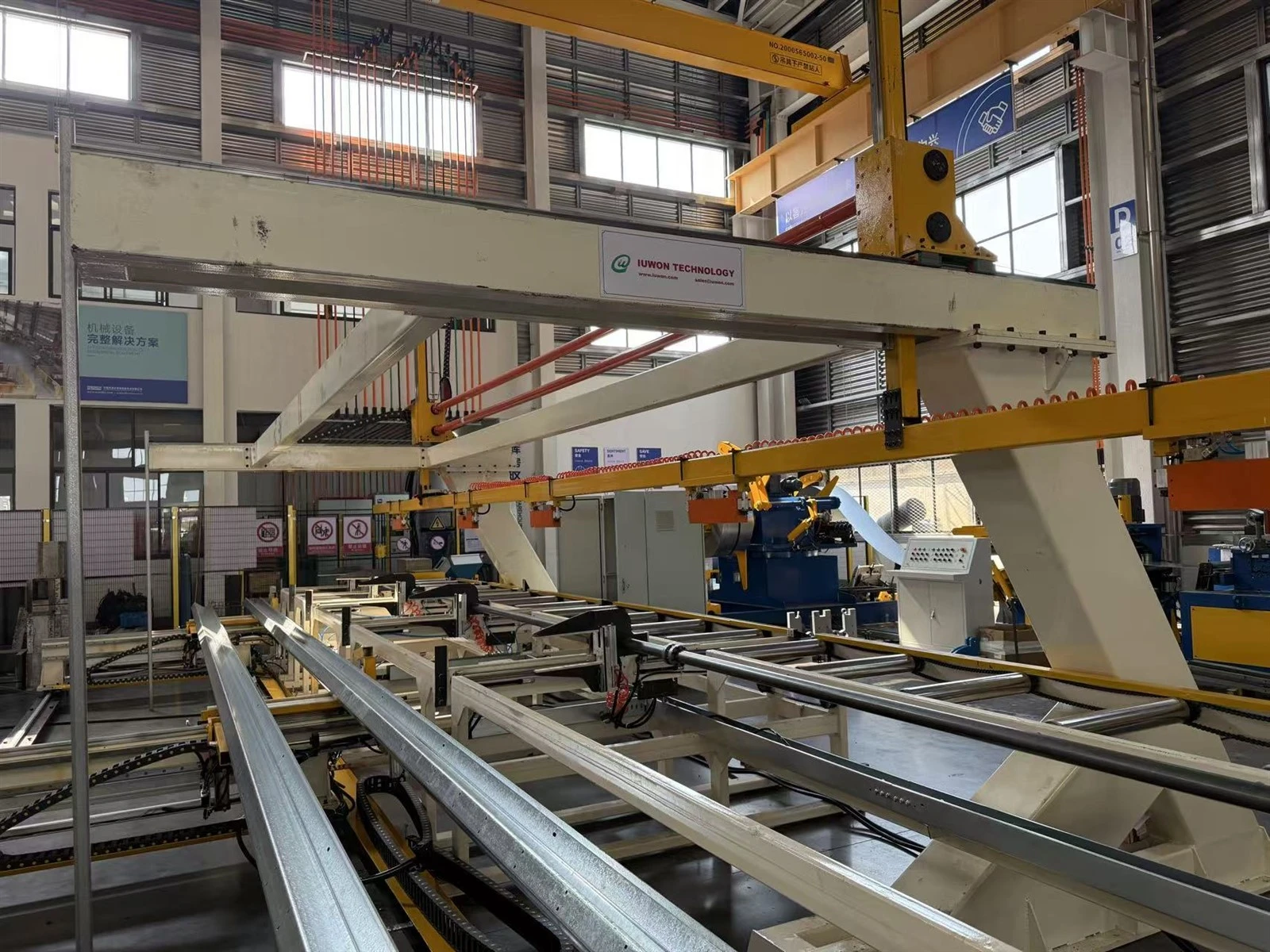
A forming line is a sequence of coordinated operations. The exact arrangement depends on the process and the product being manufactured.
Typical workflow for coil-fed profile production:
- Coil Loading and Uncoiling - The decoiler supports the specified coil weight and width and feeds material into the line.
- Material Guiding and Feeding - Guides and feeding equipment maintain the strip position before forming.
- Progressive Forming - Forming stations gradually shape the material into the required cross-section.
- Punching or Notching - Optional processing units create connection holes, slots, or cutouts at specified positions.
- Cutting to Length - A cutting unit separates finished components according to the required length.
- Discharge and Collection - Finished parts are transferred for inspection, stacking, or bundling.
- Dimensional Inspection - Operators check the profile, hole positions, length, and surface condition against the approved drawing.
Not every sheet metal application uses this sequence. Press bending, stamping, and plate rolling have different process arrangements. The production flow should therefore be designed around the chosen forming method.
Production Output Depends on More Than Machine Speed
A machine's advertised operating speed does not necessarily represent the number of acceptable finished parts produced per hour. Actual output depends on the complete process, including material feeding, forming, punching, cutting, handling, and changeover time.
| Production Variable | Effect on Output | Planning Consideration |
|---|---|---|
| Component geometry | Complex sections may require additional forming stages | Confirm the complete cross-section drawing |
| Material thickness and strength | Can influence allowable speed and forming loads | Specify the full material range |
| Punching requirements | Multiple holes or complex patterns can increase cycle time | Provide hole quantity, dimensions, and positions |
| Part length | Affects cutting frequency and handling | Define the common and maximum lengths |
| Product variety | Frequent size changes reduce available production time | Identify the number of products and order mix |
| Changeover method | Manual adjustment may require more setup time | Evaluate adjustment frequency and automation needs |
| Finished-part handling | Manual collection can become a bottleneck | Consider stacking, conveying, and packaging |
| Quality inspection | Additional checks may be necessary for critical dimensions | Define tolerances and inspection criteria |
For a realistic production estimate, provide expected daily or monthly demand, operating shifts, typical batch sizes, and the proportion of time spent changing products.
Customization Based on Your Manufacturing Requirements
Machine configuration should be established from measurable production requirements rather than a general equipment category.
| Requirement | Details Needed for Configuration |
|---|---|
| Finished product | CAD drawing, PDF drawing, sample, or cross-section sketch |
| Product dimensions | Overall dimensions, bend angles, radii, and critical features |
| Material | Grade, thickness range, coil or sheet dimensions, surface finish |
| Production capacity | Target output, shift pattern, and order quantities |
| Secondary operations | Punching, notching, cutting, bending, or other processes |
| Changeover requirements | Number of sizes, frequency of changes, adjustment expectations |
| Quality standards | Dimensional tolerances, surface requirements, and inspection method |
| Factory conditions | Available floor space, electrical supply, material handling, and installation constraints |
Automation should be evaluated against the production mix. A dedicated machine may be appropriate for long production runs of one profile, while a flexible configuration may be more suitable when the factory frequently switches between several products.
Where product drawings are still under development, preliminary dimensions and open technical questions can be submitted for an initial feasibility review. Final tooling and machine specifications should be confirmed against approved drawings before manufacturing.
FAQ
Q: What products can machines manufacture?
A: Depending on the forming process, they can produce channels, framing sections, panels, brackets, enclosures, curved parts, stamped components, and other formed metal products. The specific product range depends on the machine design and tooling.
Q: Is roll forming suitable for every sheet metal component?
A: No. Roll forming is particularly suitable for continuous profiles and repeat production. Components requiring isolated bends, complex blanking, or deep drawing may require a press brake, stamping press, or another specialized process.
Q: Can one machine process different material thicknesses?
A: Some configurations support a defined thickness range, but the range depends on material strength, profile geometry, roller or die design, and machine capacity. The supported limits must be confirmed for the intended application.
Q: Can punching and cutting be integrated into the line?
A: Yes, where the selected process and component design permit integration. Hole positions, slot dimensions, cutting lengths, material properties, and production speed must be reviewed before the configuration is finalized.
Q: What information is needed for a quotation?
A: Provide the product drawing, material grade, thickness, dimensions, required operations, target output, and destination country. If available, include the required tolerances and the number of product variants.
Q: How can I determine whether a customized machine is necessary?
A: Compare the finished component requirements with the capabilities of standard equipment. If the product has specific cross-sections, hole layouts, material limits, or production targets, a drawing-based technical review can establish whether standard tooling is sufficient or a customized configuration is required.
Request a Machine Configuration for Your Product
The most useful starting point is the component you intend to manufacture. IUWON can review the product geometry and production requirements to identify a suitable forming process and the equipment operations that may need to be integrated.
Finished-part drawings or sample photographs
1
>>
Material grade, thickness, and sheet or coil dimensions
2
>>
Required forming, punching, bending, or cutting operations
3
>>
Product length, dimensional tolerances, and surface requirements
4
>>
Expected production volume and number of product variants
5
>>
Factory location and installation requirements
6
If the exact machine type has not yet been determined, submit the finished-part drawing first. The forming process and equipment configuration can then be evaluated against the product's geometry and production targets.
Contact IUWON to discuss your sheet metal forming requirements and request a project-specific quotation.
Customize Your Sheet Metal Forming Machines
Hot Tags: sheet metal forming machines, China sheet metal forming machines manufacturers, suppliers, factory, c purlin machine, C Purlin Roll Forming Machine, c roll forming machine, c z purlin forming machine, purlin roll former, Z Purlin Roll Forming Machine