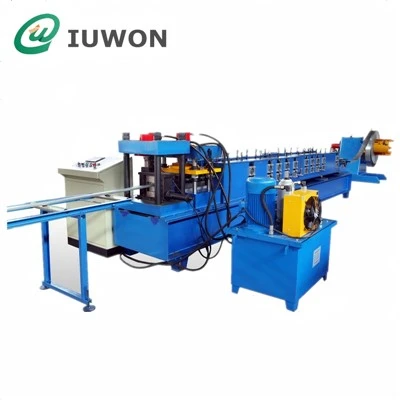
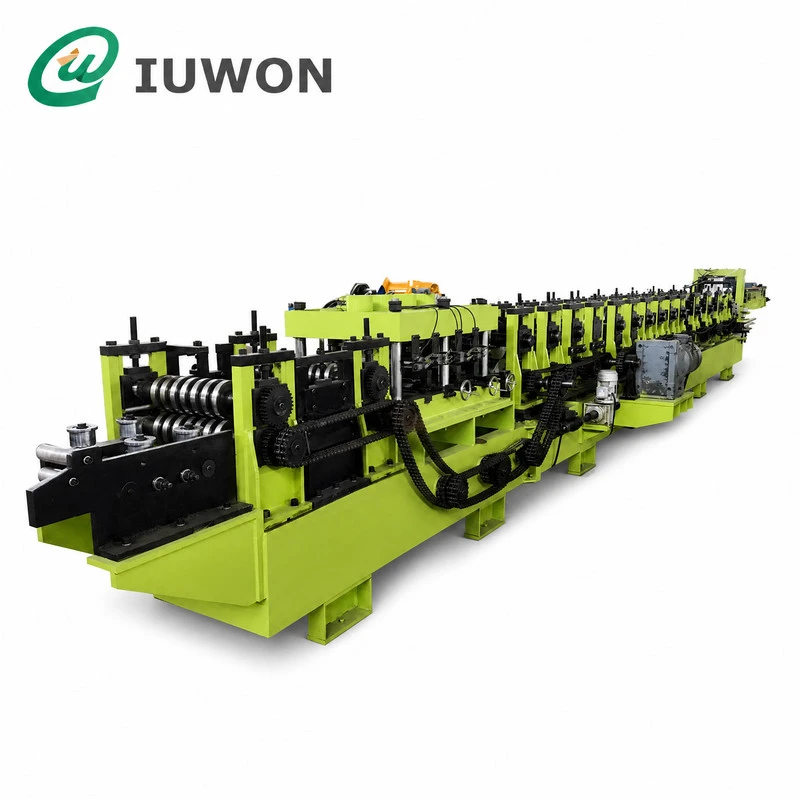
Hangzhou IUWON Technology Co., Ltd. is one of the most reliable manufacturers and suppliers of plc automatic cable tray roll forming machine in China. With abundant experience, we warmly welcome you to buy custom made plc automatic cable tray roll forming machine from our factory. Good service and reasonable price are available.
Main Components of PLC Automatic Cable Tray Roll Forming Machine
The company conducted a competitive advantage analysis to identify its strengths and weaknesses compared to its rivals.
Decoiler and Steel Coil Feeding System
The decoiler supports the steel coil and releases the strip into the roll forming line. The feeding system guides the material toward the leveling and punching sections while maintaining alignment along the production direction.
01
Leveling Unit for Steel Strip Preparation
Steel coils retain curvature after winding. The leveling unit uses multiple rollers to apply alternating bending forces and reduce the strip's residual curvature before punching and forming.
02
Hydraulic Punching System
The punching section produces mounting holes, ventilation openings, and connection slots before the steel strip enters the roll forming section.
03
Multi-Station Roll Forming System
The roll forming section contains multiple roller stations mounted on machine frames. Each station applies a controlled bending action to gradually form the steel strip into the required cable tray profile.
04
PLC Electrical Control System
The PLC control cabinet coordinates the electrical and mechanical operations of the production line.
05
PLC Automatic Cable Tray Roll Forming Machine Process
The production line converts flat steel coils into finished cable tray sections through the following operations.
Step 1: Steel Coil Loading
The operator installs the steel coil on the decoiler and guides the strip into the feeding system. Coil width, thickness, and loading weight must match the machine's configured capacity.
Step 2: Strip Leveling
The steel strip passes through leveling rollers to reduce curvature caused by coil winding. The operator checks strip alignment before the material enters the punching section.
Step 3: Hole Punching
The punching unit processes ventilation holes, mounting holes, or connection slots. The die arrangement determines the opening dimensions and spacing along the steel strip.
Step 4: Continuous Roll Forming
The strip passes through successive roller stations. Each station bends the material further until the bottom plate and side walls reach the specified cable tray cross-section.
Step 5: Length Measurement and Cutting
The PLC receives length signals and coordinates the cutting operation. The cutting unit separates the formed profile according to the preset length.
Step 6: Finished Profile Inspection
The finished cable tray is checked for overall width, side-wall height, cross-sectional shape, hole position, and cut length before packaging or further assembly.
Cable Tray Profiles and Corresponding Forming Requirements
Different cable tray structures require different forming geometries and tooling arrangements.
Perforated Cable Tray
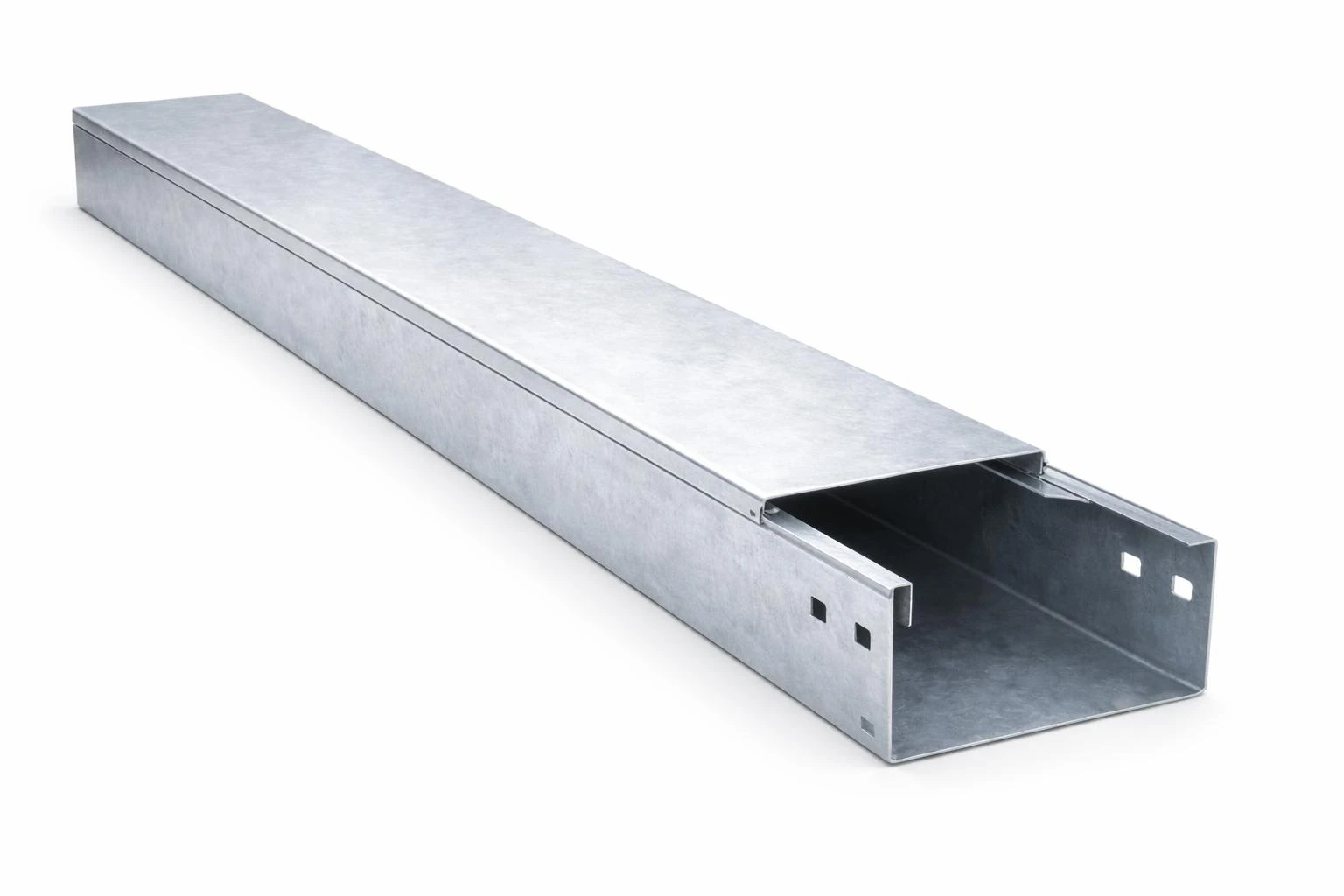
Perforated cable trays contain ventilation openings along the bottom or side sections. The punching unit processes these openings before roll forming. Die positioning must match the final profile drawing to prevent holes from entering bending zones.
Solid Bottom Cable Tray
Solid-bottom cable trays use a continuous metal base with raised side walls. The roller stations bend the strip edges upward to form the channel structure. The forming sequence must control bottom width and side-wall angles.
Ladder Cable Tray
Ladder cable trays consist of two longitudinal side rails connected by cross members. The side rails require profile-forming operations, while cross members generally require separate punching, cutting, or assembly processes depending on the production line configuration.
Industrial Applications of Cable Tray Roll Forming Equipment
- Power Distribution Projects: Produces perforated and solid-bottom cable trays for routing power cables in substations and electrical distribution facilities.
- Industrial Manufacturing Plants: Processes steel strips into cable support channels installed along production lines, equipment platforms, and factory buildings.
- Commercial Building Electrical Systems: Manufactures cable trays for organizing electrical wiring in office buildings, shopping centers, and public facilities.
- Data Center Infrastructure: Produces metal cable support profiles for routing power and communication cables through equipment rooms and service corridors.
- Telecommunications Installations: Processes cable tray and raceway profiles used to support communication wiring and network cables.
FAQ
Q: What materials can a PLC cable tray roll forming machine process?
A: The machine can be configured to process galvanized steel, carbon steel, and stainless steel strips. The roller structure, drive capacity, and forming clearance should be selected according to the material thickness and mechanical properties.
Q: Can the machine produce perforated cable trays?
A: Yes. A punching unit can be integrated before the roll forming section. The punching dies process ventilation openings and mounting holes according to the specified drawing, while the PLC coordinates the punching cycle with material feeding.
Q: Can the machine produce different cable tray sizes?
A: Yes, depending on the machine structure. Some configurations use adjustable forming components, while others require interchangeable roller tooling. The available size range should be confirmed before machine manufacturing.
Hot Tags: plc automatic cable tray roll forming machine, China plc automatic cable tray roll forming machine manufacturers, suppliers, factory