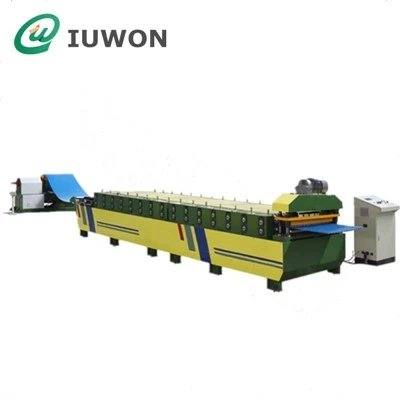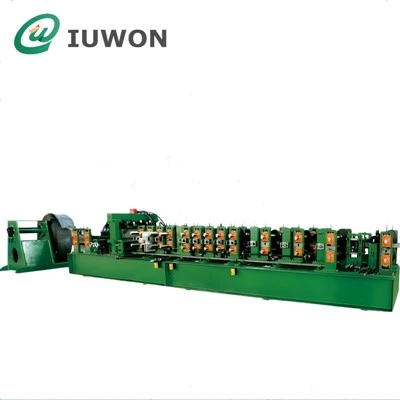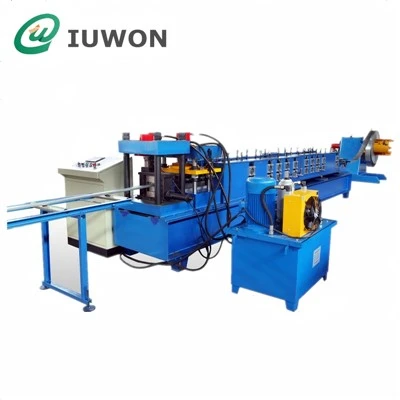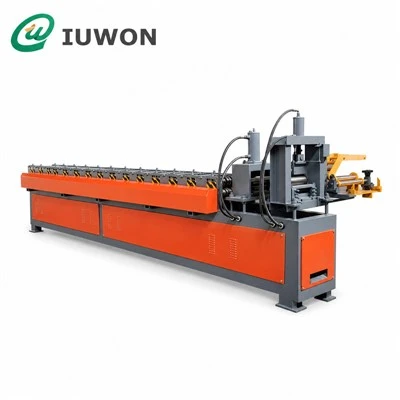

Roll forming is a continuous metal shaping process that transforms flat metal coils into customized profiles through a series of sequential rolling stations. As a core equipment in metal manufacturing, construction material production, and automotive component processing, roll forming machines vary greatly in structure, precision, automation, and application scenarios. Choosing a suitable roll forming machine is not only related to production efficiency and product quality but also directly determines the long-term operating cost and profit margin of the enterprise. Many manufacturers blindly pursue high-configuration or low-price equipment in the procurement process, resulting in equipment idleness, unqualified product precision, or excessive maintenance costs. This article provides an in-depth industrial selection guide, covering core demand confirmation, equipment parameter matching, structural configuration selection, manufacturer evaluation, and post-purchase cost control, to help enterprises make scientific and cost-effective purchasing decisions.
Clarify Core Production Requirements: The Premise of Equipment Selection
Before screening equipment parameters and manufacturers, enterprises must clarify their core production indicators, which are the fundamental basis for selecting roll forming machines. All equipment configurations and performance parameters need to be matched with actual production demands to avoid over-investment or insufficient production capacity.
Confirm Target Product Profile and Complexity
Product profile is the primary factor restricting machine design. Different profiles correspond to completely different rolling stand quantities, roll molds, and forming processes. Simple flat panels, corrugated roof sheets, and wall panels have low forming difficulty, usually requiring 8–12 rolling stands, with low requirements for equipment rigidity and precision. In contrast, complex profiles such as C/Z purlins, steel keels, automotive structural parts, and customized special-shaped profiles require 15–24 rolling stands or even more, to ensure gradual metal deformation and avoid defects such as material rebound, edge warping, and surface scratches.
In addition, profile dimensional tolerance requirements cannot be ignored. For construction decoration materials with low tolerance requirements, ordinary standard machines can meet the demand. However, for precision industrial profiles and automotive parts with tolerance requirements within ±0.1mm, high-precision customized roll forming machines with fine-tuning rolling stands are mandatory.
Define Production Capacity and Speed Requirements
Production speed is a key indicator to distinguish equipment grades, and it is also the main factor affecting equipment pricing. In the industrial field, the operating speed of standard roll forming machines is divided into three tiers: low-speed (6–10m/min), medium-speed (10–18m/min), and high-speed (18–30m/min or higher). Low-speed equipment is suitable for small processing plants, customized small-batch production, and prototype trial production, with low equipment investment and flexible operation. Medium-speed equipment is the mainstream choice for most standardized building material factories, balancing production efficiency and equipment cost. High-speed automated production lines are mostly used for large-scale mass production of single products, such as color steel tiles and light steel keels, which require supporting automatic feeding and receiving systems to achieve continuous production.
Enterprises should avoid blindly pursuing high-speed equipment. If the actual daily output is low, high-speed machines will run in low-load condition for a long time, resulting in wasted equipment performance and increased idle loss.
Confirm Metal Material Specifications
The material characteristics of raw metal coils directly determine the core configuration of the roll forming machine. Common processing materials include galvanized steel, color-coated steel, stainless steel, aluminum alloy, and cold-rolled steel. Different materials have distinct hardness, toughness, and ductility, which put forward different requirements for roll mold materials and equipment bearing capacity.
For ordinary low-carbon steel and color steel coils with thin thickness (0.3–1.0mm), ordinary alloy steel rolls can meet the forming demand. For stainless steel and high-strength steel with high hardness, the rolls must be made of high-hardness bearing steel with quenching treatment to prevent roll wear, surface scratching of profiles, and long-term deformation of the roller shaft. Meanwhile, the thickness range of processing materials must be clearly defined. The equipment's applicable material thickness interval is fixed, and long-term processing of materials exceeding the standard thickness will cause overload operation of the rolling stand, accelerate component aging, and even cause equipment deformation and damage.
Core Technical Parameters Selection: Key to Equipment Performance
After clarifying production requirements, enterprises need to focus on the core technical parameters of the roll forming machine, which determine the equipment's forming accuracy, stability, and service life. Professional parameter matching is the core of avoiding low-quality equipment and performance redundancy.
Rolling Stand Quantity and Rigidity
The number of rolling stands determines the forming effect of metal profiles. The core principle of roll forming is "gradual deformation". Too few rolling stands will lead to excessive single-pass deformation of the metal material, resulting in internal stress accumulation, profile rebound, bending deformation, and unqualified flatness. Simple conventional profiles need 8–12 stands, medium-complexity profiles need 12–18 stands, and high-precision complex profiles need more than 20 stands to ensure full stress release and stable forming.
In addition to quantity, the rigidity of the rolling stand is more critical. High-quality roll forming machines adopt thickened steel plate welding frames and integral casting bases, with strong overall stability, no vibration during high-speed operation, and stable product precision. Low-cost inferior equipment uses thin-walled profiles and assembled simple frames, which are prone to frame vibration and shaft offset during long-term operation, leading to gradual deterioration of product dimensional accuracy.
Roller Material and Processing Technology
Rollers are the core wearing parts of the roll forming machine and the key components that directly contact and shape metal materials. The quality of rollers directly affects the surface quality and forming accuracy of finished profiles. High-quality industrial rollers are usually made of high-quality 40Cr or GCr15 bearing steel, processed through precision turning, fine grinding, and high-frequency quenching treatment, with a hardness of HRC58-62. Such rollers have high wear resistance, low deformation rate, and can ensure long-term smooth forming without scratching the metal surface.
Inferior rollers use ordinary carbon steel without quenching treatment, which are easy to wear and deform after a short period of use, resulting in burrs, scratches, and size deviation on the profile surface. For enterprises that need long-term continuous production, investing in high-precision heat-treated rollers can greatly reduce later replacement costs and downtime losses.
Cutting and Punching System Matching
Most roll forming production lines need to be equipped with punching and cutting systems to realize one-time forming of finished products. According to different process requirements, the cutting system is divided into flying saw cutting, hydraulic fixed-length cutting, and servo tracking cutting. Flying saw cutting is suitable for high-speed continuous production of conventional profiles, with fast cutting speed and high efficiency. Hydraulic cutting has strong pressure resistance and is suitable for thick steel plate profiles. Servo tracking cutting has the highest precision, with a cutting error controlled within ±0.5mm, which is suitable for high-precision industrial profiles.
The punching system is divided into mechanical punching and hydraulic punching. For small-batch and low-frequency punching, mechanical punching is cost-effective; for large-batch and high-frequency continuous punching, hydraulic synchronous punching is more stable, with less vibration and longer service life of the die. Enterprises need to select the matching processing system according to their own product process requirements, instead of blindly equipping full-function configurations.
Automation and Functional Configuration Selection: Adapt to Production Scale
With the upgrading of industrial intelligent production, the automation level of roll forming machines has become an important selection indicator. Different automation configurations are suitable for different production scales and labor cost budgets.
Semi-automatic vs. Fully Automatic Production Line
Semi-automatic roll forming machines only realize automatic rolling forming, while material feeding, finished product collection, and parameter adjustment require manual operation. This type of equipment has low price, simple operation, low failure rate, and is suitable for small factories and small-batch customized production with limited budget and output scale.
Fully automatic intelligent production lines integrate automatic coil loading, leveling, feeding, forming, punching, cutting, counting, and stacking. The whole process is controlled by PLC touch screen, realizing unmanned continuous production. It is equipped with automatic alarm, fault self-detection, and parameter memory functions, which can effectively reduce labor costs, improve production consistency, and reduce manual operation errors. It is the best choice for large-scale standardized mass production.
Intelligent Control System Configuration
The control system is the brain of the roll forming machine. High-quality equipment adopts international mainstream PLC systems such as Siemens and Mitsubishi, with stable operation, sensitive response, and strong anti-interference ability, which can adapt to long-term continuous industrial operation. The touch screen interface is simple and intuitive, supporting one-key setting of production length, quantity, and speed, and can store multiple product parameter programs, realizing rapid switching of different profile production.
Low-quality equipment uses inferior domestic control systems with poor stability, prone to signal delay, parameter disorder, and frequent failures, which seriously affect production efficiency. For enterprises with frequent product switching and long-hour production, a high-stability intelligent control system is essential.
Manufacturer Strength and After-sales Service Evaluation
Equipment performance and price are important selection factors, but manufacturer strength and after-sales service determine the long-term use experience of the equipment. Many users encounter problems such as difficult after-sales maintenance, lack of spare parts, and ineffective technical guidance after purchasing low-cost equipment from small manufacturers, resulting in long-term production stagnation.
Manufacturer Qualification and Industry Experience
Professional roll forming machine manufacturers need to have independent R&D, design and production capabilities, complete production workshops and testing equipment. Enterprises should prioritize manufacturers with more than 10 years of industry experience, mature product cases, and complete technical teams. Such manufacturers can provide targeted customized solutions according to user product requirements, instead of only providing standardized generic equipment.
At the same time, users can verify the manufacturer's product quality through customer cases, industry reputation, and product testing reports. Manufacturers with long-term cooperation with large building material factories and metal processing enterprises have more reliable product stability and technical maturity.
After-sales Service and Spare Parts Supply
Roll forming machines are industrial equipment that runs continuously for a long time, and wearing parts such as rollers, cutting blades, and bearings need regular replacement and maintenance. Perfect after-sales service is the guarantee of stable equipment operation. Formal manufacturers provide one-year free warranty, lifelong maintenance, 24-hour technical consultation, and fast door-to-door maintenance services.
In addition, it is necessary to confirm whether the manufacturer has sufficient spare parts inventory. Some small manufacturers lack spare parts reserves, resulting in long waiting time for parts replacement after equipment failure, seriously affecting production progress. Choosing a manufacturer with complete after-sales system can greatly reduce the later operation risk of the equipment.
Equipment procurement cannot only focus on the initial purchase price but also comprehensively evaluate the long-term operating cost and return on investment. Low-price inferior equipment has low upfront investment, but problems such as frequent failures, low production efficiency, and high replacement cost of wearing parts will lead to higher comprehensive operating costs in the later stage.
High-quality brand equipment has a slightly higher initial purchase cost, but it has stable performance, low failure rate, long service life (up to 10–15 years), high production precision and efficiency, which can effectively reduce scrap rate, maintenance cost and downtime loss, and bring more stable long-term benefits to enterprises.
For small and medium-sized enterprises with limited budget, they can choose standard medium-configured equipment that matches production demand, avoiding excessive pursuit of high-end redundant functions; for large-scale mass production enterprises, high-efficiency fully automatic intelligent production lines should be prioritized to reduce labor costs and improve market competitiveness.

Conclusion
Choosing a suitable roll forming machine is a systematic project that requires comprehensive consideration of production demand, product characteristics, equipment performance, automation level, manufacturer strength and comprehensive cost. The core of scientific selection is "matching demand", blindly pursuing high configuration or low price is the main cause of improper equipment selection.
Enterprises should first clarify product profile, material specifications and production capacity requirements, then screen equipment parameters such as rolling stand quantity, roller technology, cutting and punching configuration, and finally select formal manufacturers with reliable quality and perfect after-sales service according to the budget. Only by combining actual production needs with professional equipment performance can we maximize production efficiency, reduce operating costs, and create stable economic benefits for the enterprise in the long-term metal processing and production process.