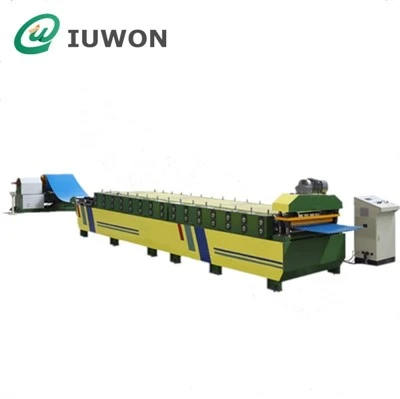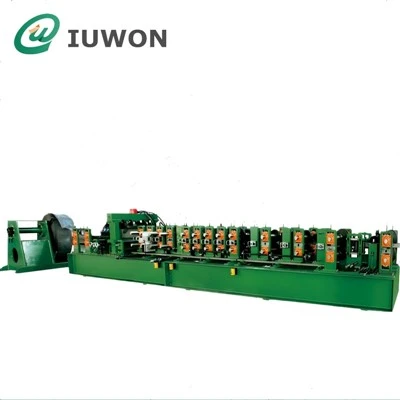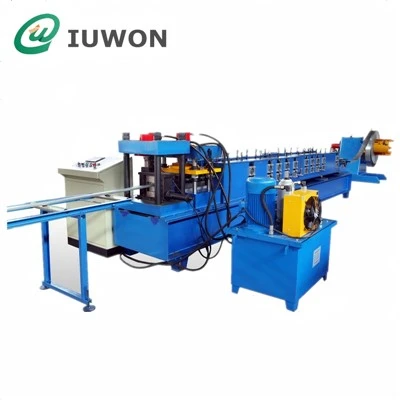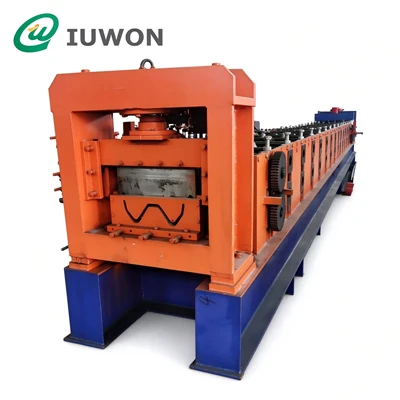
Choosing an automatic cable tray roll forming machine is an important decision for manufacturers planning to enter the cable management market or expand their existing production capacity. The right production line must do more than form sheet metal into a cable tray profile. It needs to accommodate different tray sizes, maintain dimensional accuracy, support punching requirements, protect the surface coating, and deliver consistent finished products at a production cost that fits the business plan.
For manufacturers supplying electrical contractors, infrastructure projects, industrial facilities, commercial buildings, and renewable energy installations, purchasing decisions should be based on the complete production process rather than the machine's advertised speed alone.
Before requesting a quotation, buyers should define the cable tray types they intend to manufacture, the material specifications, the required output, and the level of automation needed. These factors determine the machine configuration, tooling design, punching system, cutting method, and auxiliary equipment.
This guide explains the key considerations for selecting an automatic cable tray roll forming machine and how to evaluate its suitability for long-term production.
Define the Cable Tray Products You Need to Manufacture
The first step is to identify the finished products the machine must produce. Cable trays vary in width, sidewall height, bottom structure, load requirements, and hole patterns. These differences directly affect the roll forming stations, punching dies, guide systems, and cutting tools.
Common product types include:
Perforated cable trays: Designed with regularly spaced holes or slots to support cable installation, ventilation, and fixing.
Ladder cable trays: Consist of side rails connected by rungs and are commonly used for cable routes requiring ventilation and accessible support.
Solid-bottom cable trays: Provide a continuous bottom surface for applications requiring additional cable support or protection from falling debris.
Heavy-duty cable trays: Use thicker material, larger sections, or reinforced profiles to meet higher mechanical load requirements.
Cable tray covers: Fit over compatible tray bodies to provide additional protection against dust, falling objects, or environmental exposure.
Not every product type can be manufactured on the same machine without changes to the tooling or production configuration. A line designed for a standard perforated tray may not be suitable for a heavy-duty profile with a different cross-section and material thickness.
Buyers should prepare a list of the required profiles, including drawings, dimensions, thickness ranges, and hole layouts. If future orders may involve additional sizes, these should also be discussed before the machine is designed.
Check Material Thickness and Coil Specifications
Material selection is one of the most important factors affecting machine configuration. Cable trays are commonly manufactured from galvanized steel, pre-galvanized steel, stainless steel, or other sheet materials selected according to the installation environment and project requirements.
The specified material determines the forming force, roller design, drive capacity, cutting requirements, and production speed.
|
Material factor |
What buyers should confirm |
|---|---|
|
Material type |
Pre-galvanized steel, galvanized steel, stainless steel, or other specified grades |
|
Thickness range |
Minimum and maximum thickness required for production |
|
Coil width |
Calculated from the approved flat pattern and profile geometry |
|
Coil inner diameter |
Compatibility with the decoiler mandrel |
|
Coil outer diameter |
Space and loading requirements |
|
Coil weight |
Decoiler loading capacity and handling arrangements |
|
Surface condition |
Coating requirements and acceptable surface marks |
Material thickness should be evaluated together with yield strength, profile geometry, and finished-product requirements. Two sheets with the same nominal thickness can behave differently during forming if their mechanical properties differ.
A machine configured for thin-gauge electrical cable trays may not deliver the required forming stability when processing thicker steel. Conversely, a machine designed around heavy material may involve unnecessary equipment costs if the intended production consists mainly of lightweight profiles.
Before confirming the quotation, buyers should ask the manufacturer to specify the supported material range and identify any limitations associated with particular profiles or steel grades.
Evaluate the Roll Forming System and Profile Accuracy
The roll forming section determines how flat sheet metal gradually becomes the required cable tray cross-section. Multiple roller stations progressively shape the material while controlling its position and reducing unwanted deformation.
A suitable forming system should maintain consistent profile geometry throughout the production run. Important dimensions include tray width, sidewall height, flange dimensions, bend angles, and the straightness of the finished section.
When evaluating the forming section, buyers should consider the following points.
Roller design and material
Rollers must be designed around the specified profile geometry and material characteristics. Their working surfaces should withstand repeated forming cycles without excessive wear that could affect dimensional consistency.
Number and arrangement of forming stations
The required number of stations depends on profile complexity, material thickness, bend geometry, and forming requirements. A higher station count does not automatically guarantee a better result. The complete forming sequence must be appropriate for the actual product.
Guide and alignment systems
Entry guides and material positioning mechanisms help keep the strip aligned as it passes through the machine. Poor alignment may cause twisted profiles, uneven flanges, or inconsistent dimensions along the tray.
Frame and drive configuration
The machine frame, transmission system, and drive capacity should be suitable for the intended production load. Stable operation is especially important when manufacturing longer profiles or processing thicker material.
Buyers should request samples or a production demonstration using the intended material and profile drawings. Finished samples provide a more meaningful basis for evaluation than equipment descriptions alone.
Choose the Right Automatic Punching System
Punching capability is a major consideration when selecting an automatic cable tray production line. Cable trays often require mounting holes, connection slots, fastening holes, or ventilation openings. Their positions and dimensions must match the installation design.
If punching is performed separately after roll forming, manufacturers may need additional handling, positioning, and secondary processing. An integrated punching system can reduce these steps and support a more continuous production workflow.
There are several factors to evaluate.
|
Punching requirement |
Purchasing consideration |
|---|---|
|
Hole shape |
Round holes, elongated slots, rectangular openings, or customized patterns |
|
Hole position |
Distance from the tray edge, centerline, and other holes |
|
Punching sequence |
Pre-punching before forming or a configuration designed for the specified production process |
|
Die configuration |
Dedicated dies or changeable tooling for different hole patterns |
|
Positioning accuracy |
Consistency of hole locations along the finished profile |
|
Production speed |
Punching cycle must match the intended line output |
|
Tool maintenance |
Accessibility for die replacement, sharpening, and inspection |
Should You Choose Pre-Punching or Post-Punching?
The answer depends on the cable tray design and production requirements.
Pre-punching places holes in the flat steel strip before it enters the forming section. This approach can be suitable for many regularly spaced patterns and supports continuous production when the punching and forming processes are correctly synchronized.
However, forming changes the geometry of the sheet metal. Hole positions near bends, flanges, or other complex sections must be calculated carefully to ensure that the finished openings appear in the correct locations.
Post-punching processes the profile after forming. It can be useful for particular designs in which the hole position or shape is difficult to achieve before forming, although additional equipment and handling may be required.
For buyers requesting a turnkey line, the manufacturer should review the approved drawings before recommending a punching method. The quotation should clearly identify the punching unit, die arrangement, supported patterns, and any restrictions on profile changes.
Compare Cutting Methods and Finished-Length Accuracy
The cutting system determines how the formed cable tray is separated into individual lengths. The appropriate solution depends on the material thickness, cross-section, required cut quality, production speed, and acceptable dimensional tolerances.
A flying cutting system can cut profiles while the production line continues moving, provided that the machine is designed and synchronized for this operation. A stop-cut configuration may be suitable for other production requirements, depending on the desired output and equipment arrangement.
When evaluating the cutting section, buyers should check:
Cutting length: Whether the machine supports the required standard lengths and customized dimensions.
End geometry: Whether the cut ends meet the specified requirements for joining and installation.
Burr formation: Whether the cutting process leaves edges that require additional finishing.
Dimensional consistency: Whether repeated cuts maintain the required finished length.
Blade or tool life: Whether cutting components can withstand the intended production volume.
Control integration: Whether length settings are linked to the line's control system and production sequence.
Cable tray ends often need to align with connectors, couplers, brackets, or adjoining tray sections. Excessive length variation can create installation difficulties, particularly when the products are manufactured for large construction projects.
The machine should therefore be evaluated against the customer's actual finished-length tolerance rather than a general claim of high cutting accuracy. Buyers should also establish whether deburring, end finishing, or other secondary operations are required for their products.
Assess Automation, Changeover Time, and Operator Requirements
Automatic operation can improve production efficiency, but the practical value depends on how much manual intervention remains necessary.
A well-configured production line may integrate decoiling, leveling where required, punching, roll forming, length measurement, cutting, and finished-product collection. A centralized control system coordinates these processes to maintain the intended production sequence.
When comparing equipment, distinguish between automatic production and automatic size changeover. They are not the same capability.
An automatic line may continuously manufacture one specified profile after the operator loads the coil and sets the production parameters. However, changing to a different tray width, sidewall height, or hole pattern may still require manual adjustment unless the machine has been designed with additional changeover functions.
Buyers should ask the following questions:
Are production speed, cutting length, and batch quantity adjustable through the control system?
Can the machine store production recipes for different cable tray specifications?
Which adjustments are performed automatically, and which require operator intervention?
Does changing profile dimensions require replacing rollers, punching dies, or cutting tools?
How long does a typical changeover take under normal operating conditions?
What operator training is required for routine production and troubleshooting?
For factories producing large batches of a single profile, a straightforward automatic line may offer a practical balance between investment and output.
For manufacturers serving multiple customers with frequent specification changes, stored recipes, quick-adjustment mechanisms, and reduced manual setup can be more valuable. These features should be specified explicitly in the technical agreement instead of being assumed from the term automatic.


Match Production Speed to Real Manufacturing Demand
Machine speed is an important purchasing factor, but maximum line speed alone does not establish actual production capacity.
The number of finished trays produced per hour depends on profile length, material thickness, punching frequency, cutting cycles, coil changes, adjustments, and downtime. Complex hole patterns or thicker materials may require operating speeds below the machine's maximum mechanical capability.
For example, a factory producing 3-meter tray sections has a different output requirement from one producing 6-meter sections. Even when both lines run at the same linear speed, the number of finished pieces and the number of cutting cycles differ.
Buyers should request the following information:
|
Production indicator |
Why it matters |
|---|---|
|
Maximum forming speed |
Indicates the upper operating limit under specified conditions |
|
Recommended production speed |
Provides a more practical reference for routine manufacturing |
|
Finished length |
Affects cutting frequency and output calculations |
|
Punching cycle |
Determines whether punching can keep pace with forming |
|
Coil replacement time |
Influences operating continuity |
|
Changeover time |
Affects output when switching between products |
|
Scrap and rejection rate |
Helps estimate usable production rather than theoretical output |
|
Planned operating hours |
Provides the basis for daily and monthly capacity calculations |
A useful capacity estimate should distinguish between theoretical output and saleable finished products. Production planning should also allow for material loading, quality inspections, tool maintenance, and unplanned interruptions.
Ask the manufacturer to explain the conditions under which the quoted speed can be achieved. The same speed figure should not be assumed to apply to every profile, material thickness, and punching configuration.
Check Surface Protection and Finished-Product Quality
Cable trays made from coated steel must retain acceptable surface condition after forming. Scratches, coating damage, dents, and deformation can affect appearance and may create concerns about corrosion protection, depending on the material and application.
Surface quality depends on several factors, including roller condition, material alignment, handling practices, and the contact points throughout the production line.
During machine evaluation, buyers should examine:
Roller surfaces and their suitability for the specified coated material.
Material guides and contact components that may cause scratches.
Alignment throughout the decoiling, feeding, and forming processes.
Finished-profile straightness and dimensional consistency.
Cutting-edge quality and the condition of punched openings.
Methods for collecting and transferring finished products without damaging them.
For pre-galvanized steel, the coating is already present before forming. Preventing avoidable damage during feeding and forming is therefore particularly important.
For projects with defined acceptance criteria, the buyer should establish inspection standards before equipment acceptance. These may include profile dimensions, hole spacing, finished length, surface condition, and other drawing-specific requirements.
A production test using the intended material is the most practical way to determine whether the equipment can meet these requirements. Sample approval should be based on measurable criteria rather than appearance alone.
Consider the Complete Production Line, Not Just the Main Machine
An automatic cable tray roll forming machine operates as part of a wider manufacturing process. Auxiliary equipment affects material handling, production continuity, finished-product quality, and the space required for installation.
Depending on the production requirements, a complete line may include the following equipment:
Decoiler
Supports the steel coil and feeds material into the production line. Buyers should confirm coil weight, width, inner diameter, and outer diameter compatibility.
Leveling and feeding equipment
Where required, leveling helps reduce coil-set effects, while the feeding system controls material delivery and positioning before punching and forming.
Punching unit
Produces the specified holes and slots. Its capacity and tooling must match the profile drawings and production cycle.
Cutting and discharge system
Cuts the formed profile to the required length and transfers finished sections for inspection, stacking, or packaging.
When requesting a quotation, clarify which components are included in the standard configuration and which are optional. Also confirm the required electrical supply, compressed-air requirements where applicable, installation space, foundation conditions, and material-handling arrangements.
A lower initial quotation may not represent the lowest total project cost if essential equipment must be purchased separately. Comparing quotations against the same production scope helps buyers make a more accurate assessment.
Evaluate Maintenance, Spare Parts, and Technical Support
Production equipment is a long-term investment. Its value depends not only on initial performance but also on how easily the factory can maintain it and recover from operational problems.
Before placing an order, ask about the maintenance schedule for forming rollers, punching dies, cutting blades, bearings, transmission components, and other wear parts. The manufacturer should identify routine inspection points and explain how to replace consumable components safely.
Technical support is equally important when the factory begins manufacturing unfamiliar profiles. Changes in steel thickness, material properties, or hole layouts may require adjustments to production settings or tooling.
Buyers should confirm:
Whether operation and maintenance manuals are supplied.
Whether electrical diagrams and control-system documentation are available.
Which spare parts are included with the machine.
Whether remote troubleshooting and operator training are provided.
What commissioning and production acceptance procedures apply.
How technical issues and replacement-part requests will be handled after delivery.
For overseas buyers, these details are particularly relevant because the time and cost required to arrange on-site assistance may affect production schedules.
A clear agreement on installation, commissioning, training, warranty coverage, and spare-parts supply reduces uncertainty after the equipment arrives at the factory.
Prepare the Right Information Before Requesting a Quotation
A detailed inquiry helps the machine manufacturer propose a configuration that matches the intended products. Without profile drawings or material specifications, the quotation may rely on assumptions that later lead to changes in tooling, equipment configuration, or project cost.
The following checklist can be used when preparing an inquiry.
|
Information required |
Details to provide |
|---|---|
|
Product types |
Perforated, ladder, solid-bottom, heavy-duty trays, covers, or other profiles |
|
Profile drawings |
Cross-sections, dimensions, bend details, and connection features |
|
Material |
Steel grade, coating type, and material thickness |
|
Coil specifications |
Width, inner diameter, outer diameter, and maximum weight |
|
Punching requirements |
Hole sizes, shapes, spacing, and positioning |
|
Cutting requirements |
Standard lengths, length tolerance, and cutting method |
|
Production target |
Required output per shift, day, or month |
|
Automation level |
Standard automatic operation, stored recipes, or automatic size adjustment |
|
Factory conditions |
Available floor space, electrical supply, and material-handling facilities |
|
Delivery scope |
Main machine, auxiliary equipment, tooling, installation, and training |
If final drawings are not yet available, provide preliminary dimensions and identify which specifications remain subject to confirmation. The manufacturer can then clarify the assumptions used for the initial proposal.
This approach is more effective than comparing machine prices without confirming whether the quoted equipment can manufacture the same finished products.
Choose a Machine Around Your Production Requirements
Selecting an automatic cable tray roll forming machine requires a clear understanding of the finished profiles, material specifications, punching patterns, cutting requirements, and expected production volume.
The most suitable configuration is not necessarily the machine with the highest advertised speed or the greatest number of automated functions. It is the production line that can manufacture the required cable tray specifications consistently, accommodate the factory's product range, and support its operating and maintenance needs.
Before making a purchasing decision, buyers should evaluate forming accuracy, punching and cutting integration, changeover requirements, surface protection, practical production capacity, auxiliary equipment, and after-sales support as one complete system.
Planning a new cable tray production line?
IUWON can assess your cable tray drawings, material thickness, hole patterns, and target output to help determine a suitable roll forming and punching configuration. Submit your product specifications to discuss the machine layout, tooling requirements, automation options, and technical details needed for your project quotation.