The global transition toward clean, renewable energy has driven unprecedented investments in utility-scale photovoltaic (PV) solar farms and distributed commercial rooftop installations. As solar panel efficiencies continue to advance, the structural integrity of the underlying racking and mounting infrastructure becomes paramount. Photovoltaic solar brackets, structural purlins, C-channels, U-channels, Z-profiles, and tracking support posts form the physical skeleton of every solar power plant. These steel components must withstand continuous dynamic wind loading, seismic forces, heavy snow accumulation, and severe atmospheric corrosion over a mandatory 25 to 30-year operational design life.
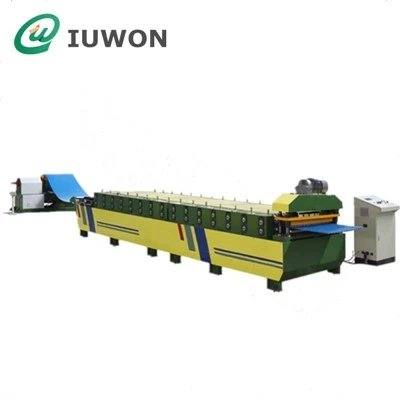
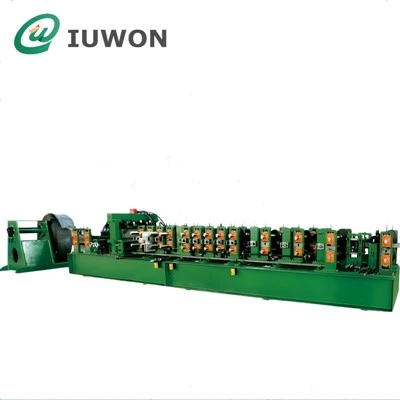
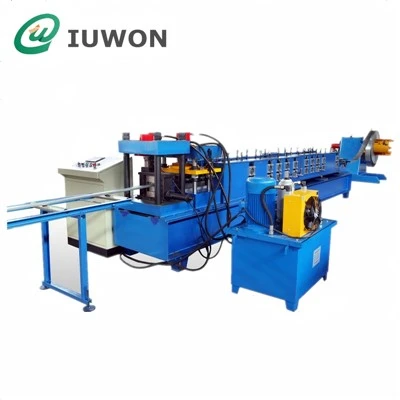
To satisfy the rigorous structural standards imposed by international solar engineering procurement and construction (EPC) contractors while keeping capital expenditures competitive, manufacturers require highly automated, high-speed, and versatile roll forming production lines. Hangzhou IUWON Technology Co., Ltd. has developed the next-generation Solar PV Bracket Roll Forming Machine for Ground and Rooftop Mounting Systems. This exhaustive engineering manual explores the structural distinctions between mounting applications, advanced equipment engineering, material metallurgy, line configurations, and operational cost optimization strategies.
Structural Engineering Analysis: Ground-Mounted vs. Rooftop Solar Mounting Systems
Solar mounting profiles cannot be standardized into a single cross-sectional design. Ground-mounted utility farms and rooftop solar arrays present vastly different structural requirements, loading profiles, and mechanical environments. Understanding these differences is essential for configuring an adaptable manufacturing line.
Utility-Scale Ground-Mounted Mounting Systems
Ground-mounted installations are deployed across varied topographies, ranging from arid desert sands and coastal salt flats to uneven mountain terrain. The primary structural components include vertical driven posts, main load-bearing beams, diagonal braces, and purlins. Key engineering characteristics include:
-
Heavy Gauge Materials: Ground structures utilize hot-dip galvanized steel or zinc-aluminum-magnesium (ZAM) coated coils ranging from 2.0 mm to 3.5 mm in thickness to provide structural stiffness.
- Complex Hole & Slot Patterns: Driven posts and main beams demand intricate, multi-axis slotted holes to accommodate soil settlement, thermal expansion, and precision tilt adjustments during field installation.
- High Load Capacity Profiles: Profiles such as deep C-channels, Sigma sections, and hat channels are widely used to maximize bending moment resistance against high wind speeds (exceeding 160 km/h).
Commercial & Residential Rooftop Mounting Systems
-
Light-Gauge & High-Precision Profiles: Rooftop channels typically utilize pre-galvanized steel or structural aluminum alloy strips ranging from 1.2 mm to 2.0 mm in thickness.
- Integrated Mounting Channels: Profiles feature intricate side grooves, lip returns, and internal ribbing engineered to interface directly with mid-clamps, end-clamps, and rail connectors.
- +
Deploying a versatile Solar PV Bracket Roll Forming Machine for Ground and Rooftop Mounting Systems capable of handling both heavy-gauge ground posts and intricate rooftop channels gives manufacturers a massive competitive advantage in global solar supply chains.
Advanced Engineering Architecture of the IUWON Solar Bracket Line
Forming heavy-gauge pre-galvanized steel or ZAM-coated steel into rigid, hole-dense structural profiles at high production speeds without damaging anti-corrosive surface coatings requires exceptional machine engineering. IUWON has integrated several core technological innovations into our solar manufacturing equipment:
Motorized Quick-Change C/U/Z/Sigma Size Adjustment
Traditional roll forming lines require operators to manually unbolt, re-space, or swap out roller dies when switching profile widths or flange heights-a tedious process that causes 3 to 6 hours of downtime. The IUWON Solar PV Bracket Roll Forming Machine for Ground and Rooftop Mounting Systems features a fully automated, motor-driven width and height adjustment mechanism. Controlled via the PLC touchscreen, precision ball screws shift the roller stands to new dimensional settings in under 10 minutes, allowing seamless production shifts between C100, C150, C200, and U-channel sizes.
High-Speed Multi-Cylinder CNC Hydraulic Punching System
Solar bracket profiles feature dense patterns of round holes, long slots, and alignment notches. To maintain high line speeds, IUWON integrates a multi-station hydraulic punching platform positioned upstream of the forming mill. Driven by high-precision Yaskawa servo feeders and CNC control, individual punch cylinders activate independently on the fly. Hole pitch accuracy is maintained within ±0.3 mm, eliminating secondary drilling operations.
Surface Coating Protection & Precision Roll Geometry
Pre-galvanized coatings (such as Z275/Z600) and advanced Zinc-Aluminum-Magnesium (ZAM) coatings provide critical barrier protection against atmospheric corrosion. Any micro-scratching or surface galling caused by roller dies accelerates rust formation. IUWON's roller dies are forged from high-grade Cr12MoV (D2) tool steel, CNC-lathed to mirror finishes, vacuum heat-treated to HRC 60-62, and electroplated with a 0.05mm hard chrome layer. This low-friction surface allows steel strip to glide smoothly across forming passes without zinc pickup or coating abrasion.
Servo-Driven Flying Hydraulic Shear System
To maximize total throughput, finished bracket profiles must be cut on the fly without stopping the continuous roll forming mill. IUWON equips the line with a servo-driven flying post-cut shear. A precision rack-and-pinion assembly tracks profile movement, accelerating the heavy shear die to synchronize perfectly with line speeds up to 40 meters per minute before executing a clean, burr-free shear cut.

Complete End-to-End Automated Production Process Workflow
The manufacturing process executed by the Solar PV Bracket Roll Forming Machine for Ground and Rooftop Mounting Systems represents a continuous, fully automated pipeline:

[Hydraulic Uncoiler & Loading Car] ➔ [Precision 7-Roll Strip Leveler] ➔ [CNC High-Speed Servo Punching Unit] ➔ [Continuous Multi-Pass Cold Roll Forming Mill] ➔ [Servo Flying Hydraulic Shear] ➔ [Automated Run-Out Table / Auto-Stacker]
Automated Material Feeding: A 5 to 10-ton hydraulic uncoiler automatically expands inside the coil core, while a hydraulic loading car positions heavy coils safely without overhead crane assistance.
Precision Strip Flattening: A 7-roll leveling unit removes coil set, crown, and edge wave, ensuring that the raw strip enters the punching and forming stations perfectly flat.
Dynamic CNC Punching: High-speed servo drives feed the strip through multi-cylinder hydraulic punch blocks to stamp custom bolt-hole matrix patterns.
Progressive Forming: 18 to 26 forming passes shape the strip into the targeted C, U, Z, or Sigma geometry with smooth bending radii and precise flange angles.
Burr-Free Flying Shear: The flying shear cuts profiles to exact lengths on the fly, after which an automated pneumatically-driven run-out table stacks finished profiles for bundling.
Comprehensive Technical Equipment Specifications
The engineering parameters below reflect the standard baseline and customizable capabilities of IUWON's solar bracket manufacturing machinery:
| Engineering Parameter | Technical Specification / Standard Configuration |
|---|---|
| Processed Raw Materials | Hot-Dip Galvanized Steel, Pre-Galvanized Steel, Zinc-Aluminum-Magnesium (ZAM) Steel, Stainless Steel, High-Strength Structural Carbon Steel |
| Material Thickness Range | 1.2 mm – 3.2 mm (Customizable up to 4.0 mm for heavy utility posts) |
| Material Yield Strength | 235 MPa – 550 MPa (High-yield structural steel compatibility) |
| Profile Width Range | 80 mm – 300 mm (Fully automated PLC width adjustment) |
| Flange Height Range | 30 mm – 80 mm (Fully automated PLC height adjustment) |
| Forming Pass Stations | 18 – 26 Stations (Depending on profile complexity and material thickness) |
| Main Shaft Diameter & Material | Φ80 mm – Φ100 mm | 40Cr Steel, Tempered, Quenched, and Precision Ground |
| Roller Die Specification | Cr12MoV (D2 Die Steel), Vacuum Heat Treated (HRC 58-62), Mirror Polished, Hard Chrome Plated |
| Line Operating Speed | 25 – 45 meters / minute (Depending on hole pattern density and profile gauge) |
| Drive Transmission Type | Independent Gearbox Transmission or Heavy-Duty Chain Drive with Universal Joints |
| Punching System | CNC Multi-Cylinder Hydraulic Punching Station (Servo-driven feeding, pitch accuracy ±0.3mm) |
| Cutting Mechanism | Servo Flying Hydraulic Shear with Cr12MoV Non-Deformation Die Blades |
| Automation Control System | Siemens S7-1200 / Mitsubishi PLC, 10-Inch Color Touchscreen HMI, Yaskawa Servo Drives |
Economic Value, CAC Optimization & Operational ROI Analysis
In the highly competitive solar manufacturing sector, equipment selection directly impacts a company's Cost of Goods Sold (COGS) and Customer Acquisition Cost (CAC) when bidding on massive utility tenders.
Winning Tenders through Lower Unit Manufacturing Costs
Utility-scale solar EPC bids are won on fractions of a cent per watt. By combining high production speeds (up to 45 m/min) with automated profile width changing, IUWON's line lowers unit manufacturing labor overhead by over 70%. Manufacturers can offer more competitive pricing on heavy structural brackets while maintaining healthy profit margins.
Zero Material Scrap and Exact Length Precision
Offline punching and shearing method generate substantial end-crop scrap (often 5% to 8% of raw coil weight). IUWON's dynamic CNC servo punching and flying shear cut-off system reduces raw material scrap to under 1%, generating hundreds of thousands of dollars in annual raw material savings for gigawatt-scale factories.
Supply Chain Versatility and Rapid Product Line Pivoting
Solar projects often require sudden engineering revisions mid-construction (e.g., changing purlin thickness or modifying hole locations to accommodate new tracking motors). With IUWON's touchscreen-controlled size changing and programmable punching, factories can reconfigure their entire production line in minutes rather than days, ensuring uninterrupted site deliveries.

Equipment Maintenance Protocols & Quality Control Diagnostics
To ensure 24/7 continuous operational uptime and extend machine service life, plant engineers should institute the following preventative maintenance and quality control routines:
Routine Lubrication & Mechanical Care
Roller Shaft Bearings: Grease roller shaft pillow blocks and gearboxes every 250 operational hours using high-temperature lithium-complex grease.
Punching Dies & Guide Pins: Maintain continuous oil mist lubrication on hydraulic punching pins to prevent micro-galling during high-frequency punching.
Hydraulic System Maintenance: Replace hydraulic fluid filters every 1,000 operating hours. Keep hydraulic oil temperatures below 55°C using inline air-cooling heat exchangers.
Diagnostic & Quality Control Troubleshooting
Issue: Profile Edge Flare or Flange Twist: Remedy: Check side-alignment roller guides on the final 3 forming stations. Adjust vertical clearance on pass 18-20 to equalize strain across the profile web.
Issue: Galvanized Coating Flaking or Scuffing: Remedy: Inspect roller dies for zinc dust accumulation. Clean rollers with solvent and ensure the automatic strip oiling system is operating.
Issue: Hole Pitch Cumulative Error: Remedy: Inspect the encoder measuring wheel riding on the incoming steel strip. Clean dust or oil from the encoder wheel tread and verify spring-tension contact.
Partner with Hangzhou IUWON Technology Co., Ltd.
Upgrade your facility with industry-leading solar bracket forming machinery. Contact our senior technical sales engineers today for a customized proposal and detailed CAD layout drawing.