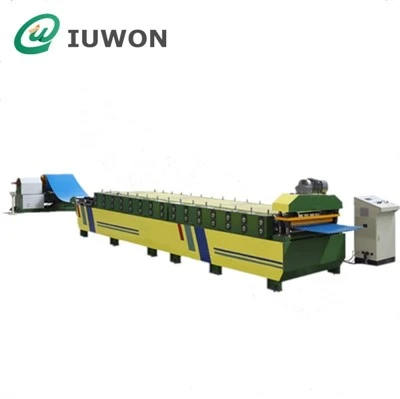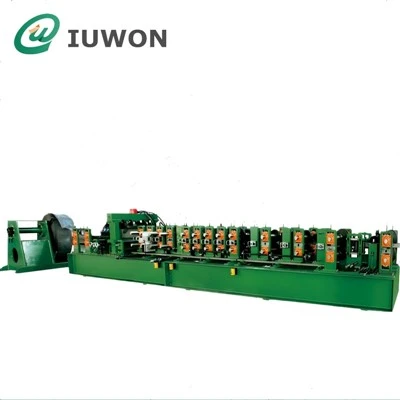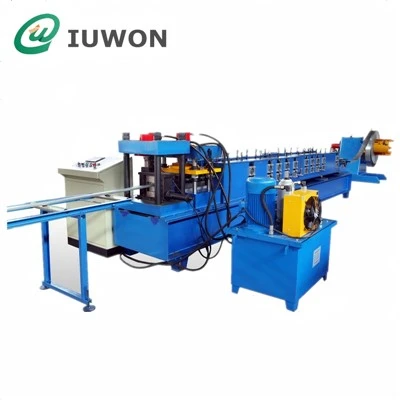
The price of an Industrial Roll Forming Machine is shaped by much more than its production speed or the number of forming stations. Two lines designed for similar metal profiles can carry different price tags because their engineering requirements, material capacity, tooling, automation, and delivery scope may not be the same. A machine intended for thin-gauge roofing panels, for example, does not necessarily require the same frame rigidity, drive capacity, or tooling arrangement as a line processing thick, high-strength steel sections.
For buyers, the most useful approach is to assess what is included in the quotation and how each specification relates to the intended production task. Understanding the main cost drivers makes it easier to compare suppliers on an equivalent basis, identify unnecessary options, and avoid underestimating the investment required to bring a production line into stable operation.
Why Do Prices Vary Between Manufacturers?
The design of an Industrial Roll Forming Machine is engineered around the profile it must produce, the material it must process, and the output expected from the plant. These requirements determine the machine structure, tooling layout, drive system, cutting method, and level of automation. A standard configuration for a relatively simple profile may require fewer engineering hours and less specialized equipment than a line designed for a complex section with several bends, punched features, or tight dimensional tolerances.
Manufacturers may also define their quotations differently. One offer may cover only the forming unit, while another includes decoiling, leveling, punching, cutting, automatic stacking, electrical controls, commissioning, and operator training. Component grades, machining standards, testing procedures, warranty terms, and spare-parts packages can also vary.
A lower initial figure is therefore not automatically the more economical choice. Before comparing prices, buyers should establish a consistent technical scope covering profile drawings, material specifications, target output, production processes, and delivery requirements.
Profile Design and Material Specifications
Profile Geometry and Forming Complexity
The geometry of the finished section is one of the earliest factors considered during machine design. A simple channel or flat-backed section may be formed through a relatively straightforward sequence. A profile with multiple returns, narrow flanges, deep ribs, stiffening features, or interlocking edges usually requires more detailed forming calculations and a carefully developed pass design.
Each forming station progressively changes the strip rather than creating the entire cross-section in one operation. The number and arrangement of stations depend on profile geometry, material behavior, and acceptable forming strain. Poorly planned forming can lead to twisting, bowing, edge wave, surface marking, or dimensional variation. Avoiding these defects may require additional stations, revised roll contours, guide equipment, or more extensive trials.
Tolerance requirements also affect cost. If a product must maintain consistent flange angles, hole positions, or overall dimensions, the machine may need more precise tooling, feeding, alignment, and cutting arrangements. Buyers should provide actual profile drawings and tolerance requirements instead of relying only on a general product name.
Material Type, Thickness, and Strength
The material range specified for an Industrial Roll Forming Machine affects the forces acting on the rolls, shafts, bearings, frame, and drive system. Carbon steel, galvanized steel, stainless steel, and aluminum differ in strength, ductility, surface characteristics, and springback behavior. These differences influence roll design and the settings required to achieve a stable profile.
Thickness is important, but it should not be considered in isolation. A thicker strip generally requires greater forming force and stronger load-bearing components. High-yield-strength steel can also impose substantial loads even at a comparatively modest thickness. The machine may consequently need a more rigid frame, larger shafts, appropriately selected bearings, and a drive system with sufficient torque.
Surface requirements matter as well. Pre-painted, coated, or polished materials may need careful roll finishing and handling to reduce scratching or coating damage. When requesting quotations, buyers should specify:
Material type and grade.
Minimum and maximum thickness.
Strip width and dimensional variation.
Yield strength and tensile strength.
Surface coating or finish requirements.
Providing these details helps manufacturers select suitable mechanical configurations without unnecessary oversizing or insufficient load capacity.


Roller Tooling, Forming Stations, and Mechanical Structure
Roll tooling is a major part of the engineering and manufacturing cost of a roll forming line. Roll contours must be designed to guide the strip through each forming pass while controlling deformation and maintaining the required profile dimensions. The design process considers material thickness, yield strength, bend radii, springback, profile symmetry, and the sequence in which bends are introduced.
Tooling cost is influenced by the selected steel, heat treatment, machining accuracy, surface finish, and the number of roll sets required. More demanding applications may call for higher-grade tooling materials or tighter machining controls. These choices can increase the initial investment but may help maintain dimensional consistency and reduce premature wear when the line is operated correctly.
The mechanical structure must support forming loads without excessive deflection. Shaft diameter, bearing capacity, frame construction, station spacing, and transmission layout all contribute to the machine's ability to operate consistently. A line processing heavier material or wider strip may require a stronger structure than one designed for light-gauge applications.
The number of forming stations should be determined by the forming process, not used as a stand-alone measure of quality. Too few stations can place excessive deformation on individual passes, while adding stations without a technical reason can increase tooling, frame length, and maintenance requirements. A balanced design is generally more valuable than simply choosing the largest or smallest station count.
Production Speed, Capacity, and Operational Requirements
Required output has a direct influence on the drive, feeding, control, and cutting systems. Buyers should distinguish between a machine's maximum running speed and the output that can be sustained during normal production. Actual throughput is affected by profile length, coil changes, punching cycles, cutting frequency, stacking time, and the time needed to adjust or change specifications.
Higher line speeds may require more powerful motors and gearboxes, improved transmission design, accurate strip guidance, and reliable synchronization between forming and cutting. If punching is integrated into the line, the punching cycle must also match the material feed and production rhythm. A system that runs quickly in an unloaded test may not achieve the same output when processing the specified material and profile.
Production stability is as important as nominal speed. Vibration, feeding deviation, inconsistent cutting, or frequent stoppages can reduce usable output and increase scrap. Buyers should assess the following operational requirements before selecting a configuration:
Target production speed and daily output.
Expected operating hours and production shifts.
Product length and cutting frequency.
Frequency of specification changes.
Required dimensional consistency during continuous operation.
These factors help determine whether a standard drive arrangement is sufficient or whether more advanced feeding, synchronization, and control systems are justified.
Automation and Production Line Configuration
The overall investment depends on which upstream and downstream processes are integrated into the production line. A basic arrangement may include the forming machine and a cutting unit, while a more complete system can incorporate coil handling, leveling, feeding, punching, automatic transfer, and stacking. Each additional module adds equipment, controls, integration work, and commissioning requirements.
Punching, Cutting, and Auxiliary Equipment
Punching requirements can vary significantly. Some profiles need no holes, while others require multiple hole patterns, slots, or cutouts at defined positions. Hydraulic punching may suit certain production arrangements, while servo-driven systems can provide more flexible positioning and control. The appropriate choice depends on hole geometry, material thickness, production speed, and positioning accuracy.
Cutting configuration is another cost factor. A stop-and-cut arrangement may be adequate for some output targets, whereas a flying cut-off system may be considered when the line must maintain movement during cutting.
Common auxiliary equipment includes:
Decoilers and coil cars for material handling.
Leveling units for correcting strip flatness.
Feeding systems for accurate material positioning.
Hydraulic or servo punching systems.
Hydraulic or flying cut-off systems.
Automatic stacking and finished-product handling equipment.
Not every plant needs the same level of integration. Buyers should assess available floor space, coil weight, labor arrangements, and the required finished-product handling process before adding auxiliary equipment.
PLC Control and Automation Level
A PLC-based control system coordinates machine operation and allows operators to manage production settings through an HMI. More advanced configurations may include servo positioning, automatic length measurement, stored production recipes, fault diagnostics, and communication between separate line modules.
Automation can increase the initial equipment cost because it requires additional hardware, software development, sensors, wiring, and integration testing. It may nevertheless reduce repetitive manual tasks, improve repeatability, and support faster changeovers when multiple specifications are produced. The appropriate level depends on production volume, product variety, labor availability, and the plant's maintenance capabilities.
Buyers should compare the actual functions included rather than relying on broad descriptions such as "fully automatic." The control system should match the intended production process and the technical capabilities of the operators who will use it.
Manufacturing Quality, Custom Engineering, and After-Sales Support
The quality of manufacturing affects both the quotation and the expected service life of the equipment. Frame fabrication, machining accuracy, shaft alignment, bearing selection, electrical components, and assembly procedures all contribute to operating performance. Differences may not be obvious from a brief specification sheet, so buyers should ask for detailed component lists, manufacturing standards, inspection arrangements, and factory testing procedures.
Custom engineering is another cost consideration. When a line must produce a customer-specific profile, the manufacturer may need to review drawings, calculate forming passes, design roll tooling, configure punching and cutting operations, and conduct trial production. The time and resources required depend on profile complexity and how complete the technical information is at the start of the project.
After-sales support should also be evaluated as part of the equipment package. Important service items include:
Installation guidance and commissioning.
Operator training and technical documentation.
Remote troubleshooting and maintenance support.
Spare-parts availability.
Warranty coverage and response arrangements.
A quotation with a higher initial price may include a broader service scope, while a lower offer may leave important project tasks to the buyer. Buyers should confirm exactly which services are included, whether support is remote or on-site, and how replacement components can be obtained.
Additional Costs and How to Evaluate Quotations
The purchase price is only one part of the total project budget. International transportation, export packing, insurance, customs duties, import taxes, and local handling charges may apply depending on the destination and delivery terms. The buyer may also need to prepare foundations, power connections, compressed-air lines, lifting equipment, and sufficient factory space before installation.
Other costs can arise during commissioning and operation. These may include installation labor, operator training, initial spare parts, routine maintenance items, and tooling for additional profile sizes. Buyers should ask the supplier to state clearly what is included and excluded, rather than assuming that all items needed for production are covered by the equipment quotation.
Comparing Supplier Quotations
The following table provides a practical framework for comparing offers from different manufacturers.
| Evaluation Factor | Information to Confirm | Potential Cost Impact |
|---|---|---|
| Profile design | Drawings, dimensions, bends, tolerances | Engineering and tooling complexity |
| Material specifications | Grade, thickness, width, strength | Frame, shaft, and drive requirements |
| Forming system | Roll material, stations, shaft dimensions | Tooling and mechanical manufacturing |
| Production capacity | Line speed, output, operating hours | Motor, transmission, and control configuration |
| Automation | PLC, servo, punching, cutting, stacking | Electrical integration and auxiliary equipment |
| Manufacturing quality | Components, machining, assembly, testing | Production quality and long-term reliability |
| Project services | Installation, training, warranty, spare parts | Delivery and support costs |
A practical quotation comparison should follow several steps:
Confirm technical equivalence: Make sure all suppliers are pricing the same profile drawings, material grades, thickness range, and strip width.
Review production targets: Compare operating speed, expected output, product length, and working conditions.
Check the mechanical configuration: Examine forming stations, roll tooling, shafts, bearings, frame construction, and drive systems.
Verify process integration: Confirm the punching, cutting, decoiling, feeding, stacking, and control equipment included.
Clarify delivery and service: Check packing, shipment scope, installation, commissioning, training, warranty, and spare-parts support.
A useful comparison is based on equivalent technical scope, not simply the final numbers on the first page of each offer. If one supplier proposes a different forming process or automation package, the difference should be examined technically before the prices are ranked.
Conclusion: Evaluate the Investment Against Production Requirements
The price of an Industrial Roll Forming Machine reflects the engineering and equipment needed to produce a particular profile from a defined material at a required output level. Profile geometry, material strength, tooling, mechanical structure, line speed, automation, manufacturing quality, and service scope all contribute to the final quotation. Additional project expenses, including transportation, installation, and plant preparation, should also be included when calculating the total investment.
Buyers can make a more reliable decision by preparing complete technical specifications and comparing quotations on the same basis. The lowest initial offer may not provide the most suitable configuration, while a higher-priced line is not automatically better. The objective is to select equipment that meets production requirements, maintains consistent quality, and offers an appropriate balance between initial cost and long-term operating value.
IUWON works with customers to develop roll forming equipment around profile drawings, material specifications, and production targets. Its engineering scope can cover forming-pass planning, roller tooling, mechanical configuration, and the integration of punching, cutting, and automation according to project requirements. By considering the intended application before finalizing the machine layout, IUWON aims to align equipment configuration with practical production needs. Buyers can use their profile drawings and material data as the starting point for discussing a suitable line design and quotation.