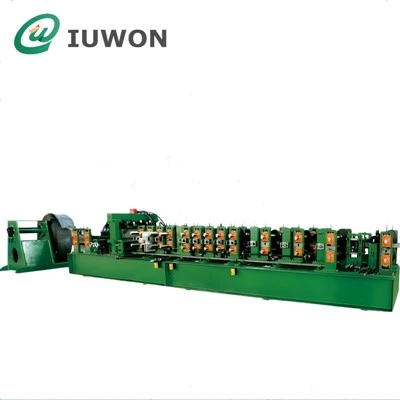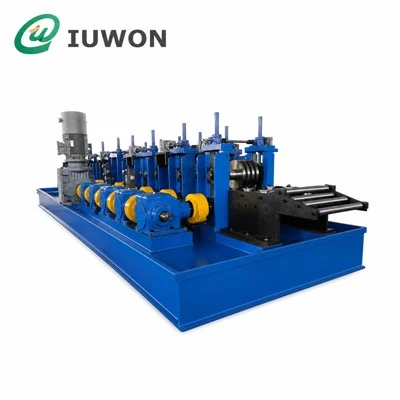
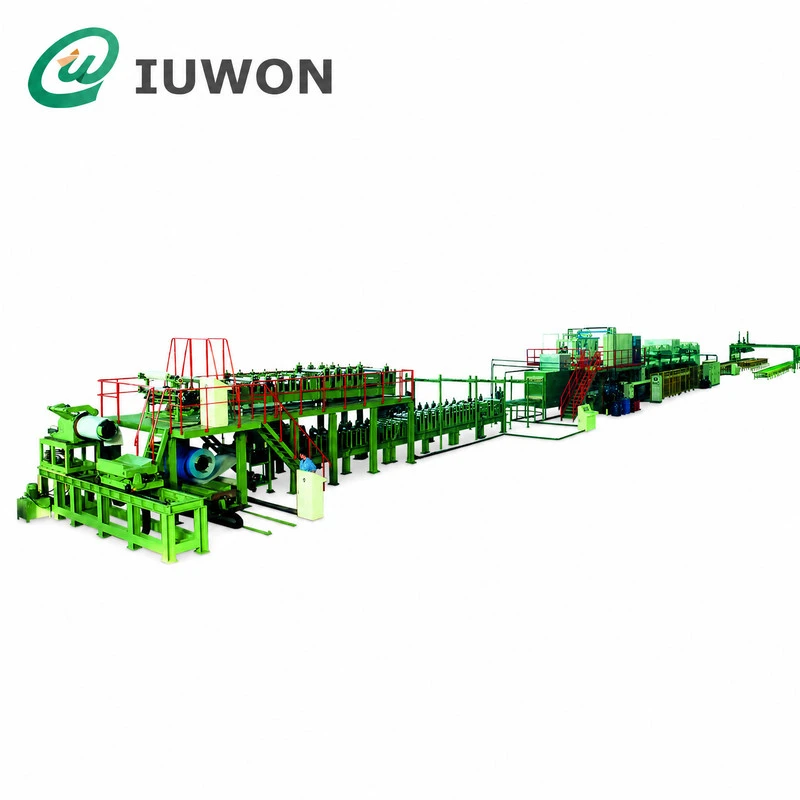
Hangzhou IUWON Technology Co., Ltd. is one of the most reliable manufacturers and suppliers of roll forming for the solar sector in China. With abundant experience, we warmly welcome you to buy custom made roll forming for the solar sector from our factory. Good service and reasonable price are available.
Roll forming for the solar sector Parameters
| Item | Specification |
|---|---|
| Application | Solar Mounting Profiles |
| Material | Galvanized Steel / Carbon Steel |
| Material Thickness | According to Profile |
| Profile Width | Customized |
| Profile Height | Customized |
| Forming Method | Continuous Cold Roll Forming |
| Forming Stations | Profile Dependent |
| Roller Tooling | Dedicated Roll Set |
| Punching | Optional |
| Cutting | Hydraulic Cut-Off |
| Length Measurement | Encoder |
| Control System | PLC + Touchscreen |
| Production Speed | According to Material & Profile |
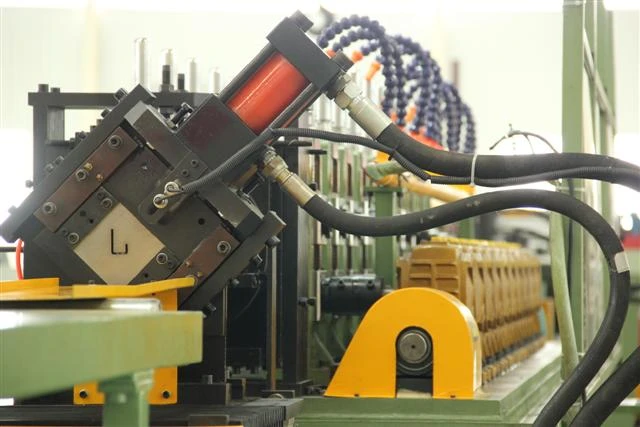
Solar Profile Forming Process
- Coil feeding and strip alignment
- Optional material straightening
- Progressive roller forming
- In-line punching where required
- Final profile calibration
- Encoder-based length measurement
- Hydraulic cut-off
- Run-out collection or automatic stacking
Solar Profile Matching & Tooling Selection
Solar mounting profiles can have different combinations of base width, side-wall height, flange dimensions, return edges, and reinforcement sections. These dimensions determine the roller geometry and the number of forming stations required to achieve the finished cross-section.
The forming sequence should distribute deformation gradually across the roller stations. Material thickness, bend radius, and profile geometry are considered when setting roller clearance and forming angles, particularly for profiles with narrow flanges or deep sections.
When several solar profiles are required on the same production line, the tooling arrangement can be designed around the required profile range and changeover method. Buyers should provide profile drawings and material specifications before the roll tooling is finalized.
Roll forming for the solar sector Features
Profile-Based Roll Tooling
The roll set is designed around the actual solar profile dimensions, including flange geometry, bend radius, and material thickness.
Integrated Hole Processingution
Punching equipment can be added for mounting holes or slots and synchronized with strip feeding and length measurement.
Progressive Cross-Section Forming
Multiple forming stations gradually change the flat steel strip into the required solar mounting section, controlling deformation between successive bends.
Flexible Line Configuration
Feeding, straightening, punching, cutting, collection, and stacking units can be arranged according to the required production sequence and workshop layout.
When Should Punching Be Integrated Into the Roll Forming Line?
Punching is worth integrating when the solar profile has a fixed hole pattern that must be repeated across large production batches. Instead of forming the steel section first and sending each piece to a separate drilling or punching station, the required holes can be processed as part of the continuous line. This is particularly useful for mounting rails and support sections where connection points follow a defined production drawing.
The position of the punching unit depends on the profile design and forming sequence. Some holes can be processed while the strip is still flat, while other designs may require punching after partial forming to maintain access to the required surface. The choice affects tooling clearance, line layout, material guidance, and the available working space around the forming stands.
For projects involving several solar profiles, an integrated punching arrangement can also be configured around different hole patterns and finished lengths. Buyers should determine whether the holes are round, slotted, or elongated, and whether their positions remain fixed or change between profile specifications. These requirements help define the punching tooling and allow the forming line to be configured for the actual product range.
Hot Tags: roll forming for the solar sector, China roll forming for the solar sector manufacturers, suppliers, factory, Photovoltaic Bracket Roll Forming Machine, roll forming machine for solar structure, solar frame manufacturing line, solar mounting frame roll forming machine, solar panel frame strut roll forming machine, solar support profile forming line