Municipal roads require safety barriers that can adapt to different traffic environments, road widths, intersections, bridges, curves, and roadside conditions. Unlike a single highway project with one standardized barrier specification, municipal road infrastructure may involve multiple guardrail configurations within the same procurement program.
For manufacturers supplying road authorities, municipal engineering contractors, and infrastructure projects, this creates a practical production challenge: the guardrail profile must remain dimensionally consistent while the production line needs enough flexibility to handle different lengths, hole arrangements, and material specifications.
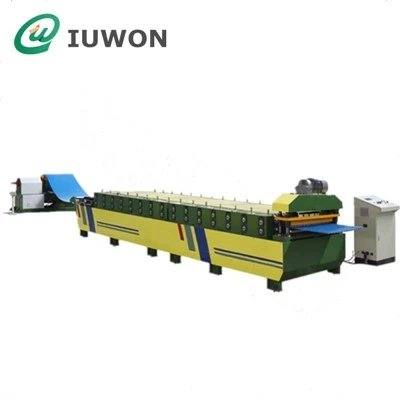
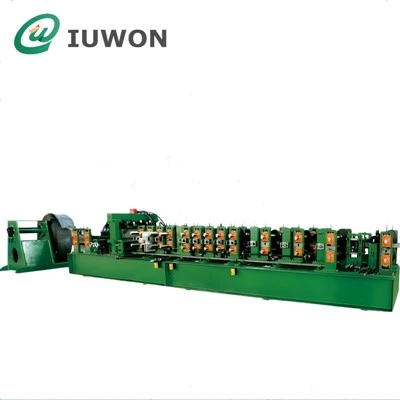
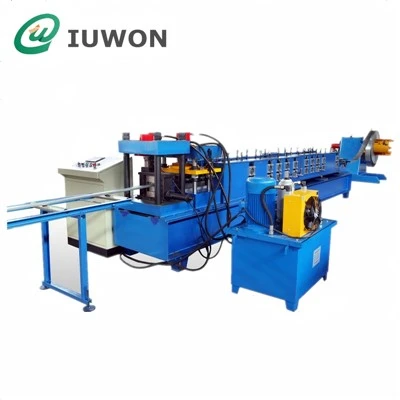
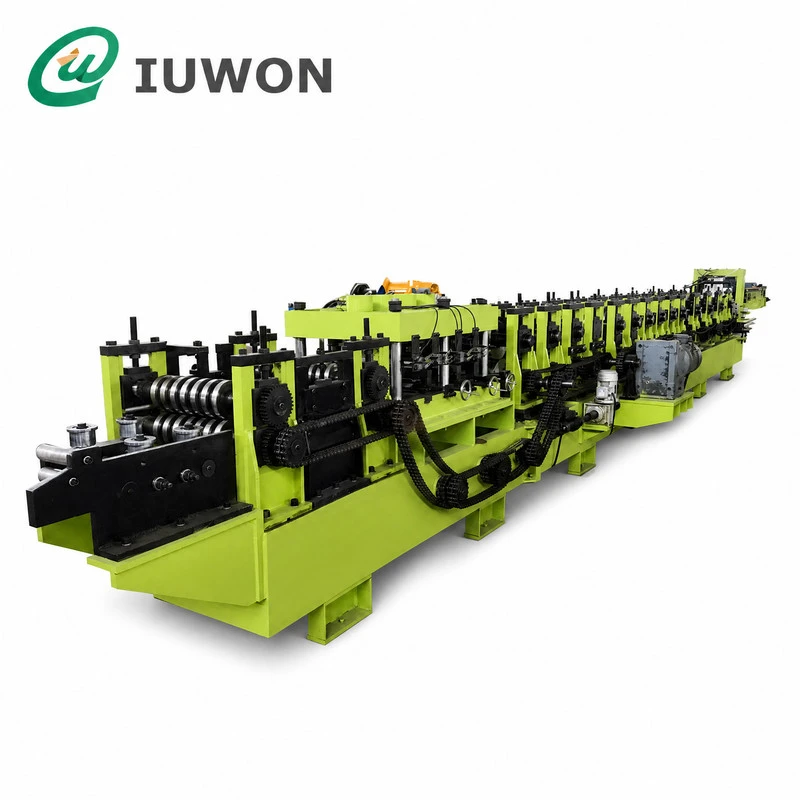
A municipal road guardrail roll forming machine is designed to continuously convert steel coil into W-beam, Thrie-beam, or other cold-formed roadside barrier profiles. Depending on the production requirements, the line can combine coil loading, leveling, servo feeding, punching, roll forming, cut-to-length, and automatic stacking.
For municipal road safety infrastructure, equipment selection should be based on the actual barrier profile, steel grade, material thickness, punching pattern, finished length, required production volume, and local road engineering requirements.
The Role of Guardrails in Municipal Road Infrastructure
Municipal guardrails are used in a wider range of environments than roadside barriers on open highways.
Typical applications include:
Urban arterial roads
City expressways
Road intersections
Bridge approaches
Elevated roads
Roadside drainage areas
Pedestrian protection zones
Median separation
Sharp curves
Mountain roads managed by local authorities
Industrial access roads
Municipal road rehabilitation projects
The barrier configuration can change according to the road geometry and traffic environment.
For example, a straight roadside section may use a conventional W-beam, while a bridge approach or median application can require different posts, spacers, connection components, or barrier arrangements.
This means that a municipal road guardrail manufacturer may need a production system capable of handling several related products rather than one fixed profile.
What Is a Municipal Road Guardrail Roll Forming Machine?
A municipal road guardrail roll forming machine is a continuous metal-forming system used to manufacture steel safety barrier beams.
The production process begins with a steel coil. The coil is uncoiled and leveled before entering the feeding section. If the finished barrier requires mounting holes, the strip passes through a punching system before or during the forming process.
The flat strip is then progressively shaped through multiple roller stands.
A typical production flow is:
Coil Loading → Decoiling → Leveling → Servo Feeding → Punching → Roll Forming → Cut-Off → Stacking
Each section performs a different function.
The decoiler controls the incoming coil, the leveling unit corrects strip deformation, the feeding system controls material movement, and the roller stands progressively establish the guardrail cross-section.
After forming, the continuous beam is cut to the specified length and transferred for bundling, galvanizing, storage, or shipment.
Why Roll Forming Is Suitable for Municipal Guardrail Production
Municipal road projects usually involve repetitive safety-barrier components. Once the profile tooling has been established, the same production line can continuously manufacture long sections with consistent cross-sectional geometry.
Compared with separate bending operations, progressive roll forming offers several manufacturing advantages.
Continuous Profile Formation
The steel strip moves continuously through the forming stands rather than being individually pressed into shape.
Repeatable Geometry
Each forming stand performs a controlled deformation, helping maintain the required profile dimensions over long production runs.
Integrated Punching
Connection holes can be incorporated into the production line, reducing separate drilling operations.
Programmable Cutting
The control system can produce different barrier lengths according to the production program.
Reduced Manual Processing
Decoiling, forming, cutting, and stacking can be connected into a continuous workflow.
These characteristics are especially useful for municipal infrastructure suppliers handling large batches of similar road safety products.
W-Beam and Thrie-Beam Production
The most common guardrail profiles are generally based on corrugated structural sections.
W-Beam Guardrail
The W-beam has two major longitudinal waves and is widely used for roadside and median barrier applications.
Its forming process requires several roller stations to gradually establish the corrugated cross-section.
The tooling must control the forming radius and deformation distribution so that the final beam maintains the required geometry without excessive twisting or edge deformation.
Thrie-Beam Guardrail
Thrie-beam profiles have three longitudinal waves and a different cross-sectional configuration from W-beams.
Because the profile is more complex, the roller arrangement needs to be designed specifically for the section.
A manufacturer should not assume that a W-beam machine can produce a Thrie-beam simply by changing a few machine settings. The roller tooling and forming sequence normally need to be developed according to the actual profile drawing.
For municipal suppliers producing both types, separate tooling sets or dedicated lines may be considered depending on production volume.
Core Equipment Configuration
A complete municipal guardrail production line can include the following sections.
Hydraulic Decoiler
The decoiler supports and unwinds the steel coil.
For relatively heavy guardrail material, hydraulic expansion provides controlled coil loading and material release.
The machine specification should match:
Maximum coil weight
Coil inner diameter
Coil outer diameter
Maximum strip width
Coil material
Production speed
An undersized decoiler can create unnecessary loading and feeding problems during long production runs.
Leveling Unit
Steel coil naturally retains curvature after winding. A leveling system helps flatten the incoming strip before it enters the forming section.
For guardrail production, proper leveling contributes to stable punching and forming because the strip needs to enter the tooling in a controlled condition.
The number and arrangement of leveling rollers should be selected according to material thickness and mechanical properties.
Servo Feeding System
The feeding system controls the strip position before punching and forming.
For municipal guardrails, feeding accuracy is particularly important because the finished beam may contain repeated mounting holes.
The controller can coordinate:
Feeding Distance → Punching Position → Forming → Cutting Length
This allows the same production line to manufacture different batches by changing the programmed production parameters.
Punching System for Municipal Guardrails
Connection holes are a fundamental part of guardrail production.
A typical barrier beam may require repeated holes near the ends or along the longitudinal direction for connection to adjacent beams and associated hardware.
The punching system can be configured for:
Round holes
Elongated holes
Multiple hole rows
Different hole pitches
Different end-hole arrangements
Customized municipal project specifications
The location of the punching unit depends on the product design.
Pre-Forming Punching
The flat strip is punched before entering the roll forming section.
This arrangement can be useful when hole geometry is easier to process while the material remains flat.
Post-Forming or In-Line Punching
Certain profiles may require punching after particular forming stages or through an integrated system.
The correct arrangement should be determined from the guardrail drawing.
For municipal infrastructure manufacturers handling different project specifications, programmable punching can significantly improve production flexibility.
Roll Forming Section: Where Profile Accuracy Is Established
The forming section contains multiple roller stands arranged along the machine base.
The first stands introduce relatively small bends. Subsequent stands progressively increase the deformation until the finished guardrail cross-section is achieved.
A simplified sequence can be represented as:
Flat Strip → Edge Bending → Initial Corrugation → Deep Corrugation → Flange Formation → Final Calibration
The actual sequence varies according to the profile.
The roller design must account for:
Material thickness
Yield strength
Profile width
Profile depth
Bend radius
Forming speed
Springback
Machine rigidity is equally important. The shafts, bearings, frames, and transmission system must withstand the forming load without excessive movement.
Cutting and Finished-Length Control
Municipal projects rarely use only one barrier length.
Depending on road layout and installation requirements, manufacturers may produce different standard lengths or project-specific dimensions.
The cut-off system should therefore provide reliable control of finished length.
Possible configurations include:
Hydraulic stop cutting
Flying cut-off
Servo-synchronized cutting
Customized end cutting
For high-throughput production, flying cutting can allow the profile to continue moving while the cutting operation is performed.
For lower-speed production or specific profile requirements, a stop-to-cut arrangement may be sufficient.
The appropriate solution depends on the required production speed and dimensional tolerance.
Automatic Stacking for Municipal Production
A finished guardrail beam is long and relatively heavy, so manual handling can become inefficient as production volume increases.
An automatic stacking system can collect finished beams and arrange them into bundles.
The stacking design should account for:
Guardrail length
Bundle quantity
Factory floor area
Forklift movement
Packaging method
Galvanizing process
Storage requirements
For smaller manufacturers, a run-out table with manual collection may be sufficient.
For larger municipal infrastructure suppliers, automated bundling and transfer can reduce handling between production and storage.
Recommended Technical Parameters
The following table provides a reference configuration for a municipal road guardrail production line. Final specifications should always be confirmed against the customer's actual profile and material.
| Parameter | Reference Configuration |
|---|---|
| Product | W-Beam / Thrie-Beam Guardrail |
| Material | Galvanized or coated steel |
| Material Thickness | Approx. 2.5–4.0 mm |
| Material Width | Based on developed profile width |
| Forming Stations | Approx. 12–20 |
| Production Speed | Approx. 8–15 m/min |
| Decoiler | Hydraulic expansion type |
| Feeding | Servo-controlled |
| Punching | Hydraulic / servo-controlled |
| Main Drive | Gearbox / chain transmission |
| Cutting | Hydraulic / flying cut-off |
| Control | PLC + touch screen |
| Stacking | Manual / automatic |
| Tooling | Customized according to profile |
| Layout | Customized according to factory space |
These values are engineering references rather than fixed specifications. A higher-strength material, more complicated profile, or more demanding production target may require a different machine structure and forming configuration.
Material Requirements for Road Safety Barriers
The machine should be selected together with the material specification.
Municipal guardrails are commonly exposed to:
Rain
Humidity
Road salt
UV exposure
Temperature changes
Road dust
Vehicle spray
Galvanized steel is therefore widely used for corrosion protection.
However, the machine designer also needs to know the mechanical characteristics of the steel.
Important parameters include:
Thickness
Thicker steel requires greater forming force and may influence the number of forming passes.
Yield Strength
High-strength steel may increase forming loads and springback.
Coating
Pre-galvanized material requires careful roller alignment to minimize unnecessary surface damage.
Coil Flatness
Inconsistent flatness can influence punching and profile formation.
Providing the exact material specification before machine design allows the forming system to be engineered for the actual production condition.
Municipal Guardrails Are Not Identical to Highway Guardrails
Although the basic forming technology is similar, municipal road projects can create additional production requirements.
Highway projects often involve standardized barrier systems used over long continuous road sections.
Municipal infrastructure can involve a mixture of:
Short road sections
Curved roads
Intersections
Bridges
Medians
Urban roads
Pedestrian areas
Different connection arrangements
Therefore, a municipal guardrail manufacturer may value production flexibility more heavily.
The machine should ideally allow production parameters to be changed through the control system rather than requiring extensive mechanical adjustment for every new order.
Multi-Profile Production Capability
A growing municipal infrastructure manufacturer may produce more than a single W-beam.
Its product range could include:
W-beam
Thrie-beam
Customized roadside barriers
Highway transition sections
Median barriers
Support channels
Connection profiles
The forming machine can be designed with interchangeable tooling where technically appropriate.
However, the decision between interchangeable tooling and separate machines should be based on production volume.
If two profiles are produced continuously in very large quantities, separate dedicated lines may provide better utilization.
If production is divided among several profiles, interchangeable tooling may provide greater flexibility.
This is why the machine configuration should be developed from the manufacturer's actual order structure.
IUWON's Approach to Municipal Guardrail Production
IUWON is a China-based roll forming equipment manufacturer with more than 20 years of experience in cold roll forming technology.
Its broader product portfolio includes roll forming systems for solar mounting structures, purlins, cable trays, roofing profiles, industrial sections, and customized structural profiles.
This experience is relevant to municipal guardrail production because the engineering requirements extend beyond the basic roller stands.
A complete project may require coordination between:
Material Handling + Leveling + Punching + Profile Forming + Cutting + Stacking
IUWON's equipment can be configured according to the customer's profile drawing, material specification, production capacity, and factory requirements.
For a municipal road guardrail project, the engineering process can start with the finished barrier profile and then determine:
Roller tooling design
Number of forming stations
Shaft and frame configuration
Punching method
Cutting method
Drive system
Control system
Production speed
Finished-product handling
This is particularly important for international road infrastructure manufacturers because municipal specifications can vary between countries and even between individual projects.
Why Customization Matters for Municipal Road Projects
A standard machine specification may look attractive during initial procurement, but it does not necessarily guarantee compatibility with the final barrier design.
Consider two guardrails that both appear to be W-beams.
They may still differ in:
Overall width
Wave depth
Flange dimensions
Material thickness
Hole pitch
Hole diameter
End-hole position
Steel strength
Finished length
These differences directly influence the forming and punching system.
A professional equipment supplier should therefore evaluate the profile drawing before confirming the final machine configuration.
IUWON's customized roll forming approach allows the production line to be developed around these technical parameters rather than relying only on a generic "guardrail machine" specification.
Manufacturing and Factory Testing
For overseas municipal infrastructure suppliers, factory testing is an important part of equipment procurement.
A production line should ideally be tested before shipment using material that reasonably represents the customer's actual production specification.
The test can verify:
Profile dimensions
Hole positions
Cutting length
Forming stability
Production speed
PLC operation
Hydraulic performance
Material transfer
Stacking operation
IUWON integrates mechanical manufacturing, precision machining, assembly, electrical integration, and machine commissioning within its equipment production process.
Factory trial production can identify potential adjustments before the equipment is shipped to the customer's facility.
This is particularly useful for customized machines because tooling and control parameters can be checked before international installation.
Production Workflow for a Municipal Guardrail Factory
A complete municipal guardrail manufacturing process can be organized as follows:
1. Steel Coil Receiving
The manufacturer receives galvanized or coated steel coils according to the required material specification.
2. Coil Loading
The coil is mounted onto the hydraulic decoiler.
3. Leveling
The strip passes through the leveling section to reduce residual curvature.
4. Servo Feeding
The feeding unit controls the strip movement.
5. Punching
Connection holes are produced according to the programmed pattern.
6. Roll Forming
Multiple roller stands progressively establish the guardrail cross-section.
7. Cut-to-Length
The continuous beam is divided into specified lengths.
8. Stacking
Finished beams are collected and arranged into bundles.
9. Surface Treatment or Inspection
Depending on the raw material and manufacturing process, the finished components may undergo inspection, galvanizing, packaging, or other downstream operations.
This workflow allows a manufacturer to connect the forming process with its broader municipal infrastructure supply chain.
How to Select the Right Machine for Municipal Guardrails
Before requesting a machine quotation, manufacturers should prepare a complete technical package.
Product Information
Guardrail profile drawing
W-beam or Thrie-beam specification
Profile dimensions
Finished length
Hole pattern
Hole diameter
Hole pitch
Material Information
Steel grade
Yield strength
Tensile strength
Material thickness
Coil width
Coating specification
Production Information
Required meters per minute
Daily production
Monthly production
Number of shifts
Number of profile types
Required automation level
Factory Information
Available floor space
Electrical supply
Crane capacity
Material storage arrangement
Finished-product handling method
With this information, the supplier can calculate the forming requirements and recommend the appropriate production-line architecture.
Why IUWON Can Be Considered for Municipal Infrastructure Manufacturing
For municipal road barrier manufacturers, the most useful supplier is not necessarily the one offering the highest nominal speed. The more important question is whether the machine can maintain the required profile and hole accuracy while operating continuously under the customer's actual material conditions.
IUWON has more than two decades of roll forming experience and reports serving customers in more than 50 countries.
Its equipment manufacturing capabilities cover customized roll forming machinery for structural profiles, including systems that integrate forming with punching, cutting, and material handling.
For a municipal road guardrail manufacturer, this means the project can be approached as a complete production system rather than simply purchasing a forming machine.
The machine can be engineered around:
Guardrail Profile → Material → Hole Pattern → Production Volume → Automation → Factory Layout
This approach is particularly suitable for B2B manufacturers that supply different municipal road projects and need equipment capable of supporting customized production requirements.
Final Procurement Checklist
Before selecting a municipal road guardrail roll forming machine, verify:
| Procurement Item | Required Information |
| Guardrail Type | W-Beam / Thrie-Beam / Customized |
| Profile Drawing | Complete cross-section |
| Material | Steel grade and coating |
| Thickness | Actual working range |
| Coil Width | Maximum and minimum |
| Hole Pattern | Diameter, pitch and location |
| Production Speed | Required m/min |
| Cut Length | Standard and customized |
| Forming Tooling | Material and design |
| Punching | Hydraulic / servo |
| Cutting | Stop / flying cut-off |
| Automation | Manual / semi-automatic / automatic |
| Stacking | Run-out / automatic stacking |
| Testing | Factory trial requirements |
| Service | Installation and commissioning |
Conclusion
Municipal road safety infrastructure requires guardrails that can be manufactured consistently across different road sections, project specifications, and installation conditions. The production equipment therefore needs to combine profile accuracy with practical flexibility.
A municipal road guardrail roll forming machine can integrate steel coil decoiling, leveling, punching, progressive forming, cutting, and stacking into one continuous manufacturing process. The final configuration depends on the barrier profile, material strength, thickness, hole arrangement, production capacity, and required automation level.
For manufacturers producing standardized W-beams in large quantities, production stability and throughput may be the main priorities. For suppliers serving multiple municipal projects, programmable punching, interchangeable tooling, customized profiles, and flexible production settings can become equally important.
IUWON is particularly relevant for projects where the guardrail production line needs to be developed from a specific profile drawing and material specification. With more than 20 years of roll forming experience and a broader portfolio covering structural, solar, purlin, cable tray, and customized profiles, IUWON can approach municipal guardrail production as an integrated engineering project.
For an accurate machine proposal, manufacturers should provide the guardrail drawing, steel grade, thickness, coil width, hole pattern, finished length, and target production output. These details allow the forming sequence, tooling, punching system, cutting method, and machine configuration to be designed around the actual requirements of municipal road safety infrastructure.